I am currently at the Society for Biblical Literature annual meeting in Philadelphia. I have talked with the people at Wipf & Stock Publishers, and they were very receptive to the idea of reprinting James Stewart’s book Thine is the Kingdom, which I have commented on here (first post; second post; third post). They have to check on printing rights etc. but I hope to know something certain in a month or so.
Wrestling with the Text

In looking over some old sermon notes, I came across this little poem I had written in response to struggling with a fairly difficult passage- one where I really wrestled to understand its meaning and application, but in the end found it to be very rich and especially pertinent to our situation. Here’s the poem:
“Gems to share have I,
But not with the glib passerby.
Come wrestle, struggle and pray.
Then will I yield light for your way.”
I am not posting this because I think this is especially fine poetry but because it is an expression of my soul in learning to wrestle with the text. We are so accustomed to hurry, and we can’t get an extension on sermon preparation- “Sorry folks, the sermon is not yet ready. If you can come back tomorrow I’ll be ready to preach.” We are pressed for time, but if we would understand the Scriptures, apply them to ourselves and be ready to preach them to others, we must take time to wrestle, struggle and pray.
A Weekend Hymn

As I sat down this evening to prepare for teaching in the morning, my eyes came across my copy of The Church Hymnary, a little hymnal I picked up in Scotland. I had not looked at it recently, so I picked it up, and as I glanced through it I came upon this hymn in the section on evening hymns. I was struck by the view of the church presented here. It was once said of the British Empire that the sun never set on it, meaning that since it spanned the globe it was always day somewhere in the Empire. That is no longer true, but it is certainly true of the Church. I think this is a fitting hymn especially for the weekend as we gather together. It is encouraging to think that the body of Christ worldwide is gathering. We are not alone. As we gather we express our solidarity with our brothers and sisters around the world- the persecuted, the impoverished, the new believer in a country where his new faith makes his life forfeit. In various languages, in widely diverse meeting places, in different circumstances praise will be ascending to the One True, Triune God.
“‘For from the rising of the sun, even to its setting, My Name will be great among the nations, and in every place incense is going to be offered to My Name, and a grain offering that is pure; for My Name will be great among the nations,’ says the Lord of hosts.” (Malachi 1:11)
The day thou gavest, Lord, is ended;
The darkness falls at they behest;
To thee our morning hymns ascended,
Thy praise shall sanctify our rest.We thank thee that thy Church unsleeping,
While earth rolls onward into light,
Through all the world her watch is keeping,
And rests not now by day or night.As o’er each continent and island
The dawn leads on another day,
The voice of prayer is never silent,
Nor dies the strain of praise away.The sun that bids us rest is waking
Our brethren ‘neath the western sky,
And hour by hour fresh lips are making
Thy wondrous doings heard on high.So be it, Lord! Thy throne shall never,
Like earth’s proud empires, pass away;
Thy kingdom stands and grows for ever,
Till all thy creatures own thy sway.John Ellerton (1826-1893)
Philosophy of Pastoral Ministry
One thing I especially want to write about here, but have not yet gotten to is the issue of oversight itself. I am convinced that the oversight of souls is the heart of pastoral ministry. Everything else emerges from this concept. Our teaching, preaching, counseling, rebuking, encouraging, visiting and working on the way the church operates is to be an aspect of overseeing souls. The key verse on this is Hebrews 13:17, which will deserve more discussion in itself.
Perhaps one good way (and one I can accomplish at the moment!) is to point you to a statement of philosophy of pastoral ministry I have drawn up. I do not claim in any way that it is complete or definitive. It is a work in progress. It is the fruit of an effort to express on paper for a specific church what exactly I thought the Scripture says about the work of the pastor.
Some Thoughts on Reading
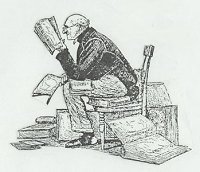
Reading is an essential discipline for the pastor, indeed for any Christian who is able. A few years ago when invited to speak to a group of college students who aspired to the pastorate, I told them (what had become a common line for me), “If you do not like to read, reconsider your calling.” This may sound strong to some, but surely the pastor must be one characterized by much reading of the Scripture at least. Then, if we take seriously the calling to expound the Word of God to the people of God in the sight of God, we will, out of sheer humility and knowledge of our own weakness, desire to read the considerations on the text by others more knowledgeable and more godly than ourselves. Yes, reading- good reading, diligent reading, much reading- is essential for the pastor.
Therefore, I will make a few points of recommendation concerning reading. Much more could be said here, but I will make a start. First, John Piper’s essay, “Brothers, Fight for Your Lives” (in Brothers We are Not Professionals) is brilliant and encouraging in many ways. His encouragement simply to set aside 20 minutes a day for reading and his calculations on what you can accomplish with that have been very helpful to me. Jim Eliff’s essay, “An Argument for Learning,” is also very helpful.
More articles could be listed, but let me conclude with some other specific things that have been helpful to me. During my doctoral work, I began trying to review every book I read. This arose from the desire to capture the thoughts and insights gained from reading. It is discouraging to read something and later not be able to remember what you thought you had learned. This reviewing has become a very helpful discipline. Now, of course the level of reviewing varies- and some have slipped by without recorded comments. Some books receive a thorough review while for others I simply summarize and give the key thoughts which have been stirred in my mind.
Lastly, I have begun keeping a file of quotes from each book. I simply save them in a computer folder titled, “Book Notes.” This has helped me to make use of these gleaned gems in future work. Also, these lists of quotes have often been useful items to share with others. These ideas are ways I seek to make the most of my reading, squeezing optimal use of the effort. May these reflections from my journey encourage you in your own reading.
The Pursuit of Holiness

One of our Wednesday night classes at my church is studying Jerry Bridges’ classic little book, The Pursuit of Holiness. As a part of the class I am re-reading this book which I first read almost 15 years ago in college. As I have re-read especially the first half of the book I have been reminded of how great this little, simply written book is. I cannot recommend it too strongly. If people in our churches grasped the ideas in the early chapters about the necessity of holiness, we would be ready to understand the necessity of oversight. It is not by accident that the book of Scripture which tells us without holiness no one will see the Lord (Heb 12:14), also speaks so strongly of the need for oversight (Heb 13:17). Bridges clearly and simply explains the biblical teaching of the necessity of perseverance, undercutting the sadly common, but false perversion of the doctrine of perseverance- i.e., the idea that one can profess faith, then live a life with no real concern for the things of God and be considered right with God and fit for heaven. The bible teaches no such thing, regardless of how common the idea may be. I do believe the bible teaches that those who are truly converted will persevere in the faith; but the point is that they will persevere. Those who profess faith but do not go on to progress in holiness and Christ-likeness (progress, not obtain perfection) show that they have never truly been converted (see Titus 1:16).
If you are trying to communicate these ideas with your church (or class or small group), a good way to start could be introducing this little book. Its size and short chapters make it a book that is not intimidating. And you can find inexpensive copies fairly easily.
P.S. While searching for an image of the book to include, the search engine suggested that perhaps I meant “pursuit of happiness” rather than “pursuit of holiness.” Interesting!
Thoughts on Books for Reading with Your Children

One thing I hope to do from time to time is to share my thoughts on certain books on biblical and theological issues for children. It is essential for the church to train parents to disciple their children. One part of this is reading good books to them. Reclaiming this practice will not only instruct a new generation of children but will also lead to dramatic growth in learning for the parents as well.
For the first installment in this topic, let me point out a short piece I wrote a few years back while we were still in Scotland. In it I recommend several books we found especially helpful for our children when they were in the range of 5 years old and younger. In future posts on this I will largely comment on books as I read them to my boys as well as share the thoughts I have jotted down along the way about books we have read together.
P.S. If you are not married or are married but do not yet have children, it is never too early to begin collecting thoughts and books for this important and fun task. If your children are grown, you can be an incredible blessing by passing on good thoughts and books for your grandchildren.
Missions Undergirded by Theology, Stewart Again
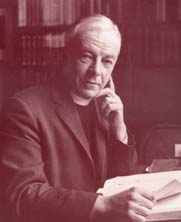
Returning to thoughts from James Stewart’s great little book on missions, Thine is the Kingdom, Stewart regularly pounds home the theme that our eschatology matters in missions. While there are differences in the realm of eschatology, we must be certain and clear that Christ is reigning now- he is not waiting to reign. Christ reigns. The enemy is still running about; the final, ultimate end of the enemy is yet future; but, Christ reigns. This is important for us to hold on to. Stewart writes:
“Now there is all the difference in the world between going out on mission with the motive of helping Christ to become King, and going out because the King has sent you.” (pg.27)
“Knowing that the Kingdom had appeared in time and that Christ was reigning now, they turned to face the future with a new intensity of hope, a hope as certain as the promises of God. Realizing that the decisive battle had been won, they flung themselves with magnificent abandon into the remaining toils and dangers of the campaign, sustained in all the hardships and dangers and persecutions of their mission by the certainty of the coming end, and straining their eyes through the darkness towards the final triumph of the Lord. Each Eucharist was a foretaste of the Messianic banquet and marriage supper of the Lamb.” (pgs.31-32)
“The men of the Bible know and declare that if the powers of darkness have a lot of rope nevertheless the end of the rope is in the hands of God. They see that God in His sovereignty can use even what is pagan and demonic as the agent of His purifying judgment upon Israel and the Church.” (pg.56)
“… the watchword on the banner of the Church’s mission, Christus Victor, represents not a pious hope, but a historic, irrevocable fact.” (pg.73)
Let us go forth in full confidence that Christ has conquered and now reigns. We go not forth to help Him achieve His victory. We go out because He is victorious, and we call all people to submit to this victorious Christ rather than be conquered as His enemies.
Newton, Poetry and the Pastorate

Poetry is very valuable for pastoral ministry. At one level, it is valuable for pastoral ministry because it is valuable for life in general! Yet, our culture has largely lost poetry. We can see this in a common inability to deal with symbols and appreciate the symbolic. Our flat understanding of language results in misunderstandings and poor exegesis. It also often hinders us in the effort to communicate deep truths. Have you ever noticed how many of the great preachers and theologians of the past wrote great poetry (including hymns)?
Here is a poem from John Newton about pastoral ministry. It is the source of his famous statement that pastoral ministry is “A sorrow full of joy”. This poem and many other good poems from pastors and theologians of the past can be found in Worthy Is The Lamb: Puritan Poetry in Honor of the Savior (Soli Deo Gloria Publications, 2004).
Travailing in Birth for Souls
by John Newton
What contradictions meet
In ministers employ!
It is a bitter sweet,
A sorrow full of joy;
No other post affords a place
For equal honor or disgrace!
Who can describe the pain
Which faithful preachers feel,
Constrained to speak in vain,
To hearts as hard as steel?
Or who can tell the pleasures felt,
When stubborn hearts begin to melt?
The Savior’s dying love,
The soul’s amazing worth,
Their utmost efforts move,
And draw their bowels forth;
They pray, and strive, their rest departs,
Till Christ be formed in sinners’ hearts.
If some small hope appear,
They still are not content;
But, with a jealous fear,
They watch for the event.
Too oft they find their hopes deceived,
Then how their inmost souls are grieved!
But when their pains succeed,
And from the tender blade,
The ripening ears proceed,
Their toils are overpaid.
No harvest-joy can equal theirs,
To find the fruit of all their cares.
On what has now been sown,
Thy blessings, Lord, bestow;
The power is Thine alone,
To make it spring and grow.
Do Thou the gracious harvest raise,
And Thou alone shalt have the praise.
Reformation Today- Parallels between the 16th Century and Today
Alister McGrath’s Spirituality in an Age of Change: Rediscovering the Spirit of the Reformers is an excellent book, not just on the topic of spirituality but also in simply describing the importance and the value of the Reformation. In the following quote, McGrath describes the state of the church in the Middle Ages in a way that makes so many obvious parallels to the state of the church today. As the quote ends, the point is made that just as the problems are similar, so the cure is similar:
A central theme of the Reformation spirituality was that the church had lost its way during the Middle Ages. The traditional concerns of the church had become overwhelmed by the involvement of the church in the secular order. In our own day and age, such involvement is generally held to be an excellent and desirable thing. The history of the church during the Middle Ages, however, perhaps sounds a note of caution, indicating what can happen through overextension of resources and personal commitment to the world. During the Middle Ages, the papacy saw its secular powers reach new heights. The ecclesiastical banking system came close to being the medieval equivalent of a modern multinational corporation. Indeed, the pope who condemned Martin Luther in 1520 was a prominent member of the Florentine Medici family, who had bought the papacy outright over the heads of a number of more distinguished and eligible rivals.
But in the middle of this experimentation with political and financial power, there were signs of decay. The arteries of the church became hardened through over involvement in the world. A price was paid for this apparent success. What, it was increasingly asked, have the splendors of the Renaissance papacy to do with the humble figure of Jesus of Nazareth? There was a widespread perception within the church, often at high levels, that a redefinition of its aims and goals was required. A new model was required. And for many – including those who would become the proponents of the Reformation – that model lay with the early church, as it can be seen emerging in the New Testament.” (pg.66-67)
Does this not sound strikingly similar? There is plenty of talk about the political power of the church in America today, and its financial prosperity general speaking is clear. Yet, where is its spiritual power displayed by significantly changed lives and counter-cultural communities of faith displaying by their lives and words a credible witness to the gospel? Yes, there are churches like this thankfully, but it certainly is not the norm.
McGrath argues that the Reformation was a returning to the roots of the faith, in an age when the history and roots of the faith had largely been lost. This is true again in our day. What is esteemed too often is what is newest rather than what is biblical, and there is little knowledge of or regard for the historic witness of the church. McGrath writes:
“To return to one’s roots was to recollect one’s birthright. It was to regain the title deeds of faith. It was to catch a fresh vision of possibilities. It was to overhear the conversations of the apostles. It was to allow a tired and weary faith to be refreshed. It was to return to an oasis from which the pilgrimage into the wilderness had begun. And it was to ignite a powder keg under the comfortable yet stagnant certainties of late medieval religion.” (emphasis mine, pg.68)
May we have a serious return to the scriptures so that the church today might be reinvigorated. Of course, this will disturb comfortable yet stagnant certainties of our day. May we choose obedience over comfort.