The John Newton Project


I have recently received information about an exciting new work in Britain, The John Newton Project. The Project is in the process of making available on their site the complete works of Newton, including previously unpublished material. What a resource that will be! Their objective, however, is not merely historical. Their mission statement is:

The Project has as its objective the transformation of society through faith in Jesus Christ, using the life and works of John Newton as one great example.

Yes! This is the purpose of historical study- to see how God used servants in the past so that we might be better prepared to serve God today.

The Board of Reference for the project includes Timothy George, John Piper, J. I. Packer, John Stott among others. This is an exciting project and one to watch.

Thielicke’s Little Exercise


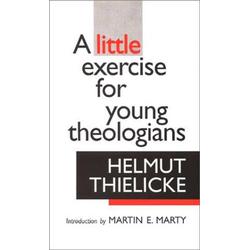
One book that I recommend to all who study theology (pastors, academics, etc.) is Helmut Thielicke’s A Little Exercise for Young Theologians . Along my way in theological education I came across this book and was greatly helped by it. I said then that if I ever taught I would require this book, and now I do. Once a year I work back through this little book with a group of students. Just this week I did this once more. In order to encourage you to read (or re-read) this book, let me share one student’s response to the book:

“At the risk of overstatement, I consider this short book to be one of the most meaningful and personally applicable that I have read. Thielicke’s clarity of thought and colorful expression led me into one of the most deeply convicting reading experiences of recent memory…. I can think of few books in the category of this one, which seemed to look with a penetrating gaze into my very life and gently rebuke me for the secret impurities and “gnostic pride” that have long been locked away in my heart concealed behind doors of humble cliches and gentleness of speech.”

Well put. Thielicke particularly deals with the problem of pride in studying theology and of thinking that because one has studied certain issues he has mastered them. While upholding the value (indeed necessity) of theological study he punctures the arrogance which so easily arises.

Much could be said about this book, but I will simply point out that Thielicke does not merely give a warning. He gives sound advice for pursuing theological study in a devotional and relational manner, for uniting head and heart. He encourages engagement with the people of God and regular reading of the Scriptures. It is not fancy, but this is the way. Here are a few quotes.

“But it is all the more important to insist constantly and almost monotonously that a person who pursues theological courses is spiritually sick unless he reads the Bible uncommonly often and makes the most of opportunities by which, in preaching and Bible classes, that cornerstone is made visible.” (pg. 40)

“How all-important it is that a vigorous spiritual life, in close association with the Holy Scriptures and in the midst of the Christian community, be maintained as a background for theological work…” (pg. 37)

“…insofar as we are determined to be true theologians, we think within the community of God’s people, and for that community, and in the name of that community;–how shall I say? — we think as a part of the community itself…” (pgs.4-5)

Amen! He is no true theologian who does not work from within the church for the good of the church.

Quote, Importance of Books Read in Childhood

Here is another quote from Grant, George & Karen Grant. Shelf Life: How Books Have Changed the Destinies and Desires of Men and Nations.

“The books that charmed us in youth recall the delight ever afterwards; we are hardly persuaded there are any like them, any deserving equally of our affections. Fortunate if the best fall in our way during this susceptible and forming period of our lives.”
– A. Bronson Alcott (1799-1888)

The Power of Books for Children, Quote

“Never underestimate the power of books for children. Note this well: it was the literature we read before we attained sophistication, maturity, and adulthood that has done the most to mold our characters, frame our thoughts, and influence our lives. A catalog of such books might well afford us a better map of comprehension than all the machinations of psychology.”
– Richard Ogilvie (1902-1988)

From: Grant, George & Karen Grant. Shelf Life: How Books Have Changed the Destinies and Desires of Men and Nations. Nashville, TN: Cumberland House Publishing, 1999, page 168. This is a great book which I would highly recommend!

Piper on the Sin of Comparing

It is unlikely that anyone reading this blog has not already seen Justin Taylor’s posts over at Between Two Worlds. Typically I do not point out posts from the really popular blogs because I figure you have already seen them. However, this time I will make an exception this time. Justin’s recent post on John Piper’s comments on the sinfulness of comparing ourselves with others is a key item for us pastors to read. Drawing from John 21:18-22 and referring to his fellow speakers at the recent Desiring God conference Piper stated:

What is it to you that David Wells has such a comprehensive grasp of the pervasive effects of postmodernism? You follow me.
What is it to you that Voddie Baucham speaks the gospel so powerfully without notes? You follow me.
What is it to you that Tim Keller sees gospel connections with professional life so clearly? You follow me.
What is it to you that Mark Driscoll has the language and the folly of pop culture at his fingertips? You follow me.
What is it to you that Don Carson reads five hundred books a year and combines
pastoral insight with the scholar’s depth and comprehensiveness? You follow me

Failure to grasp this truth is in fact often what leads to the preaching of other men’s sermons as we have discussed here before. It is what leads to envy of others success rather than simply seeking to be faithful in our own calling. This is a particularly good word.

The Smell of Perfumed Assemblies

Just today I came across a used copy of Karl Menninger’s Whatever Became of Sin? This is one of those books I have often heard about but never read. So I opened it to have a glance. A previous owner had placed a note in the front pointing to a poem on a certain page. The poem, printed below, is a searing critique of the modern Western church as it is typically practiced. I think it is a good word for us to hear headed into the weekend.

“The Smell of Perfumed Assemblies”
By Elmer F. SudermanHere they come,

my nonchalants,
my lazy daisies,
their dainty perfume
disturbing the room
the succulent smell
seductive as hell.
Here they are
my pampered flamboyants,
status spolied, who bring
with exquisite zing
their souls spick and span
protected by Ban,
their hearts young and gay
decked in handsome cliche,
exchanging at my call
with no effort at all
worship for whispering
God for gossiping,
theology for television.
Baptized in the smell
of classic Chanel
I promote their nod
to a jaunty God
Who, they are sure,
is a sparkling gem
superbly right for them.
There they go
my in-crowd
my soft-skinned crowd,
my suntanned,
so so elegant, swellegant,
natty, delectable,
suave, cool, adorable
DAMNED!


Meninger continues:

Yes, damned. Saved by grace perhaps. Certainly not helped by my cowardly silence. A word of reproof? A suggestion of sin? A confrontation? The parable of the rich young ruler? Something to disturb the Country Club coziness and complacency of my perfumed assembly? Dare I? (pp. 202-03)

Two points need to be made. First, we must indeed speak the difficult word, point out sin and call for repentance. We must not allow ourselves to become merely advocates of a cultural religion blessing the people in our narcissistic pursuit of self-fulfillment. Faithfulness to the Scripture will not allow us to do so.

Secondly, though- neither must we allow ourselves to be self-righteous “condemnation-mongers.” Let us first confess that the convicting words of the Bible speak not simply to “them” but to “us.” They wield the scalpel of God’s words most effectively who have themselves known its bite. Furthermore, while the Biblical message begins with confrontation and the call to repentance, it does not end there. We must be clear and sharp concerning sin. But, if we leave people there we have failed to preach the gospel. Having exposed sin, let us clearly, passionately point people to the cross, where damned people like us can find forgiveness and the power to change.

The gospel requires both notes: judgment and hope, rebellion and redemption, sin and forgiveness. Either one is diminished by the absence of the other. Let us then sound forth both with vigor.

The Escape: The Adventures of Three Huguenot Children Fleeing Persecution

The Escape: The Adventures of Three Huguenot Children Fleeing Persecution, by A. Van der Jagt (Inheritance Publications, 2001), pb., 179 pp.

We really enjoyed this one! The plight of French Protestants (Huguenots) in 17th century is told from the perspective of three children who end up on their own due to persecution. John and Manette’s family endures persecution because of their allegiance to the gospel. Their father is sent away to the galleys for life and their mother eventually dies of the resulting strain. Manette is sent away to Paris to live in an abusive situation. John encounters trouble as he holds fast in refusing to adopt Catholicism. Eventually John runs away intending to find and free his sister and make their way to Holland and freedom- both daunting tasks. Along the way he meets Camille another Huguenot boy who has fled after his parents converted under pressure but he was unwilling to do so.

The story presents the history well, and is full of good examples on various points including perseverance, diligence, prayer, compassion, and sacrifice. For example, when John is being pressured to convert to Catholicism and can find no way out he begins to despair. He was only a boy and couldn’t fight alone against all the priests! Thinking of this, he lifted his head with a jerk for it suddenly dawned on him that this was not true. His thoughts were utter nonsense, for he didn’t have to fight alone. Hadn’t Mother told him that the Lord would never forsake His children? Hadn’t she taught him to pray! He blushed for this very night he had completely forgotten his evening prayer. He hadn’t told the Lord his difficulties and worries as he should have done before anything else.

Slowly, he left the window and before he went back to bed, he knelt on the floor and prayed. He prayed for his father and Manette but above all he asked the Lord to give him a brave and faithful heart so that he could resist all temptation and be a true servant of Jesus Christ. (p. 22)

Some may look down on this as “moralizing”, but I disagree. It comes out naturally in the story as believing young man simply lives out his faith. It is one of the best way to teach the same to my boys. I delight in books like this.

Lastly, the book was well written. We have read other books (and they have been commented on in this blog) that had good content but simply were not told very well. This book was a delight. My boys hung on each chapter, begging each night for me to read more and urging each other to get ready for bed (finish chores etc.) quickly so that we could have more time to read (that’s always helpful!). This is a fun, meaningful book- exactly the sort we look for. We would highly recommend it.

Do the Next Thing

Here is a poem which contains much wisdom for Christian living in general and is very helpful for pastoral ministry as well. I found it in Elisabeth Elliot’s The Shaping of a Christian Family (pg.178-179). Elisabeth Elliot’s writings have meant a lot to me along the way, and I have often heard her discuss her “do the next thing” philosophy. I did not realize until recently that her language came from this poem which her mother had. There is much simple wisdom here. Do you find yourself on Monday feeling your soul is scorched, terribly aware of your inadequacies, fearful of what is to come? Since God is still in heaven and His steadfast Word declares His love for you, just carry on and do the next thing. Take the next step of obedience. Do you worry how your children will turn out, what the future will hold for your church, how the finances will look at the end of the month? Resist the allure of self pity, and just take the next step of obedience. We are typically given enough grace just for the next step. Fret not about what lies around the bend. Perform faithfully the next step, and we will make it home safely in the end.

This poem is a balm to my soul.

From an old English parsonage down by the sea
There came in the twilight a message to me;
Its quaint Saxon legend, deeply engraven,
Hath, it seems to me, teaching from Heaven.
And on through the doors the quiet words ring
Like a low inspiration: “DOE THE NEXTE THYNGE.”

Many a questioning, many a fear,
Many a doubt, hath its quieting here.
Moment by moment, let down from Heaven,
Time, opportunity, and guidance are given.
Fear not tomorrows, child of the King,
Thrust them with Jesus, doe the nexte thynge.

Do it immediately, do it with prayer;
Do it reliantly, casting all care;
Do it with reverence, tracing His hand
Who placed it before thee with earnest command.
Stayed on Omnipotence, safe ‘neath His wing,
Leave all results, doe the nexte thynge

Looking for Jesus, ever serener,
Working or suffering, be thy demeanor;
In His dear presence, the rest of His calm,
The light of His countenance be thy psalm,
Strong in His faithfulness, praise and sing.
Then, as He beckons thee, doe the nexte thynge.

–Anonymous

Carson on Prayer

One of the Wednesday night classes at our church this semester is studying D. A. Carson’s book, A Call to Spiritual Reformation: Priorities from Paul and His prayers. I bought this book 10 years ago, and it has been a significant help, challenge, and encouragement to me in many ways. I recommend it heartily. It has been helpful to take biblical prayers as models for my praying. It really is a simple idea but one I had not seriously considered before reading this book. Here are some quotes from his introduction on the need of the church to be serious about prayer.

“The one thing we most urgently need in Western Christendom is a deeper knowledge of God. We need to know God better.” (15)

“One of the foundational steps in knowing God, and one of the basic demonstrations that we do know God, is prayer – spiritual, persistent, biblically minded prayer. . . . Robert Murray M’Cheyne declared, “What a man is alone on his knees before God, that he is, and no more…: (16)

“Where is our delight in praying? . . . How much of our praying is largely formulaic, liberally larded with cliches that remind us, uncomfortably, of the hypocrites Jesus excoriated?” (16)

“…is it not nevertheless true that by and large we are better at organizing than agonizing? Better at administering than interceding? Better at fellowship than fasting? Better at entertainment than worship? Better at theological articulation than spiritual adoration? Better – God help us! – at preaching than at praying?” (16)

[quoting J.I. Packer] “I believe that prayer is the measure of the man, spiritually, in a way that nothing else is, so that how we pray is as important a question as we can ever face.” (16)

Chruch Discipline and Revival

Last week I posted about preaching on the church during a series of “Revival” meetings, arguing that if we truly want to see revival we must begin with the church. I also commented on preaching on church discipline in one of the services. While in my experience it seems church discipline would be the least likely topic considered for such a setting, it seemed to me to be one of the most obvious topics once I thought about it. I remembered hearing that a return to discipline in churches in the past had at times been a precursor to revival. So I went back to Greg Wills’s excellent book Democratic Religion: Freedom, Authority, and Church Discipline in the Baptist South, 1785-1900and found the quotes below. Before going to the quotes, however, let me earnestly recommend this book. It is very readable and provides many useful insights to our current church situation.

This first quote makes the point in and of itself:

“Pastor T.H. Stout took the occasion of a revival to inculcate the doctrine [of church discipline]. The members of Bethel Baptist Church became zealous for discipline and excluded two offenders. Stout recounted the result:
Very soon, a perceptible improvement was seen in the church. Brethren began to take up their crosses. They met and conversed on the condition of Zion, confessing and bewailing their coldness. Brethren, discipline is the life of our churches. We have no right to look for the blessing of our precious Savior unless we ‘come out from the world.’ Be ‘ye separate,’ says God. . . . May not many of our churches be incurring the displeasure of the ‘Great Head of the Church’ by laxity of discipline? During July… the church was greatly revived. . . . Quite a number of brethren prayed [publicly] who had never done so before. . . . Twenty-four were added to the church; 12 by experience and baptism, and 12 by letter…
Discipline brought revival.” (p. 36)

Then, these other quotes I also found helpful:

“Through discipline, they would, moreover, sweep the nation, for they believed that God rewarded faithful pruning by raining down revival.” (p. 8)

“After the Civil War, Baptist observers began to lament that church discipline was foundering, and it was. It declined partly because it became more burdensome in larger churches…. Urban churches, pressed by the need for large buildings and the desire for refined music and preaching, subordinated church discipline to the task of keeping the church solvent. Many Baptists shared a new vision of the church, replacing the pursuit of purity with the quest for efficiency. They lost the resolve to purge their churches of straying members.” (p. 9)

“Baptists saw discipline as a source of spiritual revival. A church with no discipline was no church. ‘When discipline leaves a church,’ Baptist theologian John L. Dagg contended, ‘Christ goes with it.'” (p. 33)

“Mississippi Baptist Elias Hibbard, who worried about excessive discipline, conceded its benefits: ‘I am aware that discipline when exercised in a proper manner is the life of our churches, and often precedes the blessings of the Almighty.'” (p. 34)

“Even with ‘the elegant preaching and eloquent prayers and the splendid appearances,’ Baptists reasoned, ‘no church can prosper spiritually if there is no discipline. . . nothing is more essential to church prosperity than the maintenance of faithful discipline.'” (p. 35)

“one of the churches that [Jesse] Mercer planted continued to intone that ‘correct discipline is the life of the Church, without it the Church is despised by the world, shorn of its power & will soon fall to pieces.'” (p. 35)

“Mercer believed that ‘most of our church difficulties grow out of neglected church discipline’ or discipline improperly administered.” (p. 35)

These are useful words for our day. Let us affirm the great desire to see renewal in the church in our day. We do indeed long to see God move mightily among His people renewing the church and converting the lost. However, all the talk about this is surely futile (to the point of being silly) if we are not willing to conform ourselves to His word, to take one of the clear steps he has provided us for the pursuit of holiness. The call for a return to church discipline does not (or ought not) arise merely from historic nostalgia, legalism, exclusivism or rash youth but for a desire for the salvation of souls and a renewal of the church- those things which will bring glory to God.