Magic Tree House Series

UPDATED
The Magic Tree House Series, Mary Pope Osborne

My boys really enjoy this series. We have listened to some on tape, my wife has read some to them, but mostly they have read these themselves. These have been some of the best books for them to get started with a love for reading.

The stories are centered around the adventures of a brother and sister duo, Jack and Annie, as they travel across time in their magic treehouse. They encounter various situations looking for clues and learning about historical events. This is not the source for profound or critical history lessons, but it is a good way to gain basic awareness of popular history.

The writing is on an easier level, but not simplistic. The adventure and intrigue make it a great draw for my boys, and we would recommend them.

FURTHER NOTE:
A question has come up in the comments because some others have specifically not recommended this series. I have addressed this some in the comments here, and I will offer some clarification as well.

I am recommending this series primarily as something for children to read on their own. They are not up to the level of some other books recommended here. They are not the most in depth kid’s books on history. However, we have found them to be acceptable. They have been good places for a start for our boys in reading for themselves. The element of mystery and adventure are appealing, and being a series there is a draw to keep reading. These have been books, then, that our boys have saved up money to buy in order to keep going with the series. We have been pleased with that sort of interest and in the fact that they get a basic awareness of the historical events. The tie in to Camelot during part of the series is an added benefit as well since knights are a big favorite of ours.

Awesome God: Worship Songs for Children

Awesome God: Worship Songs for Children, Sovereign Grace Music

Several weeks ago I, along with a number of other bloggers, received a copy of this CD for review. Sovereign Grace Music is a division of Sovereign Grace Ministries, the ministry led by C. J. Mahaney.
At first I was not especially taken with the CD because the music is not particularly my style. My boys thought the chorus of “Forever God” was a bit funny as it repeated “on and on and on.” They said it went “on and on and on.” However, from the beginning we appreciated the careful and substantial lyrics. Indeed, as we listened more we were won over. Now it is a favorite. The music is fun, but the best part is the God-centered, gospel-oriented lyrics.

One that I especially like is “Your Love.” The chorus in part says:

Your awesome love protects me
When I sin your love corrects me
You’re faithful to direct me
Always to Your love

I appreciate the discussion of God’s love including his gracious discipline and care.

This can be a fun resource for encouraging our children in thinking biblically.

Satire

Oftentimes the best way to expose error is the use of good satire. For this reason I appreciate some of the Christian satire sites on the web. This older story from LarkNews, entitled, “Church growth conference helps pastors feel like miserable failures”, is a good example. It takes a swipe at the performance orientation of so much of church thinking today- the kind of thinking that is connected with the ongoing conversation on plagiarism.

Craftsmen, reading to your children

Craftsmen: Skilfully Leading Your Family for Christ , by John Crotts
(Shepherd Press, 2005), pb., 160 pp.

This is not a book for reading to your children but a book particularly to Dads about leading their families. The author draws from the Old Testament wisdom literature to talk about being a wise man in your family. I think the subtitle promised more than was delivered, but Proverbs is so good that simply the gathering of some of them along topics and then citing them is helpful itself. So, in the end, this is a fine book, and will be helpful. I was just looking for more direct application to the role of husband and father. At some places he does more of this but, it is not consistent.
My point in listing it here though is his last chapter, “Sources of Wisdom,” which was one of the best chapters. In one section he discusses ways that parents can impart wisdom to their children (p. 146 ff.). He opens with a great quote:

“The biggest beneficiaries of a wise man in the house are his wife a children” (146).

Well put. As I often say to myself and other men, “If you want to bless and help your family, pursue godliness with all you have.”

Crotts goes on though to list several ways a father can impart wisdom. Among them he lists stories. I was pleased to see this. He focuses primarily on the relating of your personal story as Solomon does in Proverbs and Ecclesiastes. Then he also does mention the value of other stories. Here is the key paragraph.

“Of course illustrating God’s wisdom through stories should reach beyond your own experiences. Tell your children all kinds of stories. Read biographies of heroes of the faith. Use their accounts to instruct your family. Enjoy fictional tales as well. God seems to have given children an incredible appetite for stories. Satisfy their hunger and impart true knowledge at the same time.” (148)

AMEN! This is what this is site is all about. In our home, the dinner table is the typical place for telling our stories. My second son will often plead for another story from “when you and Momma were little.” These stories frame their worldview in ways beyond what we can imagine. They remember better than we do what we have told them. Then bedtime is especially given to reading other stories.

So, this is an encouraging book. I am glad to see the encouraging of fathers in this realm. Too often only the mothers are involved- it seems that mostly mothers read this site. I am not in any way hoping for a decrease in the involvement of mothers- far from it! (see 2 Tim 1:5; 3:14-15) However, I do long to see an increase in the involvement of fathers.

Pastoral Plagiarism, Part 2

The previous post has caused some stir, and I am glad because I think this is an important issue to consider. I am also glad because no doubt many will read the Sjogren article as it is on Rick Warren’s site, and I hope there will be people ready to hold accountable those who fall under the sway of Sjogren’s argument.

To further the discussion let me point out also a post from about a year ago by Justin Taylor and an article by Justin Taylor and Matt Perman. Many of you will no doubt already be aware of these documents but I did not know of them until Justin posted about them this week.

Finally, one reader commented on the previous post, linking two of his own posts arguing a different view on the subject. Here are J. A. Gillmartin’s arguments- post 1, post 2. I encourage you to read his arguments and join the conversation. Here is my response to him

J. A. Gillmartin,
Thanks for interacting. I did read your two posts. I encourage other readers here to do the same and join the conversation. I do think we disagree, and I would want to challenge you to consider your logic.
You seem to take issue with accusations that people are indeed preaching sermons verbatim. That is directly encouraged in the article I referenced. To say that simply preaching the results of another man’s efforts is the same as using reference tools (you mentioned lexicons I think) is incorrect. Most people understand and expect that for preaching (as well as any other research, speeches or papers) one will consult the work of others, preferably those who have demonstrated wisdom and godliness. However, learning from others is significantly different from parroting them. The goal is to study the Word with helps from others and absorb the truths yourself. Then when you proclaim it, you are no doubt influenced by others, but what comes out has been assimilated into your own mind and soul. You are not seeking to emulate another’s passion for a certain point but are speaking from your own affected soul. (The comment in the previous post which quotes Lloyd-Jones is especially good here).

As I prepare to preach from 1 Peter this week I have first wrestled with the Greek text on my own without consulting other expositions. After making some preliminary observations I plan to read commentaries by Schreiner, Grudem and Marshall (among others) and to listen to a sermon by Don Carson. I want to learn from these men who are wiser than me. But I will not preach their message. I will then prepare a message for my people, applying the text as best as I understand it to their lives as best as I understand them. And, no, I am not full time at my church so I know about the crunch of time.

You also take the example of third world pastors to prove a point but the example does not hold. Certainly there are people in especially difficult situations. I would not encourage them to simply parrot sermons either (and I don’t think you do), but the issue at hand in these articles is not harried 3rd world pastors. These are American pastors. Let’s not confuse the issues. It is true that the pastorate is demanding. But herein lies much of the problem. In the American church we have confused ourselves on what the pastor is to do. We need to relieve pastors of some things they think they must do (not least the drive to “keep up” with the latest church growth theories, and the need to be “creative”), and encourage them to devote themselves to the apostolic priorities of the Word and prayer (Acts 6). Note what Paul exhorts Timothy to pay special attention to. In 1 Timothy 4:6-16 the focus is on Timothy’s teaching and his lifestyle (esp. v16). In 4:13 Paul esp. highlights the public reading and exposition of Scripture. In 2 Timothy the whole focus is perseverance in right doctrine and holy living. 4:1-8 is the climax of the entire letter. 4:1 sets up a very solemn charge. The content of this solemn charge (v2) is a call to preach.

I agree wholeheartedly that pastors tend to be run ragged. The answer is not to skimp on time in the Word. The answer is to cut back on institutional machinery that is not part of the calling so that we might devote ourselves to the task God has given. I previously posted on this approach, in the form of an exhortation to churches on how to help their pastors fulfill their tasks. I would be interested in your thoughts on this.

Max Lucado’s Wemmicks

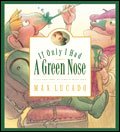
We saw the first of these books, You Are Special, several years ago when some friends gave it to us as a gift. Only more recently have we seen the sequel, If Only I Had a Green Nose . Anyone who has read even a little of Lucado knows that he is certainly a gifted writer, so these are engaging stories. The artwork by Sergio Martinez is nicely done as well. However, as could be anticipated by reading Lucado, the theology contained here is disappointing.

The stories center around Punchinello, a Wemmick, as he lives in his fallen little world of Wemmicksville. Wemmicks are little wooden people and their Maker, the woodcarver Eli, lives atop the nearby hill. The use of Eli (Hebrew for “My God”) for the “God-figure” is well done. Lucado’s main goal in both books seems to be to address the issue of self-esteem. In the sequel this is not bad as the point is simply not to try to be like everyone else. In You Are Special, however, self-esteem seems to trump the gospel. When Punchinello approaches Eli for the first time, Eli’s only message is “You’re ok.” The goal of coming to God on a regular basis is feeling better about yourself, no longer being worried about other’s opinions. Surely finding peace in God’s acceptance is a good point, but sinful people, including children, cannot find acceptance with God without the gospel. Perhaps some would say, “That’s assumed.” But we cannot simply assume the most important issues. We must speak to the reality of sin and God’s wrath so that our children will see the desperateness of our situation and the glory of the gospel’s offer of forgiveness. Some also shrink from speaking so plainly of sin and wrath to our children, but such fears are without basis. Love requires us to speak truth not to hide from it.

In the end the creativity of these stories is nice, but the theology is shallow, superficial and man-centered. I want books for my children that present the glory and greatness of God, the reality of sin, and the incredible wonder of God’s grace in the gospel. There are enough books in this direction not to bother with books like these two.

Pastoral Plagiarism

A few days ago a pastor friend sent me a link for an article entitled “Don’t be original – be effective!”, by Steve Sjogren, a Cincinnati pastor and author. The article had been posted at Rick Warren’s Ministry Toolbox at Pastors.Com. After reading the article I simply sat there dumbfounded, stupefied. I felt like imitating Ezra when he said, “When I heard about this matter I tore my garment and my robe, and pulled some of the hair from my head and my beard, and sat down appalled” (Ezra 9:3).

What produced this reaction? This article is a brazen argument for pastors to quit trying to produce their own sermons and instead simply preach the material of others- even word for word! Sjogren argues that laboring to prepare a sermon yourself is silly, stating: “stop all of this nonsense of spending 25 or 30 hours a week preparing to speak on the weekend.” As a positive example he cites Paul Cho, pastor of supposedly the largest church in the world in Korea, who said:

“Honestly, I have never given an original message in all my years of ministry here at Yoido Church. Each week, I preach word-for-word messages from either Billy Graham or W.A. Criswell from Dallas First Baptist Church. I can’t afford to not have a home run each weekend when we gather. I don’t trust my own ability to give completely original messages.”

Sjogren argues that the desire to prepare your own sermons is the result of pride that we need to get over. In fact he ridicules those who think they are preparing good sermons themselves by asking them if they are preaching such good sermons why are their churches still small. The obvious point is to simply copy the sermons of big church pastors- they’re simply plagiarizing others, Sjogren says.

Frankly, this is utterly disgusting. I remember hearing Adrian Rogers about 15 years ago at a Pastor’s Conference firmly condemn this practice. Sure, it is fitting to listen and learn from people. But skipping the hard work of study and preaching other men’s labors is abominable. Then to label the effort to prepare for oneself as the result of pride!! Oh, how blind! I suppose there is no arrogance in saying, “My service is so important I can’t afford not to hit a homerun each weekend”! How man-centered, performance driven is that? This is the real problem. The assumption behind the writing is that the big issue is a great performance in the preaching. So, if you can’t give a great performance borrow someone else’s. But, this is not what our people need. Performance is available in abundance. The word of God is not so available.

This all reminds me of a favorite passage of mine, Jeremiah 23. Here God sternly rebukes prophets who claim to come to God’s people with God’s message, but in actuality come with their own imaginations (v16). God contrasts their vain talk to the power of His Word (vv 25-32). God even says:

“Therefore behold, I am against the prophets,” declares the LORD, “who steal My words from each other.” (v30)

Even with differences in context, I think this is clear. Our people do not need a performance. They need to gather with their brothers and sisters to hear their own overseer, who knows and loves them, and to hear the overflow of his heart resulting from his own wrestling with the text that week. We are not to be talking heads with fine points, but messengers who, having set in the counsel of God, can come with His Word. Again God speaks through Jeremiah:

“But who has stood in the council of the LORD, That he should see and hear His word? Who has given heed to His word and listened?” “I did not send these prophets, But they ran. I did not speak to them, But they prophesied. “But if they had stood in My council, Then they would have announced My words to My people, And would have turned them back from their evil way And from the evil of their deeds. (v18, 21-22)

Let us give up on the sham allure of performance, stop up our ears from the siren calls even from fellow pastors, resist the enticements of Vanity Fair and simply give God’s Word to God’s people. Then we will have the pleasure of seeing people turned from their sin (one of the true goals rather than crowd gathering).

So, I encourage you to read Sjogren’s article and be appalled. Then renew yourself once more to the God-ordained task at hand. For in the end we will give account to the One who said:

“Woe to the shepherds who are destroying and scattering the sheep of My pasture!” declares the LORD. (Jer 23:1)

Shepherd Press Catalogue

Shepherd Press Catalogue

Here is another good resource we enjoy for finding children’s books. Shepherd Press (publisher of Ted Tripp’s Shepherding a Child’s Heart material) includes in its catalogue books they publish as well as other books they would recommend. I have previously recommended their commentary series for children. The St. George and the Dragon book I recommended is also found in this catalogue. This catalogue is not as extensive as the Veritas catalogue, but it is a good resource. They also offer books on various other realms of Christian living and often include good essays on parenting or other facets of discipleship. You can request a free copy of the catalogue here.

“Grace, All-conquering and charming”


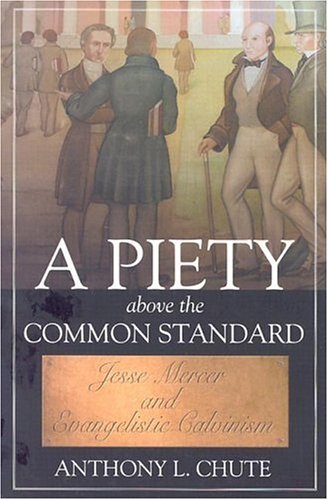
Jesse Mercer could be described as the leading Baptist in Georgia in the first half of the 19th century. He served as pastor, editor of the state paper, and denominational statesman championing the formation of schools and a mission board. Anthony Chute has written a fine overview of Mercer’s work in A Piety Above the Common Standard. You can see my review of Chute’s book here.

My point here, however, is to highlight his work in poetry, writing and compiling hymns. Mercer produced a popular compilation of American and British hymns entitled The Cluster of Spiritual Songs, Divine Hymns, and Sacred Poems. The following hymn is #5 in the cluster, and I have recorded (from when I borrowed a copy of the Cluster) that Mercer was the author of this hymn.

“Grace, All-conquering and charming”

Legion was my name by nature,
Satan raged within my breast;
Never misery was greater,
Never sinner more posses’d.
Mischievous to all around me,
To myself the greatest foe;
Thus I was, when Jesus found me,
Filled with madness, sin, and woe.

Yet in this forlorn condition,
When he came to set me free,
I reply’d to my Physician,
“What have I to do with thee?”
But he would not be prevented,
Rescued me against my will;
Had he staid till I’d consented,
I had been a captive still.

Saint George and the Dragon


Saint George and the Dragon, retold by Margaret Hodges
Illustrated by Trina Schart Hyman (Little, Brown and Company; 1984)
Hb. 32 pp., $16.95, ISBN 0316367893

This is a nicely done adaptation from Edmund Spenser’s Faerie Queen, beautifully illustrated. It is well deserving of its Caldecott Medal. The great illustrations captivate young and old, and the story speaks well to courage, nobility, perseverance and protecting the defenseless. This is one of the first books I read to my boys dealing with knights and dragons. It remains a favorite among them today. I am writing this brief review now because one of them brought our copy out this afternoon to look back through it again. This is one I hope shapes their thoughts well.