Reformation Day 2014

Happy Reformation Day! This is always a day celebrated in the Van Neste household as we acknowledge the blessings that have come down to us because of this great movement: e.g., having the scriptures in our own language, having our own copies of the Bible, understanding that salvation is by grace alone through faith alone in Christ alone, enjoying truly corporate worship, understanding the value of all work in God’s sight, and the fact that although I’m an ordained minister I am married!

Rehearsing some of these with my kids this morning, one of them said, “That’s why you love Reformation Day, Dad, because you like being married to Mom!” I heartily said, “Absolutely! That is certainly a great reason!”

There are plenty of reasons to celebrate this past work of God, and plenty of need to continue the work of returning to the Scriptures to bring our lives and practice in conformity with it.

Here are some recent items that further reflect on the Reformation.

Timothy George, has a brief column on Luther and his value to the whole church

Carl Trueman’s lecture on “Martin Luther, the troubled prophet”. Carl has a book titled Luther on the Christian Life: Cross and Freedom due out in February.

Trueman also has a great recent column titled The Wonder of Luther’s Catechisms where he holds up the value of solid, foundational teaching over the glitzy, hip discussions.

Regent audio has made three Reformation-related lectures available for free to download through the end of the day.

Then, Gerald Bray’s article from several years ago, “Was the Reformation a Tragedy?” is well worth returning to.

Lastly, since last Reformation Day my article on the pastoral impulse of the Reformation has appeared in print.

“Your souls, more precious than thousands of worlds”

How should a pastor think of the members of the church he serves? Too often today church members are thought of as customers or potential workers. This is not the scriptural pattern; nor is it the practice of our forebears.

Just today I came back to “The Glory and Ornament of a True Gospel‐constituted Church” written by Elias Keach in London in 1697. The work has historical significance for various reasons, but his opening words to his church reveal the heart of a pastor and the awareness of one who knows he is a steward who will one day have to give an account (Heb 13:17).

Dearly Beloved,
Your Souls, more precious than thousands of Worlds, being committed to my Care, as an Overseer under the great Shepherd of the Sheep, the Lord Jesus Christ, to whom ere long I must be accountable, &c. I could do no less in order to the full discharge of my Duty, than let you know your Places, Order and Work in that Church of which you are members, it being part (and that not the least part) of the Counsel of God, which I am in Duty bound to make known unto you according to my Ability.

B B Warfield on Classical Education


I am a teacher of Christian theology, and as the principle source book of Christian Theology is a Greek book, and a large part of its literature is written in Latin, I am predisposed to desire that Greek and Latin should have a large place in academic training. I fully recognize, however, that the training given in our academic institutions should not be determined by the needs of any one profession. Its primary object, in my view, in fact is not so much to impart knowledge as to form mind; and it is because I have a clear and, as I believe, well founded conviction that a sound classical training provides the best means at our disposal for a sound mental discipline that I am an earnest advocate of it. Were we for any reason debarred from the use of the classics, I have little question that much the same training which we now obtain from them could be obtained without them. But neither do I have that much doubt that the same training could not be obtained without them without a larger expenditure of both labor and effort. So long as we have the choice in a free field the classical course, in my judgment, should be chosen as supplying the best means as yet known of general mental discipline. What I chiefly value in it is the quality of mind which it produces.

– Benjamin B. Warfield

Tozer on Worship vs. Entertainment


“Oh, brother or sister, God calls us to worship, but in many instances we are in entertainment, just running a poor second to the theaters. That is where we are, even in the evangelical churches, and I don’t mind telling you that most of the people we say we are trying to reach will never come to a church to see a lot of amateur actors putting on a home talent show.”

– A. W. Tozer, Whatever Happened to Worship

(HT: Chris Mathews)

Anniversary of William Tyndale’s Death

A week ago we passed the 478th anniversary of the martyrdom of William Tyndale (Oct 6, 1536), strangled and burned for his work of translating the Bible into English and for teaching justification by faith. As we pass this significant anniversary, I commend to you a wonderful, moving lecture by Timothy George on the life and work of Tyndale delivered three years ago at a conference at Union University.


“Remember your leaders, those who spoke to you the word of God. Consider the outcome of their way of life, and imitate their faith” (Heb 13:7)

Kipling’s Lament for a Dying Culture

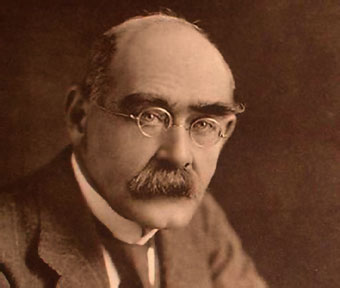
Rudyard Kiping’s poem, “The Gods of the Copybook Headings,” is a powerful and poignant challenge for our cultural situation today. Kipling wrote the poem in 1919 in response to the cultural despair after World War I when so many began rejecting the moral and religious truths which had undergirded European civilization. We need to hear this poem again in our setting.

Since the poem is almost a hundred years old, we may need some background to properly understand it. Copybooks were books used in schools for handwriting. At the top of the page was a common proverb which the student would copy numerous times. Thus, the “copybook headings” were well known sayings which embodied traditional moral truths. Kipling is saying that people in his day were abandoning these truths in pursuit of materialism and notions of “progress.” However, ignoring truth does not make it go away, and the violation of the laws of natureTurn-of-the-century copybook and basic realities
will lead to destruction.

This is not an explicitly Christian poem, and, of course, morals alone are not sufficient. However, we must assess the poem for what it aims to do. It is useful and important to be reminded that the cultural rejection of morality (sexual purity, honesty, hard work, etc.) will lead to cultural destruction. The fact that the gospel produces such character is one of the many ways it contributes to human flourishing.


The Gods of the Copybook Headings 

AS I PASS through my incarnations in every age and race,
I make my proper prostrations to the Gods of the Market Place.
Peering through reverent fingers I watch them flourish and fall,
And the Gods of the Copybook Headings, I notice, outlast them all.

We were living in trees when they met us. They showed us each in turn
That Water would certainly wet us, as Fire would certainly burn:
But we found them lacking in Uplift, Vision and Breadth of Mind,
So we left them to teach the Gorillas while we followed the March of Mankind.

We moved as the Spirit listed. They never altered their pace,
Being neither cloud nor wind-borne like the Gods of the Market Place,
But they always caught up with our progress, and presently word would come
That a tribe had been wiped off its icefield, or the lights had gone out in Rome.

With the Hopes that our World is built on they were utterly out of touch,
They denied that the Moon was Stilton; they denied she was even Dutch;
They denied that Wishes were Horses; they denied that a Pig had Wings;
So we worshipped the Gods of the Market Who promised these beautiful things.

When the Cambrian measures were forming, They promised perpetual peace.
They swore, if we gave them our weapons, that the wars of the tribes would cease.
But when we disarmed They sold us and delivered us bound to our foe,
And the Gods of the Copybook Headings said: “Stick to the Devil you know.”

On the first Feminian Sandstones we were promised the Fuller Life
(Which started by loving our neighbour and ended by loving his wife)
Till our women had no more children and the men lost reason and faith,
And the Gods of the Copybook Headings said: “The Wages of Sin is Death.”

In the Carboniferous Epoch we were promised abundance for all,
By robbing selected Peter to pay for collective Paul;
But, though we had plenty of money, there was nothing our money could buy,
And the Gods of the Copybook Headings said: “If you don’t work you die.” 

Then the Gods of the Market tumbled, and their smooth-tongued wizards withdrew
And the hearts of the meanest were humbled and began to believe it was true
That All is not Gold that Glitters, and Two and Two make Four
And the Gods of the Copybook Headings limped up to explain it once more.

As it will be in the future, it was at the birth of Man
There are only four things certain since Social Progress began.
That the Dog returns to his Vomit and the Sow returns to her Mire,
And the burnt Fool’s bandaged finger goes wabbling back to the Fire;

And that after this is accomplished, and the brave new world begins
When all men are paid for existing and no man must pay for his sins,
As surely as Water will wet us, as surely as Fire will burn,
The Gods of the Copybook Headings with terror and slaughter return!


–          Rudyard Kipling

[Here is a helpful discussion of this poem with more explanation of some of its references]

No “Safe Distance” Ministry

A main theme of this blog is the necessity of pastors knowing their people in order to be able really to pastor them. A colleague of mine, Justin Barnard, recently pointed me to Henri Nouwen’s In the Name of Jesus as a source making a similar point. The following excerpt is a powerful summary of ministry drawing from Jesus comments in John 10:14-15.

“He [Jesus] wants Peter to feed his sheep and care for them, not as ‘professionals’ who know their clients’ problems and take care of them, but as vulnerable brothers and sisters who know and are known, who care and are cared for, who forgive and are being forgiven, who love and are being loved.

Somehow we have come to believe that good leadership requires a safe distance from those we are called to lead. … But how can we lay down our life for those with whom we are not even allowed to enter into a deep personal relationship? Laying down your life means making your own faith and doubt, hope and despair, joy and sadness, courage and fear available to others as ways of getting in touch with the Lord of life.

We are not the healers, we are not the reconcilers, we are not the givers of life. We are sinful, broken, vulnerable people who need as much care as anyone we care for. The mystery of ministry is that we have been chosen to make our own limited and very conditional love the gateway for the unlimited and unconditional love of God.”(61-62)

[For further discussion of the implications of this scriptural text for pastoral ministry with quotes from key church leaders of the past, see this previous post]

“I Hear the Words of Love”

I encountered Horatius Bonar years ago while reading about Robert Murray McCheyne and, then, by reading his book, Words to Winners of Souls. His work has ministered to me in many ways. In his hymns he has a wonderful way of proclaiming the gospel in poetic form. My poem of the week this week is a beautiful example.

“I Hear the Words of Love” powerfully reminds us that our hope, our security, our peace rests in the steadfastness of God and not in our own vacillating feelings or thoughts. What an important and glorious truth! And, what a beautiful way to refer to the gospel- “words of love.” After singing this a week ago at church, it has been in my mind ever since.


I Hear the Words of Love

I hear the words of love,
I gaze upon the blood,
I see the mighty sacrifice,
And I have peace with God.

’Tis everlasting peace,
Sure as Jehovah’s Name;
’Tis stable as His steadfast throne,
For evermore the same.

The clouds may go and come,
And storms may sweep my sky;
This blood-sealed friendship changes not,
The cross is ever nigh.

I change—He changes not;
The Christ can never die;
His love, not mine, the resting-place;
His truth, not mine, the tie.

My love is oftimes low,
My joy still ebbs and flows;
But peace with Him remains the same,
No change Jehovah knows.

–          Horatius Bonar, Hymns of Faith & Hope, second series, 1861.


THE SAINTS SHOULD NEVER BE DISMAYED

William Cowper knew what it was to be discouraged, and, thus, he wrote compellingly to this struggle. My poem of the week this week is one of Cowper’s which calls the discouraged saint to look to biblical examples of the Lord’s care and intervention in order to hold fast. The last two lines are my favorite.

THE SAINTS SHOULD NEVER BE DISMAYED

The saints should never be dismayed,
Nor sink in hopeless fear;
For when they least expect His aid,
The Savior will appear.
This Abr’am found: he raised the knife;
God saw, and said, “Forbear!
Yon ram shall yield his meaner life;
Behold the victim there.”

Once David seemed Saul’s certain prey;
But hark! the foe’s at hand;
Saul turns his arms another way,
To save th’invaded land.
When Jonah sunk beneath the wave,
He thought to rise no more;
But God prepared a fish to save,
And bear him to the shore.

Blest proofs of power and grace divine,
That meet us in His Word!
May every deep felt care of mine
Be trusted with the Lord.
Wait for His seasonable aid,
And though it tarry, wait:
The promise may be long delayed,
But cannot come too late.

Words: William Cowper, Olney Hymns (London: W. Oliver, 1779).