Nehemiah’s Enemies Today

One temptation in the pastorate is to become too concerned in the institutional life around you- church programs, denominational positions, etc. Of course we need to interact with the broader world but we must beware of the entanglements and allurements of position and prestige. It is too easy to get to the point where we are more loyal to maintaining our programs or institutions than we are to strictly obeying the Bible. I hear this when people dismiss calls for simple Bible obedience as idealistic, impractical, or just too problematic in s current situation. This quote from Packer concerning those who opposed Nehemiah and their counterparts today was helpful to me.

“Sometimes in the half-secular world of mainline denomonational life as it is today, Sanballat, Tobiah, and Geshem reappear. They take the form of bureaucrats who see any version of Christianity that challenges the status quo as subversive: unnecessary, unwise, and destructive rather than constructive in its thrust. In local churches and parachurch bodies, any leader who values order above ardour and routine above revival, and who pours cold water on visionaries as soon as they propose that something be done, risks becoming a new Sanballat or Tobiah. The loyalty of such people, whereby they think they serve God, is given to Christian institutions rather than to biblical truth, and they have no idea that in this they become Satan’s tools for the snuffing out of spiritual life; nor do they ever understand why Christians who have learned their faith and calling from the Bible find it necessary to fight them. The pride reflected in their confidence that wisdom is with them, and that they have a Christian duty to uphold the status quo against Bible-based reformers, makes the Sanballats and Tobiahs of our time into figures who are pathetic and tragic at the same time. But that does not in any way reduce our obligation to stand against them when they oppose obedience to God’s truth. Nehemiah is our model here, a very relevant model for our time.”

J. I. Packer, A Passion For Faithfulness: Wisdom from the Book of Nehemiah, 98.

Nehemiah and Opposing those who Oppose the Church

Nehemiah is downright fiery and aggressive when dealing with the enemies of the people of God. He prays that they be judged and their sin not be forgiven (4:4-5). He beat some and pulled out their hair (13:25), and he chased away a false priest (13:28). Much can be said about this, but Packer makes some significant, searching points. Packer notes that we need not expect that every action of Nehemiah was exactly right, but he pushes our assumptions as well. The second quote is especially powerful.

  • Nehemiah is not expressing personal vindictiveness against Sanballat and Tobiah so much as zeal for God to vindicate himself against them because they have opposed him. . . .
    Difficulty is felt today with biblical prayers that God will take vengeance, partly because of their oriental exuberance of expression . . . but mainly because the pure zeal for God’s glory that those prayers express is foreign to our spiritually sluggish hearts….
    What we are being shown here is that when Christians get to heaven, with their sanctification complete and their minds as fully conformed to the mind of Christ as the angels’ minds are, they will forever rejoice not only in the mercies by which God has glorified himself in their own lives, but also in the judgments by which he vindicates himself against those who defy him. (p. 101-102)
  • Any embarrassment we might feel at Nehemiah’s forthrightness could be a sign of our own spiritual and moral limitations rather than his. Was it a weakness that in Nehemiah’s code of conduct the modern shibboleth, “thou shalt be nice” seems to have had no place, while “thou shalt be faithful to God and zealous for God” was evidently basic to it? . . . . The assumption, so common today, that niceness is of the essence of goodness needs to be exploded. Nehemiah should not be criticized for thinking that there are more important things in life than being nice…. And if Nehemiah upsets us by seeming to be a judgmental egoist, we should remember that he believed in the absolutes of divine revelation and the reality of God’s judgments with a robustness that few nowadays match. Belief in absolutes is out of fashion in the West; relativism and pluralism have become “politically correct” pollutions of the cultural air we breathe, and any affirmation of what purports to be universal truth is thought of as bad manners, if not worse. (p.182-183)

WOW!

A Passion for Faithfulness: Wisdom from the Book of Nehemiah

Packer, Nehemiah and Church Renewal

I have just finished reading J. I Packer’s A Passion for Faithfulness: Wisdom from the Book of Nehemiah . The book wanders a bit, but as would be expected there is much wisdom here. Packer properly points out that the book is about not simply “leadership lessons” but about the renewing of the people of God- in our terminology renewing and reforming the church. I’ll take a few posts to distill some of the points he makes.
Packer points out how Nehemiah begins with a heart broken for the state of the people of God and repentant not simply for the sins of others but recognizing his part in the failure of the people. It is all to easy to point out what others are doing wrong rather than taking our place among the ruins of God’s people and acknowledging our part in the current situation. Of course, before any rebuilding can be done, we must be among the people.

  • We have all had a greater share in the church’s shortcomings and unfaithfulnesses than we know, and we may not therefore treat such sense as we have of its failures as excusing us from the need to confess that we shared in the process of its failing. Nor is it for us to turn our back on the church in impatience…but to pray and work for its renewal, keeping that as the prime focus of our concern at all times. (p. 48)
    Do we in fact start where he started, with the same passion for God’s glory and the same burden of concern and distress when we contemplate the broken-down state of God’s church?
    “How few the strong men in these days who can weep at the evils and abominations of the times! How rare those who, seeing the desolations of Zion, are sufficiently interested and concerned for the welfare of the church to mourn! Mourning and weeping over the decay of religion, the decline of revival power, and the fearful inroads of worldliness in the church are almost an unknown quantity. . . . Nehemiah was a mourner in Zion. [E.M. Bounds, Prayer and Praying Men (Grand Rapids, MI: Baker, n.d.), p. 73ff.]
    . . . Are we willing to learn to pray for the struggling communities of God’s people as Nehemiah prayed for the Jews, and to accept with Nehemiah any changes of circumstances and any risk that may be involved in rendering the needed service? (p. 67)

Also, Nehemiah’s concern for God’s glory which causes him to be bothered about the status quo, does not allow him to merely carp from the sidelines but compels him into the fray to do something about it. Packer writes:

  • [Nehemiah was] one of those “who delight in revering your name”. Such zeal, though matched by Jesus and the psalmists and Paul (to look no further), is rarer today than it should be; most of us are more like the lukewarm Laodiceans, drifting along very cheerfully in becalmed churches, feeling confident that everything is all right, and thereby disgusting our Lord Jesus, who sees that, spiritually speaking, nothing is right (see Rev. 3:14-22). (p. 33)

Family Worship Book


This is not actually a book to read to your children, but it is a great book about reading The Book to your children. Family worship, so common in previous days (indeed lack of it was often considered grounds for discipline!), has fallen on hard times. Terry Johnson’s The Family Worship Book: A Resource Book for Family Devotions is a great resource for a family wanting to begin family worship. You can see my review of this book here. As you can see in the review, part of what I like about this book is the down to earth approach. Johnson encourages us to be simple and focused on the main thing. We have found this a helpful resource to take and adapt to our use.

Not Just for Pastors

This post is just a clarification one.
Occasionally I hear people almost apologetic about reading this blog since they are not pastors. I have mentioned this in some comments, but I want to put it here just for clarity, my focus in writing is on pastoral ministry, but I hope that pastors as well as non-pastors read the blog. I am convinced that pastors need to think more carefully, critically and biblically about pastoral ministry. I also think the people in the pews also need to do the same thinking so they will now what to look for and what to encourage in their pastors. As pastors seek to function more biblically they will need more people in their congregations to support such ministry- esp. since it is often different from many have seen. So, welcome all!

Pastoral Ministry Course

When the new semester begins here at Union in about a week and a half I will be teaching a course on Pastoral Ministry. I am hoping this will also help me to write some things here that I have been wanitng to get to. Anyone interested can see the syllabus here. This syllabus is from the first time I taught this class two years ago- some of you reading were in that class and some are registered for this upcoming one.
For those taking the class, I will require the same books, except I will not require the Bridges book. Instead I will have you choose another book from the bibliography at the end.
For readers not taking this class (most of you by far!), I thought some of the basic ideas in the syllabus might be helpful and that the reading list might be of interest.

Quintus: A Story about the Persecutions of Christians at the time of Emperor Nero

Quintus: A Story about the Persecutions of Christians at the time of Emperor Nero, R. Weerstand (2d ed.; Pro Ecclesia Publishers, 2000)

This book started out a bit slow with almost too obvious “preaching points.” You could tell that the author was overtly trying to teach about life in Rome and to make theological points. At times it was a bit over the top telling you exactly what was on the devil’s mind at certain points or what the devil was doing. I always edited these portions. However, it did a good job portraying a young man struggling with the claims of Christians and the slander being spread about Christians before and after the burning of Rome. Once the story came to the point of the persecutions some good points were made (particularly from statements by the presbyter Sestianus) about suffering, trusting God even in difficulty and how God’s ways are always best.
One last note- the book is not for the very young. The death of Quintus’s mother in the fire is related forthrightly. Then, the tortures of Christians by burning in Nero’s gardens and being torn apart by wild animals are related in much gory detail. It appears the author is wanting to bring the point home- a viable position, but not so much for younger children.

Fountain of Life

Fountain of Life, Rebecca Martin (Christian Light Publications, 2001)

This was a fair book. It was not real exciting for young boys and misses it a bit on Jewish life. It comes across with a too exalted view of the Sadducees (probably not intended)- the Sadducees are the nice open-minded guys in contrast to the narrow-minded judgmental ones- and too negative a view of the Law. Nonetheless, it does depict local Jewish people struggling to understand the life and teachings of Jesus and clearly portrays for the reader the importance of repenting and believing in Jesus.

Homer for Children


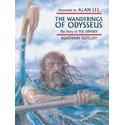
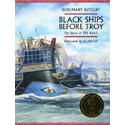
Last year we covered Greece and Rome in our homeschooling, so we looked at a number of books on the Illiad and the Odyssey. We were very pleased with the two books by Rosemary Sutcliffe,Black Ships Before Troy: The Story of The Iliad and The Wanderings of Odysseus: The Story of the Odyssey . Mrs. Sutcliffe retells the story well communicating the action, adventure and intrigue. Furthermore, Alan Lee’s illustrations are masterful resulting in two very compelling books that make it easy to introduce children to these classic stories of western civilization. I enjoyed reading them simply for myself, and my boys would beg us not to stop reading.
Now two issues might come up concerning these stories. First, there is some female nudity in the illustrations. I think it occurs once. When using books with young boys, I think this is a legitimate concern. The illustration would probably be considered mild, but we were able simply not to show that picture to the boys and move on.
The second issue is that some wonder about teaching their children about pagan gods. We did not introduce discussion of Greek mythology until our boys were clearly grounded in the biblical view of God. Now this can be done easily by age four or five (not that they are ready for a degree in systematic theology, but they are clear that there is one true God, and know His basic attributes). Then, with a proper view of God in mind it was not problematic to encounter old stories about “the gods other people believed in.” We have regularly encountered people (in books) who held other views of God, and my boys readily discuss how their ideas conform to or fail to conform to Scripture. For example in reading Black Ships Before Troy we came to the section where Zeus descended to assist the Trojans. Then thinking everything well in hand, he turned aside to pressing matters in Egypt. Then, while he was not looking the tide of the battle turned so that Zeus discovered later, to his chagrin, that his side had lost! At this, my boys scoffed, commenting on how poor their gods are if they can be turned aside and be duped! This led to a great conversation about how the One True God is far superior to the various imagined gods men have conjured up. It is a great joy to see one’s young children see the deficiency of man made religion and in essence say with the Psalmist, “For all the gods of the peoples are worthless idols, but the LORD made the heavens” (96:5).

So we would highly recommend these two books. Penelope Lively has also written a companion volume retelling the Aeneid, In Search of a Homeland : The Story of the Aeneid . We have used it as well and would recommend it though it is not as good as Mrs. Sutcliffe’s books.

Luther on the Prosperity Gospel

For Christmas I received a copy of the excellent book, What Luther Says: A Practical In-Home Anthology for the Active Christian. This book is the result of some serious work! It contains over 1600 pages of selected passages from Luther’s writings arranged in topics alphabetically. This makes it a wonderful reference tool. You will probably see some Luther quotes coming soon! In fact here are two that jumped out to me as directly addressing the prosperity gospel. Some things never change- and the truth of the gospel is one of those!

If Only the Church Promised Men This World!
If Christ had the sort of kingdom and Gospel in which money were plentifully given and temporal, visible help were dispensed, men would promptly believe in His heaven. In fact, in that event another heaven would be required; for everybody would believe, and the present heaven would be entirely too small. With a sermon that promised plentifully to distribute gold and silver among the people, I would pledge the “conversion” of all the people in the world to Christianity. Since, however, the kingdom and Gospel of Christ give life eternal and teach at the same time that one must be willing to let oneself be dishonored, hated, caught, beaten, plagued, killed, no one wants to accept it, and our good God has room enough in heaven.

Outward Prosperity Paralyzes Spiritual Progress
Now that we have made the matters of the church attractive and famous and have drawn the spirit into the flesh, wealth, a tyrannical administration, impunity, outward peace, and a more than worldly pomp are called a good state of the church. For the devil saw and finally understood our spiritual prosperity; so he kept himself in check and attacked us from a different direction and is now triumphing to our terrible misfortune. And he who was defeated in war now rules in peace – in both instances certainly by God’s marvelous decree. Therefore St. Hilary has aptly and very truly said that it is the nature of the church to wax by adversities and inevitably to wane in prosperous times.