All my heart this night rejoices,
As I hear, far and near, sweetest angel voices;
“Christ is born,” their choirs are singing,
Till the air, everywhere, now their joy is ringing.For it dawns, the promised morrow
Of His birth, who the earth rescues from her sorrow.
God to wear our form descendeth;
Of His grace to our race here His Son He sendeth.
Yea, so truly for us careth,
That His Son, all we’ve done, as our offering beareth;
As our Lamb Who, dying for us,
Bears our load, and to God, doeth in peace restore us.
Hark! a voice from yonder manger,
Soft and sweet, doth entreat, “Flee from woe and danger;
Brethren, come; from all that grieves you
You are freed; all you need I will surely give you.”
Come, then, let us hasten yonder;
Here let all, great and small, kneel in awe and wonder,
Love Him Who with love is yearning;
Hail the star that from far bright with hope is burning.
Ye who pine in weary sadness,
Weep no more, for the door now is found of gladness.
Cling to Him, for He will guide you
Where no cross, pain or loss, can again betide you.
Hither come, ye poor and wretched:
Know His will is to fill every hand outstretch’d;
Here are riches without measure,
Here forget all regret, fill your hearts with treasure.
Bless’d Savior, let me find Thee!
Keep Thou me close to Thee, cast me not behind Thee!
Life of life, my heart Thou stillest,
Calm I rest on Thy breast, all this void Thou fillest.
Thee, dear Lord, with heed I’ll cherish;
Live to Thee and with Thee, dying, shall not perish;
But shall dwell with Thee for ever,
Far on high, in the joy that can alter never.
Forth today the Conqueror goeth,
Who the foe, sin and woe, death and hell, o’erthroweth.
God is man, man to deliver;
His dear Son now is one with our blood forever.
Shall we still dread God’s displeasure,
Who, to save, freely gave His most cherished Treasure?
To redeem us, He hath given
His own Son from the throne of His might in Heaven.
Should He who Himself imparted
Aught withhold from the fold, leave us broken hearted?
Should the Son of God not love us,
Who, to cheer sufferers here, left His throne above us?
If our bless’d Lord and Maker
Hated men, would He then be of flesh partaker?
If He in our woe delighted,
Would He bear all the care of our race benighted?
He becomes the Lamb that taketh
Sin away and for aye full atonement maketh.
For our life His own He tenders
And our race, by His grace, meet for glory renders. |

 . I have pasted only a portion below. I encourage you to go on to
 , Dietrich Bonheoffer- superb! Truly a classic. One of the best books on the Christian life
 , Jay Richards- good explanation of the value of capitalism and why it does not violate Christian principles. The author handles the bible and theology well. Good antidote for the soft Marxism creeping into churches today.
 , G K Chesterton (
 , James Spiegel- Great book! Bold, biblical thesis clearly made. This is a valuable book for evangelism as well. He argues that our desire to remain in sin prevents us from belief.
 , Bob Schultz- Excellent book on boyhood and growing toward manhood (See posts at Children’s Hour). The sequel,
  , is also good, though not as good as the first volume. A godly older construction worker giving manhood advice to young men- priceless.
 , Benjamin Merkle- A good biography of a significant character often lost to popular awareness today. The author handles the ancient texts and stories sympathetically. The part that brought it all together was the last main chapter describing Alfred’s reforms which really solidified his countries, the renewed pursuit of learning in service of piety. There are models here for rebuilding a culture in various settings, as well as for rebuilding a fallen church culture such as we have today. It was fascinating to see that Alfred was translating the Bible into the vernacular Anglo-Saxon years before Tyndale! He was working on the Psalms as part of the books that everyman needed and made it through the 1st fifty.
 , Robert Alter- very interesting. The first chapter and last few concluding pages were of most interest to me. The actual analysis of Melville, Hemingway, Faulkner and a few others was a bit tedious to me. The point of the influence of the KJV on American fiction writing is well made and quite interesting. Alter says American fiction has been more shaped by a canonical translation of the Bible than any other Western culture. Very interesting!
 , Rudolf Wentorf- translation and editing are poor but the story itself is still very compelling. This is another hero of the faith not well known today.
 , Henry Edmondson III- Really useful read. It is good for exposing the errors and wide implications of Dewey’s work. Also along the way the author uses a lot of good material from other sources on education. This makes this book a gold mine of quotes and useful info for speaking/writing on education.
 , Arnold Pent III (June)- A really good, challenging account of a family with 8 children who travelled the US singing and sharing scripture. Every family member could quote full chapters of the Bible and one could quote any verse in the New Testament. They never focused on memory work just read so much they eventually knew it. Also good word on exercise, fatherly leadership, home schooling.
 , Wendell Berry- Excellent! Powerful. This is the first collection of Berry essays I have read. I don’t think he takes seriously enough the effect of the fall on creation, but it is still very good and helpful. It has been good for my soul leading me into more wisdom as I saw reverberations of Ecclesiastes, Proverbs & Psalms.
 , trans. Seamus Heaney (audio)- This translation (especially read by the author in his Irish accent!) is very compelling. It was easy to get lost in places but much of value, with good themes of freedom, honor, Christianity.
 , Clive Hamilton [C. S. Lewis] (audio)- This one makes the list because it was particularly interesting to listen to these poems written by Lewis prior to his conversion and to hear how many of the themes which show up in his later works are already here. In the later works, he has discovered that the Gospel is the orienting truth of these themes.
 , Brandon O’Brien- Probably the most significant book I read this year on church matters. O’Brien is right in noting many strengths of the smaller church- internally and externally- and provides a vision for a missional (though I don’t think he used that word), small church which seeks to keep overhead low and plants other churches. I think this is the way forward. Highly recommended.
 , Leland Ryken- This book should be out any day now. I had the opportunity to read it in proofs, and it is very good.
 , A T Robertson- Brilliant! Some parts are dated now in regards to some Greek particulars but even those show his devotion to the details of the text and his awareness of the latest scholarship of the time. Most moving to me are the comments on preaching (e.g. on Broadus)
 , Constantine Campbell- Wonderful little book, the right size, the right price and the right tone. Best thing I have seen to encourage and help you to maintain Greek
 , Dorothy L. Sayers (audio)- The first Sayers novel I have read. A very fun story, with interesting side points on culture and even Christianity.
 , Marilynne Robinson- A powerful, poignant novel which I described as Wendell Berry with more theology. Since it is told in the first person of the main character who is a pastor, it also becomes a good portrait of pastoral ministry. It deals with family, the value of being rooted in a specific place and the brevity of life.
 , David Downing- This was a fun book- a fictional account of an American researcher encountering C. S. Lewis, J. R. R. Tolkien, and Charles Williams, uncovering a plot and discovering an ancient artifact connected to the tales which so interested the Inklings. It was not a truly great story but a good one providing a helpful introduction to the thought of Lewis, Williams and Tolkien. The strength of the author is that I came away feeling like I had met these three men.
 )- slow in places, but strong in many others; a record of faithfulness in persecutions, dealing with heresies, etc.
 – Good material on the value of work and of the Psalms
 , Bede- This was often slow, but helpful history.
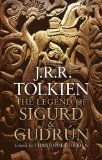
 , 7)
, 7)