O Shepherd, Where Art Thou?


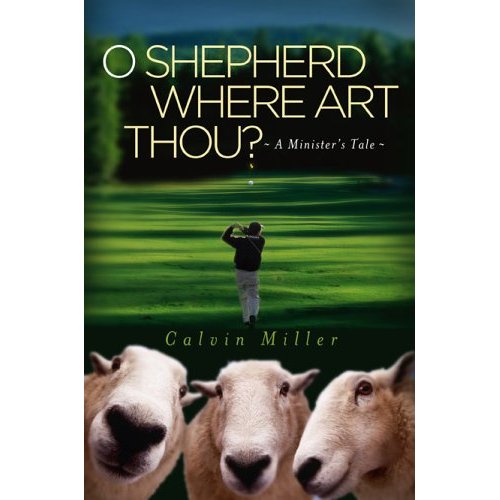
O Shepherd, Where Art Thou?, Calvin Miller
Broadman & Holman, 2006

I am writing a review of this book for the Southern Baptist Journal of Theology so in fairness, I cannot write a full review here. Let me just say that this is a very valuable book on pastoral ministry, a tract for our time. There are things I would say differently, a place or two which concerned me, but overall this is an excellent book. If every pastor would read it and heed it, we would be much better off. It is a short, easy read as well so many might read this when they would not read other things.

In typical Miller story-telling fashion he lampoons a common view of success in pastoral ministry (gathering more and more people into your service) and argues that pastoral care is an essential part of pastoral ministry. He focuses on hospital visitation, but the principle points to the larger issue of the oversight of souls, keeping up with each of those under our care a ministering to them as individuals. Readers of this blog will know that this resonates with the key theme of what is written here. Get a copy for yourself, and give copies to other pastors. It would make a great gift for pastors this Christmas.

Resource for Fathers


I am convinced that one key thing for pastors to do is to encourage fathers to take up their proper role of shepherding their families, discipling their children, etc. This is so foreign in our typical context but is clear in the Scripture as well as in the history of the church. Reclaiming this role of fathers is essential for achieving health in the church. This is a big subject, but my point here is simply to introduce a book that will be helpful in encouraging fathers in this direction. This is not a book that directly speaks to fathers on this issue. Rather it is a book that fathers can read to their children, particularly sons.

I am referring to the Crown and Covenant Series published by P&R. I have posted a review of the first volume in this trilogy over at my blog on children’s books. I will not repeat the review here, but simply suggest that these would be great books for pastors to urge the fathers in their churches to read to their sons. Sons will enjoy it and fathers, if they even barely pay attention, will be encouraged and convicted by the father in the book. The father in the stories, Sandy M’Kethe, takes seriously his role in discipling his children, leading his family, teaching them in word and example, etc. If you can encourage your fathers to read these books to their sons, you will accomplish much. Simply reading to their children is one good thing. Secondly, as they enjoy time together they will see a good example. Third, as the story wrestles with significant theological issues you may get them thinking on such topics as well.

Lastly, the books are best suited for children no younger than six. They are actually aimed children even a bit older than that. The review can guide you further.

Duncan’s War, A Story of the Covenanters

Duncan’s War, Douglas Bond
Volume 1 in the Crown & Covenant Series
(P&R, 2002)

This is one of the best books we have ever read. That is saying a lot, but it is true. It is similar in strengths to the “Martin and Boudewyn books” (as we call them), but surpasses them. It has adventure, intrigue, humor and strong Christian figures.

The story is set in 17th century Scotland, the time when the Covenanters were being persecuted by King Charles. This is a significant time in the history of the Church but one that in my experience few American evangelicals are aware of. I became aware of it while we were in Scotland and have benefited deeply from reading about it. Thus, it was a joy to be able to introduce my boys to it early in their lives.

The story revolves around rising persecution and how the M’Kethe’s, a faithful, Covenanting family, will respond. This, however, is no one sided story. Bond is clear in his affinity for the Covenanters but also portrays hotheads on that side. Duncan, the main character, is a young boy who keeps the family sheep and dreams of glory in battle defending the rights of Christ and Covenant. His father, however, seeks to temper his son’s enthusiasm by holding firmly to the necessity to honor the King and to seek peace. One of the most compelling elements of the book is how Duncan’s father seeks to be completely faithful to the Scriptures in all situations eschewing hotheaded vengeance but reluctantly taking up the sword when necessary to defend his neighbors and family. When he finally does fight, he explains to Duncan that they do so in obedience to the command to love their neighbors. He loves his neighbor by fighting to rescue and elderly main from the torture of the Redcoats and by keeping those same Redcoats from committing grievous sin for which they would have to answer to God some day. A powerful, faithful and very sensible just war theory arises from the discussion- not in an abstract philosophical manner but in a very concrete way. This is a great thing for young boys. Young boys have a natural affinity for conflict, and that is not all bad. However too many other things either encourage this uncritically or condemn it outright. This book teaches them to wrestle with the Scriptures desiring obedience over all else. It teaches faithfulness despite all, the willingness to suffer and the clear rightness of defending others.

The story eventually leads to the historical battle at Rullion Green. One of the great aspects of the book is how Bond so naturally weaves his fictional characters into real events and into encounters with key figures of the day. The horror of battle is not downplayed. Duncan then becomes an example of real grit and courage in risking all to save his father. With the battle and subsequent hangings, this is not light stuff. The books are advertised as being for ages 10 to 14. My boys at ages 6, 8, & 10 loved it, but I did edit a bit. Bond is never gratuitous but he is dealing with persecution.

There is so much that could be said, but I will mention two others. One of the explicit points that Bond raises through the characters is why God allows the righteous to suffer. Duncan wrestles with why God allows the Covenanters to be persecuted and then why God would allow them to lose the battle. Why does God then allow godly men to be hanged by their persecutors. His interaction with his father on this topic is very helpful. With this topic and others we had a book that my boys loved which also raised significant topics of conversation for us. More than once during our reading and since I have been able to use events form the book as examples for instruction and exhortation.

Lastly, as I have alluded, Duncan’s father- Sandy M’Kethe- is one of the most powerful compelling features of the book. Here we have not simply an example of a strong, Christian man, but more specifically a father. Duncan’s hero is his Dad. Duncan’s best example of faithfulness, his key source of biblical instruction is his Dad. When Duncan is not sure what to do, he ponders what his Dad would do or say. When tempted with sin he worries about disappointing his Dad. This is excellent stuff both for encouraging sons to look to their father and in encouraging Dads to be this sort of man for their sons. Sandy M’Kethe is not perfect. He is open about his fears and deals honestly with his failures. He leads his family by teaching them the Scriptures and leading them in singing the Psalms. Fathers, read this book to your sons for your benefit as well as theirs.

This is probably more of a boys’ book. I would recommend it strongly for any family with boys. It would make a great gift to encourage boys and fathers.
ESV Reverse Interlinear


ESV Reverse Interlinear

The actual title of this book is The English-Greek Interlinear New Testament, English Standard Version. Most people, for obvious reasons, do not use the full title. 🙂

While carrying this book down the hall I was stopped by a colleague who practically exclaimed, “What are you doing with an interlinear?!” Greek professors are not supposed to affirm interlinears. I am sure this is somewhere written in the Greek professor equivalent of the Hippocratic oath. And, up to this time I have never found an interlinear that I thought much of. I picked one up as a student but found it to be of little help.

Thus, I was a bit skeptical when approaching this book. I had heard good things though so I wanted to see what it was like. I found myself not just pleasantly surprised, but amazed. This is truly a helpful volume.

One of the problems with typical interlinears is the English is so wooden that it is of little help with the result that you really only have a cluttered Greek text. The reverse feature helps this by starting with an English translation and arranging the Greek text according to the English. I knew this feature but was skeptical about the fact that the Greek word order would be lost. However, each Greek word is numbered so that you can easily see what the Greek word order is. Also where more than one English word is required to translate a Greek word, it is clearly noted what Greek word these English words are derived from. Each Greek word is also parsed. More features could be discussed, but in short I am really impressed with all that has been done to provide access from the English into the actual Greek text. This is a significant work.

I think this will be a great tool for various sorts of people. People who do not know Greek but want to can use this New Testament and dip into Greek as they have the opportunity. I have already recommended this to a doctor friend who simply out of personal interest took a crash course in Greek. This New Testament provides a good way to begin or maintain some element of contact with Greek. In the same way it can be a useful tool for first year students. Of course, it could provide a temptation for first year students to cheat on parsing exercises but laziness already has enough outlets so that this book does not seriously increase the temptation.

Also, since I am writing for pastors, this could provide the much needed opportunity for many to refresh some Greek skill. This tool would allow you to do as much or as little as you could in any given week. I think one major obstacle many pastors face in trying to refresh is the feeling that you have to jump all the way in. Thus, you begin to feel like there is no point in trying. Perhaps this tool can alleviate that fear and get some past that obstacle. If so, then this will have been a very useful tool.

Finally, the Preface by John Schwandt is very good on how and why knowledge of Greek is helpful. He does a great job of dispelling shallow reasons some times given for studying Greek and arguments against such study. This essay is one of the best on this topic that I have read.

Suffering and the Sovereignty of God, review

Suffering and the Sovereignty of God , ed. John Piper and Justin Taylor
(Crossway, 2006), pb. 256 pp.

I have not read this book all the way through, but I am very impressed with it so far. I think this will be a very useful resource for dealing with suffering and for helping, pastoring those who are suffering.

The book, as many of you will know, grew out of the 2005 Desiring God National Conference. I was taken with the introduction written by Justin Taylor. He stresses the point that this is not a book of abstracts ideas, but is a book of applied theology. This book is not the final word on suffering (as if there could be such a thing!), and it does not claim to be. I liked how Taylor presented the authors as “fellow pilgrims on the journey … friends who are taking the time to write to you about what God has taught them concerning his mysterious sovereignty in the midst of pain and suffering” (11). Overall, as I have dipped into various essays, the book stresses the importance of a confidence in the sovereign control of God over all things in helping us to persevere through pain and suffering. At the same time, various people also remind us that a good theology does not remove the pain. There is the temptation to think that if we have our doctrine arranged correctly, suffering will not hurt so much. The authors make it clear that this is not their claim. In fact, they remind us, to suggest that right theology will minimize suffering is to err considerably and to fail to love others by teaching them error. The sovereignty of God is not a talisman to ward off suffering, but is an anchor to stabilize us as we go through suffering. This is imminently helpful and practical material for us pastors.

The table of contents is viewable at Amazon, so I will not bother with listing the contributors and essay titles. One essay that I especially appreciated was Stephen Saint’s “Sovereignty, Suffering, and the Work of Missions.” It read to me primarily like a personal account of how God has used suffering in his life. He first indicts us by pointing out what we consider suffering here in the US as compared to what many in other parts of the world consider suffering. This alone is a worthwhile reminder. It deals a lot with how we expend so much effort to avoid suffering. Of course we need not pursue pain, but his point is well taken. He goes on then to point out that “sufferers want to be ministered to by people who have suffered.” Our efforts to insulate ourselves essentially cut us off from ministering to people. I was impacted by this essay, his experience with his father, his daughter and his Waodoni friend moved me. I have found myself reflecting much on this essay at various levels, even beyond what Saint himself was aiming at I think.

So, this is a great resource which I recommend fully. I appreciate again what Taylor said in his introduction:

Our prayer is not that this book would make the bestseller list or receive acclaim or praise. Rather, our prayer is that God would direct the right readers- in accordance with his sovereign purposes- to its pages, and that he would change all of us so that we might experience more grace and hope.

Amen! And I think this book has been well prepared to achieve just this end.

Book Reviews Coming

Over the next few weeks I plan to post several book reviews. This will be more reviews at once than typical for me, but I will do this for two main reasons. One, this is the time in the year when I come across more new books. Second, it is also a time when people are typically considering books for presents so it seemed to me that it might be useful.

Shepherd Press Newsletter

I appreciate the work of Shepherd Press, and their regular newsletter is a good resource for thoughts on parenting and good books. Their best known book is probably Tedd Tripp’s Shepherding a Child’s Heart , which is a great book.

My point here though is their email newsletter. You can sign up here to receive it. Here is an excerpt, written by Tedd Tripp, from the most recent newsletter. Great exhortation and reminder.

Until your children have seen the glory of God in the face of Jesus Christ, until they have come to see that he is the Lily of the Valley, that he is the Bright and Morning Star, that he is the One who is altogether lovely;until they have seen and understood that it is worthwhile to divest of everything, that nothing in all the earth matters but knowing and loving Jesus, they will never know him and love him and serve him.They might play church. They might even be teen VBS helpers, or go on short-term mission’s trips, but until they are convinced that Christ is the treasure, they will never truly know him.

You cannot over-estimate the importance of showing your children the glory of God. If they do not know who God is, how God thinks,what God feels, and why he does what he does, they will have no grounds for finding joy in him, no reason to celebrate his abundant goodness and no basis for finding satisfaction in him. Delight in God cannot occur in an intellectual vacuum. Your careful display and demonstration of the wonders of God’s glorious being is crucial for your children. Joy in God is the fruit of what you know to be true of him. The spiritual heat of joy, delight, and wonder in the face of God cannot take place in a conceptual vacuum.

Wow! My purpose in this blog is to recommend books we find helpful in pursuing this goal, though this from Tripp reminds me of how far we are from meeting this goal.

Shepherd Press Newsletter

I appreciate the work of Shepherd Press, and their regular newsletter is a good resource. They produce a number of good books primarily on family life. Their best known book is probably Tedd Tripp’s Shepherding a Child’s Heart , which is a great book.

My point here though is their email newsletter. You can sign up here to receive it. Here is an excerpt, written by Tedd Tripp, from the most recent newsletter. Great exhortation and reminder.

Until your children have seen the glory of God in the face of Jesus Christ, until they have come to see that he is the Lily of the Valley, that he is the Bright and Morning Star, that he is the One who is altogether lovely;until they have seen and understood that it is worthwhile to divest of everything, that nothing in all the earth matters but knowing and loving Jesus, they will never know him and love him and serve him.They might play church. They might even be teen VBS helpers, or go on short-term mission’s trips, but until they are convinced that Christ is the treasure, they will never truly know him.

You cannot over-estimate the importance of showing your children the glory of God. If they do not know who God is, how God thinks,what God feels, and why he does what he does, they will have no grounds for finding joy in him, no reason to celebrate his abundant goodness and no basis for finding satisfaction in him. Delight in God cannot occur in an intellectual vacuum. Your careful display and demonstration of the wonders of God’s glorious being is crucial for your children. Joy in God is the fruit of what you know to be true of him. The spiritual heat of joy, delight, and wonder in the face of God cannot take place in a conceptual vacuum.

Wow! My purpose in my children’s literature blog, The Children’s Hour, is to recommend books we find helpful in pursuing this goal, though this from Tripp reminds me of how far we are from meeting this goal.

A Hymn for Thanksgiving

As we begin our Thanksgiving, let me share this hymn. It is good for us to give thanks to God for all things, but we must take care that we not sound as if we are really worshipping the idol Materialism. In other words, while we thank God for things, we have much to thank God for if we lose all we can see or touch. This Watts hymn moves me and reminds me to cry out in deep thanksgiving to God for saving my soul. Verses three and four especially drive this point home. As I gather with my family and friends today, I want to thank God for salvation and then, as in this hymn, let my thanksgiving overflow in prayer for the salvation of the nations.

How Sweet and Awesome is this Place
By Isaac Watts (you can hear the tune here)

How sweet and awesome is this place
With Christ within the doors,
While everlasting love displays
The choicest of her stores!

Here every bowel of our God
With soft compassion rolls;
Here peace and pardon bought with blood
Is food for dying souls.

While all our hearts and all our songs
Join to admire the feast,
Each of us cry, with thankful tongues,
“Lord, why was I a guest?

“Why was I made to hear
Thy voice, And enter while there’s room,
When thousands make a wretched choice,
And rather starve than come?”

“Twas the same love that spread the feast
That sweetly drew us in;
Else we had still refused to taste,
And perished in our sin.

Pity the nations, O our God!
Constrain the earth to come;
Send Thy victorious Word abroad,
And bring the strangers home.

We long to see Thy churches full,
That all the chosen race
May with one voice, and heart and soul,
Sing Thy redeeming grace.

The Christian Counselor’s Commentary, I Timothy, II Timothy, Titus

The Christian Counselor’s Commentary, I Timothy, II Timothy, Titus,
by Jay E. Adams
(Timeless Texts, 1994)

I was very intrigued with this book when I saw it advertised. I am no expert on Jay Adams, but I know that he has stressed a reliance on the Bible in addressing the issues of life and the place of the church in life transformation. With those themes I resonate, so I was interested to discover what he was doing in this book.

This book is part of a series in which Adams is commenting on the entire New Testament. The goal is not to produce a standard commentary but to comment on the text as it relates directly to the work of counseling believers. It is necessary to understand what Adams means by “counseling.” He means something quite different from what many of us might think. In essence, I think he means discipleship. He envisions individual pastoral work where one helps a believer face sin and change. This is the regular work of the pastor. Coming to the Bible with the question of how we do this sort of work is a very important task. Simply as an example, this is a helpful book. It is too easy to simply find things to “preach” about or to remain at an ethereal level, but we must also consider how we get our hands dirty in the helping address the messiness of lives.

I would recommend this book. There are places where I would differ with the exegesis (smaller issues) or where the discussion is unaware of more recent scholarship, etc., but the book does a good job in accomplishing its stated goal. I think this would be a helpful book for pastors both in helping us think through how we do our “house to house teaching” and simply in thinking about application to make as we preach these texts.