Joy to the World, by Scott Hahn

joy to the world hahn Joy to the World: How Christ’s Coming Changed Everything (And Still Does), Scott Hahn
(Image, 2014), hb. 175 pp.

I really enjoyed this book where Scott Hahn expounds key texts related to the Christmas story. Hahn writes for a popular audience and provides clear exposition. Of course, in places his Catholic take on things (e.g., perpetual virginity of Mary) leads to places where I have serious disagreement, but overall this is an engaging and helpful book.

Hahn argues for the importance of the idea of family in the Christmas story and the entire flow of Scripture- “There is a family dimension to all the saving mysteries” (7). Specifically related to Christmas, Hahn writes:

“The Christmas story has an unconventional hero- not a warrior, not a worldly conqueror, not an individual at all, but rather a family” (8).
“When God came to save us, he made salvation inseparable from family life, manifest in family life” (9).

In contrast, “The evil king Herod is clearly anti-family, anti-child- murdering Bethlehem’s offspring, devouring them” (9).

Hahn is at his best connecting biblical texts, showing parallels to the OT story, historical background data and providing salient comments from authors in the ancient church. He argues throughout the ongoing impact of the Christmas event. “What happened in Bethlehem didn’t stay in Bethlehem. It changed the world. It changed history. It changed the very structure of the cosmos” (91).

I think he is right also in his closing call to evangelism through joy.

“We evangelize when we … enjoy celebrating the feasts- when we have ourselves a merry little Christmas, and invite others to share it. That’s the best way to evangelize friends, family, coworkers, and everybody else. Why? Because the world offers countless pleasures, but no lasting joys. What Jesus Christ gives is joy, even in the midst of hardship and sorrow- even amid persecution, flight, and exile” (166).

Amen.

Mary Didn’t Know

Stained glass depicting the Virgin Mary holding baby JesusThere have been a flood of memes and other comments this year mocking the popular song, “Mary Did You Know?” “Yes, Mary knew!”, they proclaim, typically pointing to Luke 1 where Gabriel tells her that the child born to her “will be called holy- the Son of God.” I don’t feel the need to defend every pop Christmas song, but I think, in this case, the song deserves more careful consideration.

Yes, Mary was told that her son would be the Son of God. She undoubtedly understood the angel’s point that her son would be the Messiah. But, how did she understand these words “Son of God” and “Messiah”? If she was like the best of her contemporaries, she did not grasp the fullness of these truths prior to the resurrection. Peter and John believed Jesus was the Messiah, but they did not grasp all this meant. The Messiah was not expected to be divine, and “Son of God” could be understood in the first century in terms much lower than “Eternal Second Person of the Godhead.” By all accounts Mary believed what she was told, but she would only come to understand the fullness of what she was told in time, especially after the Resurrection.

We must bear in mind Mark 3 as well. Verse 21 tells us that after Jesus called his twelve apostles and launched his public ministry, “his family … went out to seize him, for they were saying, ‘He is out of his mind.’”  His “family” here is then described as his mother and brothers in verse 31. Mary, apparently, did not understand all that Jesus was doing. This is not surprising. Jewish Messianic expectation was diverse and did not grasp all that Jesus eventually did. They saw in a glass darkly. Mary, even with what she was told, even as she stored up these things in her heart and pondered on them, was surprised- even as we all are! This is part of the wonder of Christmas, that God colored outside our lines, blew away even our wildest expectations and did something grander than our wildest imaginations. He did not merely send a new David- a mighty, yet fallen leader; instead He came himself to walk among us.

So, no, Mary did not know that her baby boy would walk on water, give sight to a blind man, calm a storm with his hand. She knew he would save his people but it doesn’t seem that she knew the full significance of this. She knew he was the “Son of God,” but without full awareness of what this meant, I don’t think she knew that as she kissed him, she kissed the face of God. She didn’t know the sleeping child she was holding was in fact the great I Am. She did not yet fully grasp his role as heaven’s perfect Lamb.

So, we do right to think carefully about the songs that come along, but we need not be unnecessarily critical. We ought to let this song remind us of the wonder of the Incarnation that surpassed all those before us could have asked or thought. Gobsmacked awe is the appropriate response to the Incarnation.

Merry Christmas to you all as we worship in wonder and awe at the incarnate Deity.

Professor Howard Marshall

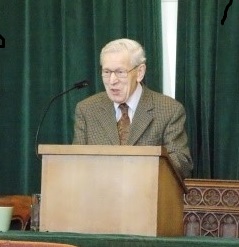
IHM christmas letterAs has now been widely reported, I Howard Marshall, Emeritus Professor of New Testament at Aberdeen University, passed away this weekend.

I had the privilege of studying with Howard doing my doctoral work from 1998-2001. Howard was always clear that no one studied “under” him but “with” him. He corrected my use of prepositions early on. He also insisted that he be called, simply, Howard. In the biographical sketch of Howard which I wrote for his most recent festschrift, I related the humorous manner in which he finally convinced me- against my Southern upbringing- to adopt this practice.

In correspondence over the weekend, my friend J Hering, related a story which illustrates the experience of many who studied in Aberdeen, whether directly with Howard or not. For his research J needed a 40-50 year old unpublished German thesis which he had not been able to locate through the major libraries. J relates:

“When Prof. Marshall one day asked me how my research was coming along, I related to him that I had stalled, due to the unavailability of this single thesis. He just smiled. He had a copy in his personal library. Incredible. I soon learned that there were very few German NT works that he had not read.”

J went on to reflect on Howard’s love for us- “He really looked out for us.” Howard was not J’s supervisor, but he took an interest in helping all of us.

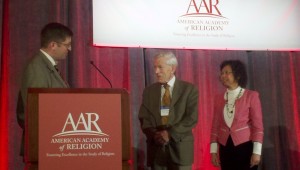
IHM fss presentationThe Gospel Coalition posted tributes to Howard from myself and from Darrell Bock.

Howard’s voluminous writing is often commented on. Here is the bibliography from the festschrift with some updates:
I H Marshall Bibliography
Here are four other tributes which I found and appreciated:

Mark Goodacre: http://ntweblog.blogspot.com/2015/12/i-howard-marshall-1934-2015.html

Michael Bird: http://www.patheos.com/blogs/euangelion/2015/12/i-howard-marshall-1934-2015/

Stan Porter: http://domainthirtythree.com/2015/12/12/a-brief-tribute-to-i-howard-marshall/

Chuck Bumgardner: https://cbumgardner.wordpress.com/2015/12/12/i-howard-marshall/

Mark Goodacre’s post includes this Youtube clip of a young Marshall defending historicity of Jesus’s teaching in New Testament– vintage Howard.

Carl Trueman’s interview of Howard in Themelios in 2000 (cited in my tribute) shows much of the heart of the man: https://t.co/ck32zmEK2l


CREATOR OF THE STARS OF NIGHT

For this first week of Advent, my poem of the week is this wonderful 7th century hymn that I have only recently come across. I hope you enjoy it as I have.

Creator of the stars of night,
Thy people’s everlasting light,
Jesu, Redeemer, save us all,
And hear Thy servants when they call.

Thou, grieving that the ancient curse
Should doom to death a universe,
Hast found the medicine, full of grace,
To save and heal a ruined race.

Thou cam’st, the Bridegroom of the bride,
As drew the world to evening-tide;
Proceeding from a virgin shrine,
The spotless victim all divine.

At whose dread name, majestic now,
All knees must bend, all hearts must bow;
And things celestial Thee shall own,
And things terrestrial, Lord alone.

O Thou whose coming is with dread
To judge and doom the quick and dead,
Preserve us, while we dwell below,
From every insult of the foe.

To God the Father, God the Son,
And God the Spirit, Three in One,
Laud, honor, might, and glory be
From age to age eternally.

–          Unknown author, 7th Century (Conditor alme siderum); translated from Latin to English by John M. Neale in the Hymnal Noted, 1852

Pastoral Care at the Hospital and in Times of Loss

Recently I was asked to speak to a class in our Worship Leadership program on pastoral care issues, specifically hospital visitation and bereavement.  The professor rightly wanted these students to be prepared to participate in this work of pastoral care.

Below are my notes in bullet form for some key, basic thoughts on this realm of ministry. I also encouraged them to see several books by Brian Croft and others which are listed at the end.

Hospital Visits

  1. Go! Too many people just avoid this area of care because it makes them uncomfortable or they are unsure of what to do. This is inexcusable. We must be there to help care for people in their difficult times
  2. Be brief. They want to see you but you do not need to stay long. This is especially true the more pain or discomfort they are in or the less lucid they are. There will be times when you need to stay longer, but in general a 5 minute visit is great.
  3. Ask how they are doing and listen. Updates on their status will help you know how to pray and how to inform others or to set up support in ways needed. Primarily though the gift of your listening is the key here. In general people tend to have a deficit in the area of being listened to. This is particularly a need when you are unwell.
  4. Share scripture. Again, not long, but bring the Word of God. It may be a verse or two. Begin collecting suitable passages. Biblical benedictions are a good source since they are prayers for gospel grace. The Psalms are also a great source.
  5. Pray. It should be rare indeed for you to visit someone in the hospital without praying with them. You need not be complex in your prayer but lift them to the Lord asking for healing, comfort, and grace.
  6. Take a card. Always be prepared to leave a note if they are out or are asleep. You want to let them know you were there. Just state you came by, sorry to have missed them, praying for you. You might include a verse.

Bereavement

  1. Your presence is the main thing. Be there.
  2. Don’t feel like you have to say something. This is not the time to provide theological analysis. That day will likely come, but not now.
  3. Pray.
  4. Look for ways to meet (or mobilize the church to meet) physical needs. Do they have a funeral home? Do they have a funeral plan? You should familiarize yourself with area funeral homes, phone numbers, what services they provide, etc. Who’s bringing meals? What can the church do?
  5. This will often be the place for a longer visit, as you just remain around as others come and go. You may need to be on hand for a while.

Brian Croft, Visit the Sick: Ministering God’s Grace in Times of Illness

Brian Croft & Phil Newton, Conduct Gospel-Centered Funerals: Applying the Gospel at the Unique Challenges of Death

Brian Croft & Austin Walker, Caring for Widows

“The Church’s One Foundation”

My poem of the week this week is this great hymn. Even those who know it (a shrinking number among my students) often have seen all the verses. The hymn provides a helpful meditation on the church, her struggles and her solid Hope.

“The Church’s One Foundation”

The Church’s one foundation
Is Jesus Christ her Lord,
She is His new creation
By water and the Word.
From heaven He came and sought her
To be His holy bride;
With His own blood He bought her
And for her life He died.

Elect from every nation,
Yet one o’er all the earth;
Her charter of salvation,
One Lord, one faith, one birth;
One holy Name she blesses,
Partakes one holy food,
And to one hope she presses,
With every grace endued.

The Church shall never perish!
Her dear Lord to defend,
To guide, sustain, and cherish,
Is with her to the end:
Though there be those who hate her,
And false sons in her pale,
Against both foe or traitor
She ever shall prevail.

Though with a scornful wonder
Men see her sore oppressed,
By schisms rent asunder,
By heresies distressed:
Yet saints their watch are keeping,
Their cry goes up, “How long?”
And soon the night of weeping
Shall be the morn of song!

’Mid toil and tribulation,
And tumult of her war,
She waits the consummation
Of peace forevermore;
Till, with the vision glorious,
Her longing eyes are blest,
And the great Church victorious
Shall be the Church at rest.

Yet she on earth hath union
With God the Three in One,
And mystic sweet communion
With those whose rest is won,
With all her sons and daughters
Who, by the Master’s hand
Led through the deathly waters,
Repose in Eden land.

O happy ones and holy!
Lord, give us grace that we
Like them, the meek and lowly,
On high may dwell with Thee:
There, past the border mountains,
Where in sweet vales the Bride
With Thee by living fountains
Forever shall abide!

Words: Sam­uel J. Stone, Lyra Fi­del­i­um; Twelve Hymns of the Twelve Ar­ti­cles of the Apos­tle’s Creed (Lon­don: Messrs. Park­er and Co., 1866).

O, How We Need the Public Reading of Scripture

I am deeply enjoying Cry, the Beloved Country by Alan Paton now that I am finally reading it. Or, rather, I am listening to it. I can’t help but think that listening to Michael York read this book is the best way to savor it.

One scene is particularly riveting and gives a moving picture of how the public reading of Scripture should be done. The main character, Kumalo, who is a priest, is deeply distressed and downcast, but is attending a worship service. Then, another priest rises and reads Scripture to the gathered congregation. Paton describes the reading in this way:

“the voice was of gold, and the voice had love for the words it was reading. The voice shook and beat and trembled, not as the voice of an old man shakes and beats and trembles, not as a leaf shakes and beats and trembles, but as a deep bell when it is struck. For it was not only a voice of gold, but it was the voice of a man whose heart was golden, reading from a book of golden words. And the people were silent, and Kumalo was silent, for when are three such things found in one place together? …

“And the voice rose, and the Zulu tongue was lifted and transfigured, and the man too was lifted, as is one who comes to something that is greater than any of us.”

Too often, in various Christian groups including Baptists, the public reading of Scripture is overlooked, not practiced, or done perfunctorily. Paul told Timothy to “give attention to” or “devote himself to” the public reading of Scripture (1 Timothy 4:13). We seem to have forgotten this and, as a result, neglect a powerful means of grace.

O, how we need public reading of Scripture in our gathered worship like that described in Paton’s novel! Where golden words are read by one who loves those words and has been impacted by those words- careful, deliberate, passionate reading of words which have entered deep into the soul of the reader and therefore come from his mouth with care, with reverence for them and with longing for others to hear and receive them. May we, thus, read the Scriptures to our people and train others to do so.

For All the Saints

My poem of the week this week is William How’s magnificent hymn, “For All the Saints.” Sung to Ralph Vaughan Williams majestic tune, “Sine Nomine”- particularly with a good pipe organ- this is one of my favorites- a grand tune reminding us of the great cloud of witnesses about us. I rarely can get through the last verse without choking up. Following the preceding verses it is a powerful reminder to me that I am a part of a great host from across time who have found God faithful.

I have never heard all the verses sung, but they are all worth reading.

For all the saints, who from their labors rest,
Who Thee by faith before the world confessed,
Thy Name, O Jesus, be forever blessed.
Alleluia, Alleluia!

Thou wast their Rock, their Fortress and their Might;
Thou, Lord, their Captain in the well fought fight;
Thou, in the darkness drear, their one true Light.
Alleluia, Alleluia!

For the Apostles’ glorious company,
Who bearing forth the Cross o’er land and sea,
Shook all the mighty world, we sing to Thee:
Alleluia, Alleluia!

For the Evangelists, by whose blest word,
Like fourfold streams, the garden of the Lord,
Is fair and fruitful, be Thy Name adored.
Alleluia, Alleluia!

For Martyrs, who with rapture kindled eye,
Saw the bright crown descending from the sky,
And seeing, grasped it, Thee we glorify.
Alleluia, Alleluia!

O blest communion, fellowship divine!
We feebly struggle, they in glory shine;
All are one in Thee, for all are Thine.
Alleluia, Alleluia!

O may Thy soldiers, faithful, true and bold,
Fight as the saints who nobly fought of old,
And win with them the victor’s crown of gold.
Alleluia, Alleluia!

And when the strife is fierce, the warfare long,
Steals on the ear the distant triumph song,
And hearts are brave, again, and arms are strong.
Alleluia, Alleluia!

The golden evening brightens in the west;
Soon, soon to faithful warriors comes their rest;
Sweet is the calm of paradise the blessed.
Alleluia, Alleluia!

But lo! there breaks a yet more glorious day;
The saints triumphant rise in bright array;
The King of glory passes on His way.
Alleluia, Alleluia!

From earth’s wide bounds, from ocean’s farthest coast,
Through gates of pearl streams in the countless host,
And singing to Father, Son and Holy Ghost:
Alleluia, Alleluia!

Words: William W. How, in Hymns for Saint’s Days, and Other Hymns, by Earl Nel­son, 1864.


You Should Celebrate the Reformation

There are so many reasons for people to celebrate the Reformation, and every year at this time I try to point out some facet of the impact of this great event.

This year I am pleased to announce that the Ryan Center for Biblical Studies at Union University is planning REF500, a festival celebrating the 500th anniversary of the Reformation to be held March 9-11, 2017. The event is still about 16 months away but we’ve already been working on it for a couple of years, and today we officially launch the event website. We will examine the impact of the Reformation on life as we know it across the wide spectrum of life with lectures from Union faculty from various disciplines and plenary lectures from Timothy George, Carl Trueman, Peter Leithart and David Lyle Jeffrey. In addition we will have a musical performance, theater, and a film showing all related to the Reformation.

Here is my brief attempt to highlight why we should celebrate the Reformation.

Justin Wainscott on the Importance of the Reformation

This past Sunday many church celebrated Reformation Sunday as we near Reformation Day, Oct 31, the anniversary of the day Martin Luther posted his 95 theses to the church door in Wittenberg, sparking the Protestant Reformation.

Justin Wainscott, pastor of First Baptist Church in Jackson, TN, passionately explained the importance of the Reformation in terms of our access to the Bible today. May we be good stewards of such a privilege.

Posted by Ref500 on Monday, October 26, 2015