“But there is a danger in our desire to do big things for God, for our pursuit of success dovetails with a powerful American temptation: the appeal of celebrity. These days, obscurity is the worst kind of failure. When we do something significant, we expect to be rewarded with popularity.” (Brandon O’Brien, The Strategically Small Church,
27)
“How can you believe, when you receive glory from one another and do not seek the glory that comes from the only God?” (Jesus, John 5:44)
A.T. Robertson on Sermon Preparation
“It is not too much to say that, however loyal laymen are to the pulpit, they yet consider it a piece of presumption for the preacher to take up the time of the audience with ill-digested thoughts.”
– A. T. Robertson, “Grammar in Preaching”, in The Minister and His Greek New Testament
, 81)
Doug Wilson on Relevance
Relevance is a big topic in the church these days. Of course we ought to be relevant, but the issue is how such relevance is defined. Doug Wilson in his A Primer on Worship and Reformation
“There are at least two kinds of irrelevance. One is the irrelevance of offering a bicycle to an oyster. But there is another kind of irrelevance entirely, and that is the practice of setting forth the gospel of light and righteousness to those who love their darkness and iniquity. We are commanded to be irrelevant in this second sense. We are called to worship God in a way that is pleasing to Him, and to which unbelievers will be attracted only if God moves them in a sovereign and mysterious way.” (13)
Tozer on Slowing Down for Cultivation of the Soul
This analysis by Tozer in his day is no less true in ours. The acceptance of trite entertainment and showmanship in church is surely the result of a shallowness that has resulted from frenetic activity.
The idea of cultivation and exercise, so dear to the saints of old, has now no place in our total religious picture. It is too slow, too common. We now demand glamour and fast flowing dramatic action. A generation of Christians reared among push buttons and automatic machines is impatient of slower and less direct methods of reaching their goals. We have been trying to apply machine-age methods to our relations with God.”
The tragic results of this spirit are all about us. Shallow lives, hollow religious philosophies, the preponderance of the element of fun in gospel meetings, the glorification of men, trust in religious externalities, quasi-religious fellowships, salesmanship methods, the mistaking of dynamic personality for the power of the Spirit: these and such as these are the symptoms of an evil disease, a deep and serious malady of the soul. (The Pursuit of God
)
“Be still and know that I am God” (Psalm 46:10)
A. T. Robertson on Imagination and Preaching
I have commented here from time to time on the value of proper imagination in interpreting and proclaiming Scripture. I was pleased today to come across a quote along this line from A. T. Robertson. Robertson was certainly not one to minimize close attention to the text. In fact this quote comes from his famous book urging pastors to use Greek and from a chapter on fine nuances of Greek negative particles! Robertson believed we ought to pay close attention to the particulars of Scripture and that we must be attuned to the realities of the human situation.
“Preachers become metaphysical hairsplitters in the explanation of a passage of Scripture because they fail to read between the lines and to visualize properly the atmosphere of the saying. The historical imagination is essential to correct interpretation and to effective preaching. The preacher who sees men as trees walking will speak to an audience that does not see them at all.”
(A.T. Robertson, The Minister and His Greek New Testament
Howard Marshall on Evangelical Certainty
“…where criticis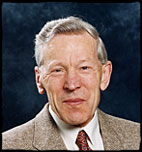 m takes place on the basis of anti-supernaturalist presuppositions and the teaching of scripture is assessed in terms of what modern, unbelieving western man is prepared to accept, again the evangelical will have no truck with it. The kind of ecumenism which tries to assure us that really we all believe the same things will not cut much ice here with evangelicals, for they know that without a clear acceptance of the supreme authority of scripture the gospel which they treasure is liable to be tossed to and fro and carried about by every wind of human teaching.”
I. H. Marshall. “The Young Christian and the ‘Liberal’ Pastor.” Expository Times 95 (1984): 367.
For you I am a bishop, with you, I am a Christian

Augustine’s sermon “On the Anniversary of His Ordination” (listed as Sermon 340) provides a beautiful portrait of pastoral ministry. I have included here several excerpts. The importance of the oversight of souls is clear in these comments. Here is a good blend of authority and humility. The people need their pastors and the pastors need their people. Prayer is needed from both. And, pastors are first and foremost members of the church along with everyone else.
“What, though, is to be dreaded in this office, if not that I may take more pleasure, which is so dangerous, in the honor shown me, than in what bear fruit in your salvation? Let me therefore have the assistance of your prayers, that the one who did not disdain to bear with me may also deign to bear my burden with me. When you pray like that, you are also praying for yourselves. This burden of mine, you see, about which I am now speaking, what else is it, after all, but you? Pray for strength for me, just as I pray that you may not be too heavy.” 292
“Where I’m terrified by what I am for you, I am given comfort by what I am with you. For you I am a bishop, with you, after all, I am a Christian. The first is the name of an office undertaken, the second a name of grace; that one means danger, this one salvation. Finally, as if in the open sea, I am being tossed about by the stormy activity involved in that one; but as I recall by whose blood I have been redeemed, I enter a safe harbor in the tranquil recollection of this one; and thus while toiling away at my own proper office, I take my rest in the marvelous benefit conferred on all of us in common.
So I hope the fact that I have been bought together with you gives me more pleasure than my having been placed at your head…” 292
“Make my ministry fruitful. . . . The turbulent have to be corrected, the faint-hearted cheered up, the weak supported; the gospel’s opponents need to be refuted, its insidious enemies guarded against; the unlearned need to be taught, the indolent stirred up, the argumentative checked; the proud must be put in their place, the desperate set on their feet, those engaged in quarrels reconciled; the need have to be helped, the oppressed to be liberated, the good to be given your backing, the bad to be tolerated; all must be loved.
In all the vast and varied activity involved in fulfilling such manifold responsibilities, please give me your help by both your prayers and your obedience. In this way I will find pleasure not so much in being in charge of you as in being of use to you.” 293
“Just as I, you see, have to give thought with great fear and anxiety to how I may blamelessly carry out my duties as bishop; so you for your part must make a point of showing a humble and eager obedience of everything that is commanded of you.
So let us pray together, dearly beloved, that my tenure as bishop may be of profit both to me and to you. It will profit me, if I tell you what has to be done; and you, if you do what you hear. You see, if we all pray tirelessly, I for you and you for me, with the perfect love of charity, we shall all happily attain, with the Lord’s help, to eternal bliss. May he be graciously pleased to grant us this, who lives and reigns forever and ever. Amen.” 294
(In The Works of Saint Augustine: a Translation for the 21st Century. Translation and notes by Edmund Hill. Edited by John E. Rotelle. 292-294. Brooklyn, NY: New City Press, 1990-1997)
Preach the Word as Though It Were Alive
This is a good exhortation from Doug Wilson as we prepare to preach the Word tomorrow.
Speaking of Heb 4:12-13, Wilson writes:
“…preachers need to learn to preach as though this is what is happening. First, we must handle the Word like a sword. And secondly, we must learn to handle the Word as though it were alive and has a mind of its own- because it does.” (from the chapter, “Thundering the Word,” in A Primer on Worship and Reformation
Prayer While Studying and Teaching
Howard Marshall, Preaching the Kingdom
“The message of the kingdom was good news, an announcement of what God is doing rather than of what man is required to do, although the latter is not exclude from the phrase. To preach the kingdom of God is to announce a divine action. This is of course thoroughly evangelical, and if we have possibly refrained from preaching about the kingdom because the phrase had been taken over and interpreted wrongly by the ‘Social Gospellers’, we ought to mount a take-over bid and restore the face value of this rich currency.”
– Howard Marshall, “Preaching the Kingdom of God,” Expository Times 89 (1977): 14-15