Best Reads of 2025

Each year I keep a list of the books I read all the way through, typically with brief notes, as a way of tracking my thoughts and a way to look back on each year and see some of what influenced me. So, in this post I have drawn from that list some of the best books I read this year with slightly edited versions of the notes I jotted down after reading them. These are only books that I read all the way through and do not involve commentaries and reference works I’ve used.

I selected a Top 10 from the books I read this year. These 10 aren’t listed in a particular order, and they made this list for various reasons ranging from sheer enjoyment to level to impact on me. Following the Top 10 are some more books I enjoyed reading this year (in no particular order) as well as some disappointing ones.

Top 10

  1. The Dawn of Redeeming Grace: Daily Devotions for Advent, Sinclair Ferguson- Excellent. I love this sort of book. Brief pieces allowing space to really ponder various aspects of a text. Really well done. Rich theologically, aware of scholarly issues in the text. Dependable and pastoral. I loved it.
  2. History Matters, David McCullough- Excellent! This is a collection of McCullough essays/speeches gathered posthumously, some of which had not been previously published. I enjoyed it very much.
  3. Riding with Reagan: From the White House to the Ranch, John R. Barletta- A beautiful book. I first heard of this book from its use in the Reagan movie. This is a touching portrait from a guy who got to know Reagen well after bonding with him over the shared love of horseback riding. The closing parts choked me up.
  4. The Bible Among the Myths, John Oswalt- very good, particular in arguing against the positive use of the word myth and using that word to describe the bible. Very good also on arguing that the Biblical religion is strikingly different from the surrounding religions in the OT, that the difference is greater than their similarities. His treatment of history is less clear to me, though I agree with the overall point. Very helpful.
  5. Men and Women in the Church: A Short, Biblical, Practical Introduction, Kevin DeYoung – very good! Good summary of most of the best arguments on key texts, and really well written pastoral application.
  6. Impossible Christianity: Why Following Jesus Does Not Mean You Have to Change the World, Be an Expert in Everything, Accept Spiritual Failure, and Feel Miserable Pretty Much All the Time, Kevin DeYoung- Very good. Treatment of the idea that we can never decently obey God but just keep at it. Speaks to the issue of why David can speak confidently in places of being right with God (which Paul does as well).
  7. Keep Your Kids: How to Raise Strong Kids in an Age of Therapeutic Sentimentalism,  Douglas Wilson- excellent. I wish many parents would read this book. I will give copies to my sons with children
  8. Jack Hinson’s One Man War: A Civil War Sniper, Thomas McKenney- A fascinating book with a true story from middle TN which I had never even heard of. The author did a lot of research to rescue this story and then wrote this in a wonderful way. The story parallels the Patriot movie in many ways. It is a story of revenge, which never ends well.
  9. The Bookseller of Inverness, S G Maclean- Very good! The author, I discovered, has a PhD in Scottish history from Aberdeen and lives in the Highlands. That makes sense! She brings the story to life and obviously knows the Jacobite history and the setting. Really well written. The story drew me right in, I enjoyed the characters and was drawn into the intrigue. (See a series by this author below).
  10. The Dancing Floor, John Buchan- As will be seen below, I decided this year to begin the straight read-through of Buchna’s novels which I have contemplated for years. This novel is one of the stories dealing with Ed Leithen, and one that I had not previously read. It developed a bit slowly but  was powerful in the end. Buchan didn’t write “Christian” novels but his latent Christian beliefs come through clearly as was typical in his time (late 19th to early 20th century). He is simply telling a good yarn, but along the way the main character regains the Christian faith he grew up with and finds starkly exposed the power of Christ over paganism and the shallowness of modern skepticism. Here we find a worldly-wise man confronted with the stark realities of the demonic and finding the only power sufficient to answer this is the risen Christ.

Buchan seems to be seeking to engage the skepticism of his day and to challenge it. This is seen also in some of the stories in Runagate’s Club. It comes to full bloom in Witchwood (which was a favorite of C S Lewis).

Theology/Bible/Christian Living

  1. Postliberal Protestants: Baptists Between Obergefell and Christian Nationalism, Hunter Baker- I really enjoyed and appreciated this one. It was timely and well argued. I think his thesis stands- Christians are put out with the traditional Baptist position of separation of church and state because of how that has been warped and this has opened the door for pining for a national church. But, history has shown this to be a dead-end road. We must maintain an independent, regenerate church even if that means we lose culturally. We must pursue discipleship not dominance. The only way to influence the populace is to proclaim the gospel and its ethical implications praying for people to be persuaded and converted. We must not rely on the sword/government.
  2. Planting by Pastoring: A Vision for Starting a Healthy Church, Nathan Knight- very good. I love the vision, the portrait of pastoral ministry and the overall vision of ministry. Excellent.
  3. Courage: How the Gospel Creates Christian Fortitude, Joe Rigney- Good brief book, helpful treatment of courage especially the biblical data and the issue of how both sexes are called to courage, but it typically looks different.
  4. Biblical Foundations for Baptist Churches, John Hammett- Helpful book. Much I agreed with but I was surprised by how often I differed. This second edition needed more updating.
  5. Pastoral Theology: The Pastor in the Various Duties of His Office, Thomas Murphy- very good, much wisdom, quite long. The first few chapters were gold. The rest were good to fine.
  6. The Lord God of Elijah, or The True Biblical Doctrine of God as Opposed by Evolution: A Great Question of Today, David Heagle- Great to see a vigorous defense of the transcendence of God against evolution by one who had been dean of theology at Union. Published in 1916.
  7. Requiem: A Lament in Three Movements, Thomas Oden- From a very different setting than I know- almost 30 years ago, and he is in a mainline denomination trying to stay in it to turn things around. But strong critique of doctrinal compromise, liberal theology, and what became known as woke.
  8. The Fountain of Life: Contemplating the Aseity of God, Samuel G. Parkison- Good, careful and devotional
  9. The Household and the War for the Cosmos: Recovering a Christian Vision for the Family, C. R. Wiley- Very good, challenging
  10. God Rest Ye Merry: Why Christmas is the Foundation for Everything, Douglas Wilson- Good, though repetitive, and overstated in places.
  11. The Blessed and Boundless God, George Swinnock- very good. Devotional study of the character of God. Swinnock is good with his words, helping to draw out the implications of God’s character applying that to our hearts and deeds.
  12. Saint J. D., James Cole & Robert Lee- I read this to learn more about JD Grey, a prominent UU alum from the mid to late 1970’s. The book isn’t really well written. It seems to try to stuff in one liners some of which don’t make sense 50 years later. Still it contains helpful info and shines at times. It reminds me that mediocre biographies are better than no biographies since at least we do have an attempt to tell a person’s story.

This gave me a better understanding of Grey. The book is hagiographic, but you can see that he was devoted to his church and city. He was a rough and tumble guy, but it seems that fit New Orleans well. I respect that he took on the gambling culture head on despite threats to his well-being. You also can see Union’s standing in the SBC at the time.

History

  1. Washington’s Crossing, David Hackett Fisher- very good.
  2. The Siege: A Six-Day Hostage Crisis and the Daring Special-Forces Operation That Shocked the World, Ben Macintyre- Fascinating event that I was unaware of previously. Not at the same level as his previous books, though.
  3. Washington’s End: The Final Years and Forgotten Struggle, Jonathan Horn- Fairly flat in the retelling, quite focused on slavery, seems to have the air of debunking. Not great. Billed as dealing with history that is overlooked, but most of it I had read about before. I did appreciate him getting Hamilton right- conniving.
  4. Standing like a Stonewall: The Life of General Thomas J Jackson, James I Robertson- very good. I listened to this because it was shorter than his well-known bio of Jackson. I did not realize this was a version intended for middle schoolers. It did not sound like it at all. Carefully researched and written, it is clear he respects Jackson, but he notes his errors as well.
  5. Hunting the Jackal: A Special Forces and CIA Soldier’s Fifty Years on the Frontlines of the War Against Terrorism, Billy Waugh and Tim Keown- Autobiography. Told well. Fascinating to see his longevity, pushing for a combat assignment in Afghanistan at age 71 and getting it! (He turned 72 while there). Very active, running regularly in his sixties during his work tracking the Jackal. Full of profanity, though. Interesting his ready references to God and his use of the Bible at the beginning and end. The Bible is misused, and it is clear he isn’t converted, but true to his era the Christian God and the Bibe make up part of his mental framework, just not the center.
  6. Master of War: The Life of General George H. Thomas, Benson Bobrick- I am wide open to critiques of Sherman and Grant, and it does look like Thomas was overlooked and mistreated in various ways. But the author hurts his case by being so clearly partisan. Still this was an interesting and informative read.
  7. Traitor of Arnhem– Good. It started slowly but eventually really drew me in. Fascinating (in a bad way) to see the levels of treachery. Having read Ben Macintyre’s excellent book on the Cambridge 5, this was revealing to see what all trouble they caused in WWII, specifically what the author uncovered suggesting Anthony Blunt was the key reason for the failure of Market Garden, resulting in the Russians getting so much more of Europe and all that ended up meaning for the Cold War, etc. Thanks for Clint Pressley for the recommendation.
  8. Monument to Healing: Two Soldiers and the Good Death, 1862, 1914, Charles Cox with Spurgeon King- This was an interesting, brief book about a Confederate soldier who died in a skirmish just south of Jackson, TN, how the grave was identified, and eventually moved to Salem Cemetery. I did not know it was there and had never heard this story. Thanks to Steve Frye for the recommendation.
  9. The Pioneers: The Heroic Story of the Settlers Who Brought the American Ideal West, David McCullough- McCullough just has a way with writing history. Great examples, full of the “American spirit,” nobility, industry, character, integrity, etc.
  10. Quotations of John F Kennedy, John F Kennedy- I got this from the gift shop at the JFK presidential library. JFK was so good with words. Even though I have significant disagreements with him in principle, he is a reminder of the power and beauty of words put together well.
  11. A Quiet Company of Dangerous Men: The Forgotten British Special Operations Soldiers of World War II, Shannon Monaghan- A good book. Not all of this tale is “forgotten” since Ben Macintyre has told parts of this in his books, but the title holds as it refers specifically to the lives of the key British soldiers in view. Fascinating to see all that these men endured in Europe and Aisa and through WWII into the Cold War up to Iraq.

Leadership/Education

  1. Mission-Driven Colleges: Keeping First Things First in Christian Higher Education, Richard Langer & Scott Rae- The best book on integration of faith and learning I have read. I usually think such things fail to go all the way, but this one is excellent.

Fiction

  1. As mentioned above, I began reading back through the novels of John Buchan. Here I will list the Hannay novels, all of which I re-read this year: The Thirty-Nine Steps, Greenmantle, Mr. Standfast, The Three Hostages, The Island of Sheep, Courts of the Morning. These are Buchan’s best known novels and are great fun. They are clean, straightforward, assuming basic virtues of fair play, nobility, courage, and honor. It is fun to note the cultural presuppositions in all of Buchan’s novels including a sturdy Christian worldview, moral clarity, Western preeminence, and that all his readers would catch brief biblical allusions and be able to handle random lines in Latin, German, and French.
  2. The Runagates Club, John Buchan- This is a Buchan I had not previously read. I am not usually as fond of short stories, but, in the end, I did like this book. As in Buchan’s others, the references to other literature or people are quite striking- the things he expects his readers to know- esp. the Bible, Latin, Greek mythology, basic Nore mythology, as well as basic French and German. It is also striking the level of interest in the spirit world. The characters deny much interest or belief in it, but the theme of the stories again and again is to press us the think again.
  3. I also read all of the Leithen novels by John Buchan: The Power House, John Macnab, The Gap in the Curtain, The Dancing Floor (mentioned above), and Sick Heart River. I really like the Ed Leithen character, who apparently is the character most like Buchan himself. AS in the Hannay novels, there is a regular concern among the leading men about growing soft as they age. The Gap in the Curtain (one I had not read before) is very interesting and profound. It doesn’t deal with time travel but with the idea of whether or not it would be good to know some part of one’s personal future. Buchan resoundingly answers that knowledge of the future would most often harm us. Instead we should put our heads down and live faithfully in the here and now and let the future take care of itself. Sick Heart River, I had read before, and once again found it to be a very interesting consideration of the meaning of life and Christian faith. Leithen, who seemed to have recovered his faith in the Dancing Floor (see above), is now facing certain death which leads to more soul searching. The breakthrough comes when he moves from the idea of an inscrutable all-powerful God and a Stoic acceptance (which did at least create a steady resilience) to seeing the kindness and mercy of God which then led to a love for others leading him in the end not just to “die on his feet” but to give his life for others. The book, which is Buchan’s last (published in fact after his death) ends with the line, “He knew he would die; but he also knew he would live.” The hope of the resurrection!
  4. I read for the first time Buchan’s Dickson Mc Cunn stories:

Huntingtower– The first of the Dickson McCunn adventures. It was fun for Archie Roylance, from the Hanny and Leithen stories, to make an appearance. McCunn strikes me as Buchan’s Don Quixote. He has just retired as a grocer in Scotalnd and now sets out for romantic adventure, seriously underestimating what that means. Bumbling along he eventually becomes the hero he longed to be. But, Buchan himself several times compares his main character to Ulysses. As commonly in his novels, Buchan critiques communism (unsurprisingly), and here he specifically praises the middle class man. I noticed that early in the novel and then Buchan states it explicitly at the close.

“You will not find him in Russia. He is what they call the middle-class, which we who were foolish used to laugh at. But he is the stuff which above all others makes a great people. He will endure when aristocracies crack and proletariats crumble. In our own land we have never known him, but till we create him our land will not be a nation.”

Castle Gay– The second Dickson McCunn book. It took me a bit to get into this one because I had to realize this one was a bit of a farce. Once catching on, it was a fun yarn of intrigue on Scottish soil of leaders of a fictional European nation, Evallonia.

The House of the Four Winds– the third and last of the Dickson McCunn stories. This one took me longer to get into. The key characters end up in the midst of a revolution in Evallonia.

  1. Hell Bay– Will Thomas (Barker & Llewellyn book 8)- I continued this series from last year. In some ways this is one of the best of the series. In other ways, there were things that seemed too obvious to me for the characters not to pick up. But the intrigue and action were fun. I really liked Barker’s charge to the heir who felt unprepared and sought to lose himself in drink. The “get yourself together and do your duty” speech was excellent. I also read these from the series An Awkward Way to Die, (8.5), Old Scores, (9), Blood is Blood (10, Barker’s brother shows up).
  2. Lethal Pursuit, Will Thomas (Barker & Llewellyn book 11)- I will single this one out. Our heroes battle wits with their own government, the German government, an Austrian nobleman intent on reviving the Holy Roman Empire, and the Vatican over an ancient document which claims to be a fifth gospel possibly older than the canonical four. Over the last few the stories seem to “slip” more often. That is, they have places where the flow doesn’t fit as well, things to follow on as naturally, where more ready to hand solutions seem evident, etc. But, if you don’t’ worry yourself about these much, they are entertaining. The picture of Barker doesn’t hold up as well, either. His use of language doesn’t really square with a serious deacon from the Metropolitan Tabernacle, and despite repeated assertions that he seeks to avoid lying, he does it often, even at times when there are ways to avoid it. These I assume show places where the author does not share or fully understand this worldview. The writing seems like one who seeks to portray a worldview he himself does not share and thus does not truly know.
  1. Dance with Death– Will Thomas (Barker & Llewellyn Series, Book 12)- The story is fine, though I admit they are losing their draw for me. The most intriguing thing is how Thomas uses historical characters, often lesser known ones, and weaves his story believably into the known fragments. The affair between the heir of Russia and a ballerina is true. In fact the ballerina is historical. Most interestingly, the Russian guard who was a black man from the American south (Jim Hercules) is historical! That is the most interesting part of the story to me this time.
  2. The Shepherd, Frederick Forsyth- nice little story. Set in Cold War Britain, a pilot tries to fly home from Germany solo in a fighter plane, but his controls go out. At the last minute he is found by a plane which guides him safely in. But the plane doesn’t exist. He slowly recognizes that the plane and pilot went down back in WWII. That pilot regularly went back to find lost pilots and shepherd them safely home. Planes sent out to help planes without controls were called shepherds. There is a line of stories like this where one is helped by someone who you later find out has been dead a long time. Nice story. Not hard to find connections to the gospel here (though, by all indications, they would be unintentional).
  3. Day of the Jackal, Frederick Forsyth- Good story. Intelligent in a way too few stories or movies are. Told well. I liked the movement between the different groups and places. There was no sensuality for a good while and then it showed up. Very minimal in comparison with the typical, but still more than is helpful. Good suspense. I really liked the character of the French detective who isn’t a big shot, is really looked down upon by the big shots, regular beat guy, who in the end wins the day.
  4. A Clean Kill, Steven Konkoly- A bit darker than some of his other books due to featuring a serial killer. Intrigue and action as before, and focusing on corruption in government as often. Action-packed, but I don’t think I will continue this series. Though it is clean by the standards of the genre (no sensuality), more profanity and depravity than I care for.
  5. The Last Trail, Zane Grey- This was far better than Riders of the Purple Sage. This was a good, fun story- brave men protecting the settlement along the borders, a love interest, men risking themselves for the people and their women. Good story.
  6. True Grit, Charles Portis-a lot of biblical content/allusions. The girl is a convinced Christian who quotes the Bible and seeks to follow Biblical principles. A really well written novel, great characters. I went on to read Portis’s The Dog of the South, which I did not care for as much.
  7. Mistakes Can Kill You, Louis L’Amour- Only fair. Not up to the regular L’Amour standard
  8. The Eye of the Tiger, Wilbur Smith- I was in need of a fun novel to refresh my mind, and this one did the trick. It isn’t profound or deep, just a good action novel. It was fun to read one from 1975 and set in formerly British Africa. I had not heard of Wilbur Smith but discovered he wrote many novels and several of them were made into movies. The difference of that era from today were very interesting to note, and honestly mostly refreshing. While it has the typical “hero is a ladies man, gets girls wherever, though he really falls for this one,” the author is not explicit. Just good action thriller, outsmart and outfight the bad guys, ups and downs, and a redemptive arc in the protagonist. The author showed you there was a hidden bit waiting for the end, but it still surprised me.

Also, while it is not remotely Christian, the hero makes Scriptural allusions. As often noted, common Biblical passages just made up part of the intellectual furniture of the day. The author also assumes more historical knowledge of his readers than authors do in this sort of book today. E.G., the Battle of Hastings.

  1. The Protector, David Morrell- Fair. It was clean, and I really appreciate that. Even the woman who works with the agent is his wife, whom he would not have dragged into the issue, but he had to. The FBI guy is identified as a Southern Baptist deacon. The story overall, though, was decent, not great. I did not continue the series.
  2. I enjoyed Andrew Klavan’s Mind War trilogy (Mind War, Hostage Run, Game Over). It is aimed at teens and can be over the top. But it has good themes rooted in Christian faith. Even with some of the overdone melodrama, I wanted to keep reading. This series could be made into a good animated show. I appreciate what the author is doing.
  3. Because of Love, Kelvin Moore- This is the sequel to Kelvin’s Three Noirs and a Blanc, which I mentioned in my 2023 list. I really enjoy his characters, I think partially because I can hear him in them. I also really appreciated the message he is communicating about the life giving power of real friendships.
  4. Theo of Golden, Allen Levi- Heartwarming, nicely written. I like how it held back the key to understanding until the end.
  5. I enjoyed S. G. Maclean’s Seeker series, at least the first four books of the series, which I read this year (The Seeker, The Black Friar, Destroying Angel, The Bear Pit). I discovered these after reading The Bookseller of Inverness, mentioned above. In this series we have an author with a PhD in Scottish history setting up essentially detective stories during the time of Oliver Cromwell’s Protectorate. I found this fascinating. I kept worrying about where she might go with the story, but the stories are clean and even handed with the people involved. Many side characters who show up are true, historical people including Dante and others. She tells a good story with intrigue and twists and turns. Murder mysteries set in Cromwell’s London. What’s not to like!

Disappointments

  1. The Palace at the End of the Sea, Simon Tolkien- I bought the book because of the family connection- Simon is a grandson of J R R Tolkien. I didn’t care for the story from early on but kept going thinking it might get better. It never did. I was never won to the main character. I had sympathy for him with his struggles but couldn’t go with his continued dumb decisions. The book ends with me being exasperated with him again. I don’t really see where the story is going either. The series continues, but I did not.
  2. War Against the Mafia: The Executioner (Mack Bolan series, Book 1), Don Pendleton- I get that it spawned a genre, but too sexual.  It was interesting to see the Bible quoted several times As I have said before, novels show the sense of the time. Moral ambiguity flowing from the Vietnam War is big here. Vigilante stories (movies or books) don’t seem to worry much over killing today. But this one wrestles with the moral issue deciding that to be good one must oppose evil whatever that takes. The main character several times says that there is no morality in a holy war. That’s inherently contradictory since holy is a moral category, but you can get the point- when you’re fighting evil you can do evil. But that is a slippery slope which is very clear today. This is the reasoning of Islamic terrorists. It is the easiest way to excuse evil. It is the argument used to justify torturing enemies.
  3. The Art of Fairness, David Bodanis- fair, so-so, nothing all that great. The latter half when he has a sustained narrative is better reading, but it is selective reading of history at its worst. Also, no moral compass. FDR is the paragon of virtue, and we are to be glad of the inspiration he gained from his extra-marital affair.
Rhymes & Times

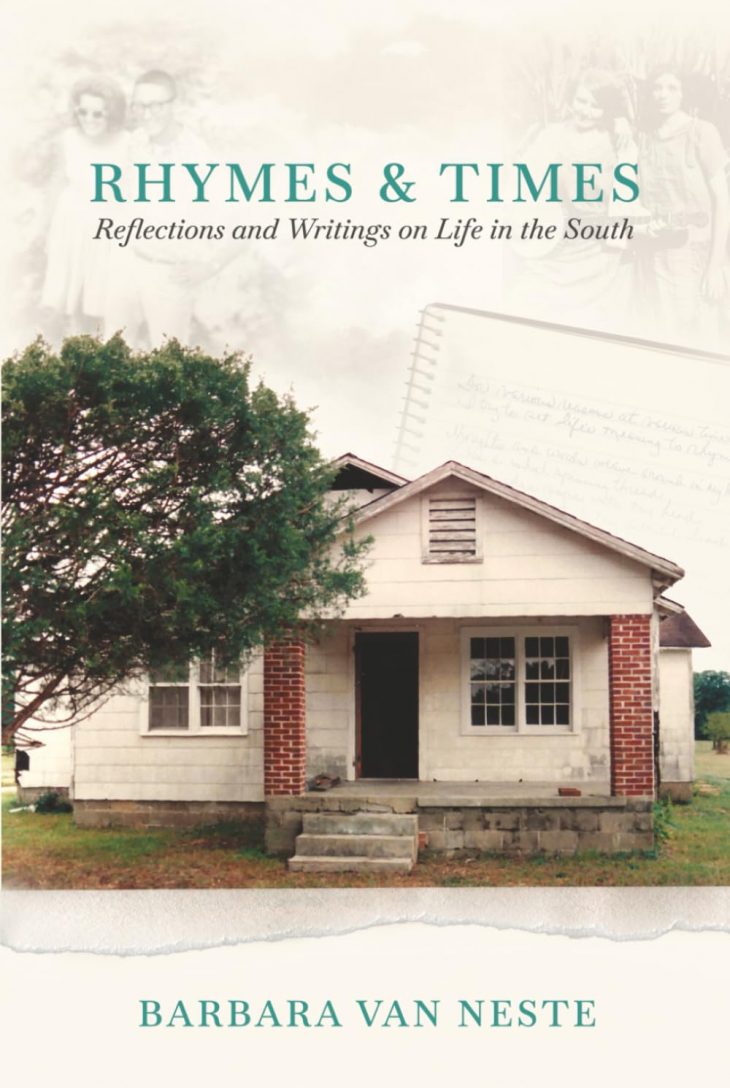
I am pleased to get to announce the publication of my mom’s book today, her first birthday since going to be with the Lord. My mom loved words and writing. I knew she published a few of her reflections and poems in local papers and discovered she had published a few in a local journal. Toward the end of her life that she mentioned in passing that she had gathered most of these in a notebook and referred to them as her “book.” It is fun now to see them arranged and published as a book.

Here is what I put on the back of the book:

Barbara Van Neste always wanted to be a Southern writer. This volume gathers her “poems and pieces,” some of which she had put into a notebook for a possible book one day. In these writings you will find humor, appreciation of simple life and the outdoors, as well as reflections on joys and tragedies of life all in the light of her Christian faith.

Work Hard!

The Imaginative Conservative recently published my essay with this title. This is an address I gave to a group of Union students at a guys morning Bible study a couple of years ago. Too many voices encourage men to laziness or a complaining, whining spirit. We must cast this off and embrace the call to work hard and endure. As I told these young men, “Whining whittles away the will to work.” I hope this essay can stir up some young men to this path which is a necessary part of any meaningful life.

Best Reads of 2024

Each year I keep a list of the books I read all the way through, typically with brief notes, as a way of tracking my thoughts and a way to look back on each year and see some of what influenced me. So, in this post I have drawn from that list some of the best books I read this year with slightly edited versions of the notes I jotted down after reading them.

I selected a Top 11 from the books I read this year. These 11 aren’t listed in a particular order, and they made this list for various reasons ranging from sheer enjoyment to level of impact on me. Following the Top 11 are some more books I enjoyed reading this year (in no particular order) as well as some disappointing ones.

I realized that in this list are two series in which a hard-nosed detective is also a deeply committed Baptist, shaped by those principles, one in 19th century England (the Barker & Llewellyn series) and the other in 20th century America (the Swagger series).

Top 11 (couldn’t get it down to 10!)

  1. Nights Under a Tin Roof: Recollections of a Southern Boyhood, James A Autry – I saw this book on my parents’ shelf through the years, so, after my mom died this year, I read it. It is very good, and I see why it was one of my mom’s favorites. Her writings, “pieces”, as Autry calls them, are in this same vein as they reflect on life growing up in rural Mississippi. I also read Autry’s follow up, Life After Mississippi, which was also good, though not as good as the first one. He is right to say, “important things come without background music, that life is largely a matter of paying attention.”
  2. Recollections of a Long Life, Theodore Cuyler- I was on a run of reading books from Cuyler after reading and publishing a new edition of his wonderful book for pastors. This one is particularly fascinating! Cuyler met and interacted with the leading poets, pastors, and statemen of his time as he travelled the world. It really is amazing the breadth of his interaction. Much wisdom here to be gleaned and he writes so beautifully. (see another of his books listed below)
  3. The Art of Divine Contentment, Thomas Watson- Excellent! Important truths stated well. I decided I’ll plan to read all his books on Christian living.
  4. Reading Backwards: Figural Christology and the Fourfold Gospel Witness, Richard B Hays- a great read. Very stimulating. I think he is spot on hermeneutically, that we should learn to read the Bible like the Gospel writers did. It is sad then to see where he went in his most recent book.
  5. Clash of Visions: Populism and Elitism in New Testament Theology, Robert Yarbrough- This was a second read, this time with a class. Yarbrough does an excellent job of demonstrating the 2 different approaches within biblical studies, essentially the believing approach and the unbelieving approach. Powerful. A must read for anyone engaging in academic study of the Bible.
  6. The Watchdog: How the Truman Committee Battled Corruption and Helped Win World War Two, Steve Drummond- Really well done. I have some idea of how challenging it is to amass a lot of data and then weave that into a compelling story. Many books of history don’t do that well, but Drummond did that very well here. Engaging and fun to read, while also informative, careful, and balanced.  A fascinating bit of history that I did not know. A good example of the old adage that the best preparation for tomorrow’s work is to do today’s work exceptionally well.
  7. The Lessons of Tragedy: Statecraft and World Order, Hal Brands & Charles Edel- Great book on the value of history and our need to learn from it or be doomed to repeat the mistakes of the past. The first part of the book which recounts the Greeks and makes this point about history is the strongest (the intro is amazing). The latter part when he applies this to early Europe, WWI, between war period, WWII. Is also very good. The portion of 16-17th century Europe made clear reasons why I do not favor any sort of return to a wedding of church and government. The point about “tragedy” is to recognize how easy it is for things to fall apart and thus not to get lazy, overconfident, or presumptuous.
  1. Valcour: The 1776 Campaign That Saved the Cause of Liberty, Jack Kelly- This was a great book. I have read quite a bit about the Revolutionary War but did not know Valcour! So that was fun, but it also was well written. Great lessons on leadership and beyond.
  2. Patton’s Prayer: A True Story of Courage, Faith, and Victory in World War II, Alex Kershaw- An excellent book. Superbly written. He provides a compelling portrait of the complexities of Patton- vain, ambitious, religious, caring, etc. The contradictions are allowed to stand, and surely we are all contradictions in various ways. Reading Kershaw it makes perfect sense that I have heard people who loved Patton deeply and others who hated him. It makes perfect sense. From the New York Times obituary cited in the book: “Long before the war ended, Patton was a legend. Spectacular, swaggering, pistol-packing, deeply religious and violently profane, easily moved to anger because he was a fighting man, easily moved to tears, because underneath all his mannered irascibility he had a kind heart, he was a strange combination of fire and ice.”
  3. Front Sight: Three Swagger Novellas, Stephen Hunter- I really enjoyed this one. I like Hunter’s writing and these characters, just sometimes the story turns to more depravity than I care to read. Thankfully that was not the case here. Hunter is also smart in is writing, including pieces which connect across the three generations of characters, making off hand comments to connect back to other stories. I realize how much I enjoy such things. He’s also just a good writer, with twists and turns in the story. I like that his characters are typically noble, fighting for the down and out.
  4. Leadership and Emotional Sabotage: Resisting the Anxiety That Will Wreck Your Family, Destroy Your Church, and Ruin the World, Joe Rigney- This was so good that I bought a copy for all my adult sons.

Theology/Christian Living

  1.  God’s Light on Dark Clouds, Theodore Cuyler (New York: Baker & Taylor, 1882) – An excellent devotional aimed particularly at those in the midst of hard times. He alludes to his loss of a child and at the end of the book a paragraph from the local paper is included which told about the death of his 21 year old daughter. His care and commiseration are clear as is his confidence in God and His word. He gives straightforward counsel, dealing frankly with death in ways that I think would make some people today wary. He also writes beautifully. (Link is to Banner reprint).
  2. Newly Enlisted: A Series of Talks with Young Converts, Theodore Cuyler (American Tract Society, 1888)- Another compelling book by Cuyler.
  3. Amaze them with God: Winning the Next Generation for Christ, Kevin DeYoung- This is actually a little booklet (a chapter excerpted from a previous book, but it is excellent. The answer to reaching younger people is not gimmicks or style but being people who are genuinely caught up with God and laying out the truths of the greatness of God to them. Give them something big enough to believe in and show them what it looks like.
  4. More Precious Than Gold: Psalm 19– this is a brief little book going line by line through Psalm 119 and providing other Scriptures or quotes from Christian writers that go along with each line. Very nice.
  5. The Bible of Superhuman Origin, H E Watters- I loved seeing a book by this title from a former Union University president. He boldly asserts confidence in the Bible and demonstrates the integration of the Bible with various disciplines.
  6. The Appearing of God Our Savior: A Theology of 1-2 Timtohy, Titus, Claire Smith- I read this in an advance reader copy in order to supply an endorsement. It is very well done.
  7. Shepherds for Sale: How Evangelical Leaders Traded the Truth for a Leftist Agenda, Megan Basham- I expected to largely agree with this but perhaps to find her too snarky, fearing she might be over the top and too geared toward one liners and zingers. I came away impressed. I have felt the pressure she describes to soft pedal the Bible’s teaching on homosexuality, for example, and have been chided. I don’t get the pressure to soft pedal hard things in order to win an audience. My church upbringing challenged that sort of thinking from the beginning. I was taught to expect to be the odd man out, to expect the ridicule of the world and to beware of courting its favor.
  8. How the Church Fathers Read the Bible: A Short Introduction, Gerald Bray- I re-read this with my Readings in Theology class. It is interesting that I mark many different things this time through than I did the first time. A very helpful introduction to the Church Fathers and hermeneutics.
  9. Epitaphs for Eager Preachers, J. D. Grey- A humorous discussion of 10 bad approaches to ministry. Not much theology but some good advice. The most interesting to me was his stories from time at Union or interaction with people from there like his president J J Hurt. Though it had been several decades since his student days, the influence of his Union professors still was prominent in the thinking of this man who was one of the leading preachers of his day.

Leadership/Education

  1. A Sanctifying Context: A Vision for Christian Higher Education, Stephen Lennox- Excellent! I didn’t know the author and it came from a small denominational press which I hadn’t seen before, but I got it because it was recommended. And it was great. His thesis is bold- the purpose of Christian higher education is sanctification. This is above education. Education is a step to this higher goal and everything else the school does (student life, athletics, classroom, etc.) is for this end. I am persuaded. A lot of good advice for each of these areas. Strong on the importance of a robust chapel program, one that knows the purpose of chapel is worship and resists those, even well-intended, who want to move chapel away from this specific purpose to something broader. Strong on the importance of the theological faculty. He says they must be “privileged”, that is put in the center and looked to for formation.  
  2. The Five Temptations of a CEO, Anniversary Edition: A Leadership Fable, Patrick Lencioni- I like the format of a fable. Makes it very engaging. Also very insightful. I would have liked a better ending to the fable, but very helpful material on leadership.
  3. Lessons in Leadership: A Weekly Reading of the Jewish Bible, Rabbi Jonathan Sacks- At first I was a bit put off by the book with his take on the Scriptures. However, I began to appreciate it. I still have my obvious disagreements, but engaging the Jewish reading of the Pentateuch was stimulating. There is much in the example of Moses to speak to leadership especially of the people of God. In the end I really liked it and am considering getting Sacks’s books on each of the 5 books of Moses.
  4. On Power, Robert Caro- A brief, fascinating audio (2 hrs approx.) from Pulitzer prize winning author of large book on Robert Moses and massive series on Lyndon Johnson. He didn’t write these, he says, because he was interested in these men, but rather because he wanted to investigate political power, how it was gathered and wielded.
  5. Becoming Great Universities: Small Steps for Sustained Excellence, Richard Light & Allison Jegla-  Some basic concepts, decent ideas, but over all pretty dull.
  6. Warrior Politics: Why Leadership Demands a Pagan Ethos, Robert Kaplan- This book isn’t as provocative as the subtitle may suggest. First, many today read “pagan” as “perverse”, but the author uses it in its technical sense of “Greco-Roman.” And the Christian ethic he critiques is of a certain sort. He eventually acknowledges this. In the end, he primarily objects to those who abstract a certain personal morality and uncritically apply that to international relations. The best Christian thinking on this subject has agreed. Towards the end of the book he identifies this largely with the media which has the luxury of being moralistic and calling for simplistic responses to humanitarian crises with a utopian idea that the US should be able to resolve satisfactorily every problem. He instead says any country must consider its own self-interests, that these are complex issues where the most moral outcome is cloudy, and that political, military, and economic power is limited in what it can achieve. On all these points I agree. In his opening he makes a great argument for knowing history since he is calling for a renewed awareness of ancient history.

History/Biography

  1. The Black Hand: The Epic War Between a Brilliant Detective and the Deadliest Secret Society in American History, Stephen Talty- Very interesting. I was not aware of this story though it is historically important. Insightful on the anti-Italian bias, with lessons for similar racial prejudice towards others today. Shows that this has been around and not just tied to skin color (though the darker skin tone of Italians is mentioned). Interesting on the evolution of police forces, on immigration questions, etc. Also, a compelling portrait of honesty, courage, and perseverance in Joseph Petrosino. He could have been a lead character in a Louis L’Amour story.
  2. The Secret Agent: In Search of America’s Greatest World War II Spy, Stephen Talty- fascinating. I did not know about Eric Erickson and his spy work to help destroy Germany’s synthetic oil production. I knew just a bit about Germany’s shortage of oil and dependency on outside sources. It is really interesting that Erickson said the weakness in German leaders which allowed him to “get in” was their vanity.
  3. Getting out of Saigon: How a 27-Year-Old Banker Saved 113 Vietnamese Civilians, Ralph White- I have read some about the government efforts to evacuate US personnel from Viet Nam but had not thought about what international businesses faced with their employees (and dependents). This is an amazing story and Ralph White tells it well. One specific thing that stood out to me was the poise of this 27 year old man. In a day when we continue to push back the expectation of maturity and responsibility, it is striking to read of Chase Manhattan Bank entrusting their Saigon branch to a young man. Furthermore, it was compelling to read of how this responsibility weighed on him leading him to stand up to high-ranking government personnel (including rebuking the US ambassador to his face!), to risk job, freedom, and life to circumvent government bureaucracy, interact with hostile forces, and design a way to rescue people who were considered expendable by others.
  4. The Gatekeepers: How the White House Chiefs of Staff Define Every Presidency, Chris Whipple- Very interesting, view from inside the administrations with many lessons for leadership. Obvious leftward bias, but I drew many specific lessons for myself at this time.
  5. The Last Outlaws: The Desperate Final Days of the Dalton Gang, Tom Clavin- pretty dull. The least of Clavin’s books that I have read.
  6. War on the Border: Villa, Pershing, the Texas Rangers, and an American Invasion, Jeff Guinn- Fascinating history, information. Not super in its telling. Seemed to ramble and his overall aim was not clear to me. Of course he wanted to tell the story, but to what end. There is always an end. He pointed out the mistreatment of Mexicans and Texicans, critiqued heavy-handed, jingoistic Americans, but mostly with an even hand. He did make connections to today, even the fact that people were building walls at the border then and wanting to build even more! The info was fascinating though. I knew of course about the war with Mexico, but did not realize we were so close to another war with them after the Civil War, up to and beyond WWI! I had heard of Pancho Villa as a villain but did not know more about him. I had not heard about Zappata and he made me wonder if the Lee Van Cleef movie, Sabata, was supposed to refer to him.
  7. The Wager: A Tale of Shipwreck, Mutiny and Murder, David Grann- I wasn’t as taken with this book as others seemed to have been. Fine but not great. I pushed myself to finish it. A decent story but didn’t stand out.
  8. 1217: The Battles that Saved England, Catherine Hanley- well written and engaging. Some history I was unaware of. I have read a book on William Marshall the great knight who appears here, but I did not catch the full weight of the nobles under King John offering the crown to a French claimant to the throne due to how bad John was. I knew they forced him to sign Magna Carta and that he then reneged as soon as he could. The framing of this civil war which, with the death of John and the accession of his son, Henry, became more like a war against an invading armywas fascinating. Good lessons: John’s greatest contribution to the war was dying (so nobles could rally around a potentially better king in his son), the value of just holding on as several did like the man holding Dover castle. There seemed to be no hope for him but because he just held on, he bought time for his side, eventually leading to victory.
  9. 1177 B.C.: The Year Civilization Collapsed: Revised and Updated (Turning Points in Ancient History, 1), Eric Cline- Very interesting. He argues that the Late Bronze Age had a globalized economy similar to the modern world, with extensive trade from Greece to Persia to Egypt. Various parts were then deeply dependent on one another so that when a series of disasters hit, the whole civilization collapsed. The fact of collapse is agreed upon. What is debated is the cause. Cline says none of the single things pointed to as cause is sufficient in itself (the sea peoples conquering lands, earthquakes, drought, famines, internal rebellions). He argues it was a “systems collapse”, i.e., due to the confluence of several different events and due to the mutual dependence of the different countries, the collapse came. Very intriguing. This would all be coming to a head during the time of the Judges based on traditional dating. I’d like to think more about how these ideas would inform our reading of the OT. I appreciated that the author took the OT seriously. He did not regard it as inspired or necessarily accurate, but he took it seriously as ancient literary evidence.
  1. Ascent to Power: How Truman Emerged from Roosevelt’s Shadow and Remade the World, David Roll- very interesting due to the time and people involved. Roll makes a strong case that this was a very consequential time period- from Roosevelt’s last year until Truman won his own election. That is all very interesting. The downside is that Roll’s partisanship is clear but unacknowledged. I also didn’t trust his assessment of people. He considered comments of Truman’s as evidence of insecurity when it seemed to me as likely to be self-deprecation.  There were many other instances. He has researched this, of course, but given the evidence he shared with the reader, his “read” on various actions weren’t convincing.
  2. Civilization: The West and the Rest, Niall Ferguson- Fascinating. I had not read him before. He is willing to push back on commonly accepted things and to affirm things that are often thought of as scandalous (like the benefits of empire).
  3. Throne of Grace: A Mountain Man, an Epic Adventure, and the Bloody Conquest of the American West, Bob Drury & Tom Clavin- a bit of a disappointment. Their others by these authors have been so good but this one wandered, seeming like Jedidiah Smith was a pretext for writing about all the other mountain men. And despite the title, Smith’s faith is only lightly dealt with. It seemed that the authors didn’t really know what to do with his faith. They relate some good stories, but they can be found elsewhere already in print. In the latter part they began to focus more on Smith, and I enjoyed the entries from Smith’s diaries. There is still a place for a more aware and appreciative assessment of the man in light of his journals.
  4. Remembering Louis L’Amour, Reese Hawkins and Meredith Hawkins Wallin- A fun read because it centers on the authors’ interaction with L’Amour. It would be better if they didn’t always simply transcribe conversations but summarized and tightened them up. Perhaps this is why the book hasn’t been given greater promotion. But I enjoyed reading about their trips together researching for books L’Amour would write. I really liked the story about Grassy Cove, TN where L’Amour would bring the Sacketts. I also enjoyed learning more about Jamestown, ND, the effort to get the Congressional medal for L’Amour, and naming of an elementary school for him the year after he died. I had never heard of the school before.

Fiction

  1. The Shepherd of the Hills, Harold Bell Wright- my mom gave me her copy last month and told me this was her favorite book and asked me to read it. I had just started the book before she died. I enjoyed it a lot and could see why she loved it. Much of what she loved and longed for is here- simple country life and the truths of God revealed in the beauty of nature, the woods and hills.
  2. My Glorious Brothers, Howard Fast- This book was recommended to me years ago by a student who read it in homeschool. It tells the story of the Maccabees as a first-person narration by Simon, the last living of the sons of Matthias. I seriously doubt its historical accuracy in various places, but I was captured by the story of a man and his 5 sons resisting tyranny. Their speech sounds OT, hence Jewish to me, in its cadence and forms. But, their discussion of freedom etc. sounds like the modern West. I doubt the Jewish people of this time really thought in those terms. He has them several times say, as a Jewish proverb, “Resistance to tyrants is the greatest service to God” (or something like that) which sounds more like T Jefferson or B Franklin. In fact the whole thing sounds like a set up for the American Revolution. What is shocking, is to read that Fast was a communist and that at least one reviewer at the time (late 1940s) saw this a thinly veiled exaltation of Soviet communism against American aggression! Yet, I enjoyed the story, despite the anachronisms, because it sounded like a paean to political freedom!
  3. The Mark of Zorro, Johnston McCulley- the original story that started it all! I really enjoyed it. Originally published in serials in 1919. I enjoy many of the classics from this era. Interestingly Zorro’s mask here covers all his face including his mouth. Also he gathers other young caballeros to work with him and they call themselves the Avengers! He also identifies himself at the end of the book. Clearly it was intended as a one off. Popularity led the author to continue the series.
  4. The Further Adventures of Zorro, Johnston McCulley- fun one again, though more farfetched. These things aren’t supposed to be reasonable, really, but the regular capture, escape, capture, escape of Zorro did get a little old, but that is probably the result of the book originally being released in serials with a cliffhanger at the end of each episode.
  5.  Zorro Rides Again, Johnston McCulley- This one was better than the second one. Dragging out the waiting for the marriage is a bit much, but the story itself works very well. Interestingly it is the armed young men of standing who keep in check a would-be tyrannical government.
  6. The House of Silk: A Sherlock Holmes Novel, Anthony Horowitz- I have enjoyed the Sherlock Holmes stories since I was a kid, so I was delighted to find a sanctioned continuation. It isn’t the same, but the author did his homework and clearly seeks ot stay with the tradition.
  7. Moriarty, Anthony Horowitz- I did not think this one was as good as AH’s first. I thought Anthony Jones was really Sherlock Holmes. I thought perhaps Moriarity was about. The story was intriguing and carried me along. Then, right at the end there was a complete shock with a dramatic twist that I in no way saw coming. That made it very intriguing.
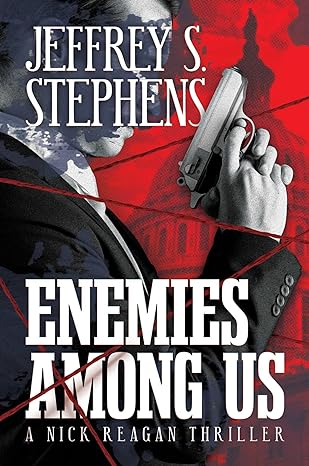
  8. Enemies Among Us: A Nick Reagan Thriller, Jeffrey S. Stephens- I read a review copy. Good fun. Clearly aimed at conservative audiences and working along lines of interest to us. Good drama and action. Basically clean. Sadly, though it is clearly marketed to conservatives, there seems to be no problem with the hero being sexually active with his girlfriend. This isn’t described, but the fact that it is seen as normal was disappointing.
  9. The Siberia Job, Josh Haven- Fascinating story. The author says it is fiction based largely on fact. Indeed, he says, the craziest parts of the story are true. It deals with an American and a Czech trying to make money by speculating in shares of Russian business just after the Soviet Union fell apart. I can’t imagine taking the risks these men did for any money. Interesting to see how things went and another aspect of what many people go through (the lives of the Russians)
  10.  The High Graders, Louis L’Amour- A fun one. I was happy to find one on audio I had not read. Regular themes but not cookie cutter. The end moves into the current day reflecting back which was new to me in a LL book and fun.
  11. Passin’ Through, Louis L’Amour- another fun one. Many common themes, but unique aspects. Fun to hear a Sackett reference and to him having to leave all of a sudden because a relative was in trouble. Also includes some great lines like, “doubt rode my shoulders like an evil thing.”
  12. The Cherokee Trail, Louis L’Amour- I finally found another L’Amour novel in audio that I hadn’t listened to yet! This was a good one. My hunch (not checked) is that this is a later one. It has all the regular themes and many familiar motifs, but the woman is the lead character and even does more of her own rescuing, though the place of the man is still there.
  13. The Confessor, Daniel Silva- AnotherGabriel Allon story. Good one, intrigue, action, twists and turns. I also read The Kill Artist, the first of the Gabriel Allon series but I didn’t like it. Too much sensuality and moral confusion. I later tried A Death in Cornwall, a more recent installment of the series, but put it down for similar reasons.
  14. Point of Impact, (Bob Lee Swagger), Stephen Hunter- fun read, enough different from the movie that I didn’t realize this was the basis of the movie until well into it. Hunter is an amazing writer.
  15. The Shadow of War: A Novel of the Cuban Missile Crisis, Jeff Shaara- informative, well written. Not as much of a page turner. But, I am interested in the subject so it was interesting to read this attempt to put a human face on it. Shaara tries to give a human glimpse of an American leader (Bobby Kennedy), a Russian leader (Khrushchev), and a regular American (Russo; who apparently is a portrayal of his father). Gave a much more sympathetic portrayal of Khrushchev which makes more sense than I realized. I didn’t realize that this incident and his backing down cost him his role as leader.
  16. Empire Of Lies, Andrew Klavan- My first introduction to Klavan. Very interesting story, well written. He doesn’t mind being politically incorrect. A good thriller.
  17. Over My Dead Body ,Rex Stout – one of the Nero Wolfe stories. I got it because our adopted grandmother loves the series. I like older novels, and this one was written in 1940. Gives a nice picture of culture at the time. Decent story, but I prefer Sapper and much prefer Buchan. It was striking that when it appears that Wolfe had a child out of wedlock, Archie, his assistant is ready to resign from working for a man with such a scandal. What a different day.
  1. Some Danger Involved, Will Thomas– This is the first of the Cyrus Barker and Thomas Llewelyn novels which apparently has become quite a series. This one was published in 2004. I had never heard of them until I saw them mentioned in an Intellectual Takeout post on books men should read. Enjoyable. Not at the level of Buchan or L’Amour but enjoyable. Great when I just want a fun listen. Sort of a what if Sherlock Holmes instead of being a drug addicted narcissist was a robust Scottish Baptist who attended Spurgeon’s church? That sounds fun! Cyrus Barker is the “private inquiry agent” (not detective) and Thomas Llewelyn is his Welsh assistant, who, like John Watson in the Holmes series, narrates the stories. I enjoyed this so much, that I listened to the first 7 in the series and am currently listening to book 8. Here are the others, with a brief note which I read this year:

To Kingdom Come, This time they infiltrate a group of Irish terrorists.

The Limehouse Text, This time they interact with a Chinese mystery and the Triad. Spurgeon is regularly mentioned, but the stories are never preachy.

The Hellfire Conspiracy, A good bit darker, dealing with satanic meetings and a serial killer who kidnapped young girls, “outraged” them, and cut off a trophy.

The Black Hand, Dealing with the Mafia. Not as dark as the previous one.

Fatal Enquiry, Dealing with international intrigue and Barker’s nemesis, with more info on his time growing up in China.  Spurgeon even makes a hospital visit to Barker in this one.

Anatomy of Evil, They take on and solve the Jack the Ripper murders. Striking here how true to historical details the author is. The last two stories, though, also show that the author doesn’t completely stay true to the outlook of a “Spurgeon Baptist.” Disappointing, but the stories are still fun.

  1. Solo, Jack Higgins- A good read, nicely paced. I was drawn in. A classic 1980’s adventure story- highly trained assassin who is also a world famous concert pianist who accidentally crosses  a rock-solid American military man who is now determined to hunt him down. I feared it was going to be overly sensual, but it wasn’t.
  2. Damascus Station, Thomas McCloskey- Fine but not as great as I heard. I saw high praise for it in First Things, but it was just fair to me, with more sensuality than I expected.
  3. A Wrinkle in Time, Madeleine L’Engle- One of my elementary teachers read this to us. I came back across references to it, so decided to read it again and see what it was about and why it had been controversial. I think those who decried it as New Age or the like must have been seriously deprived of imagination and quite narrow in outlook. The characters who seem to portray themselves as witches explicitly say this is a persona they play at to keep away snoopers, and they are directly identified later as angels. They are majestic beings of light, at the sight of whom, in their real personas, one of the children bows in worship. But these beings eschew worship saying there is only One to be worshipped. They speak freely of God and often quote scripture, making clear which God they must be referring to. This is an explicitly Christian book. There is clear good and evil, and in the end evil is defeated not by hate but by love. The ending does strike me as simplistic, but it does faithfully portray a Christian understanding. I appreciate its clear distaste for totalitarianism.

Disappointing

  1. The Power and the Glory, Graham Greene- I tried this one because a friend thought I’d like it. I didn’t at all like the previous Greene book I read, but my friend said I’d probably like this one because it is about a priest persevering under persecution. I see what Greene was doing and appreciate the idea, but I really don’t like his style. I find his manner of writing distracting and even annoying at times.
  2. Godric, Frederick Buechner- I finally read Buechner, who had been warmly commended to me. I must say, I am not quite taken. He writes well, but this isn’t my kind of book. I appreciate the lampooning of pretention to spirituality, but he does it in such a way as to go into more discussion of sin than I find helpful. I’m sure it isn’t his purpose, but it almost glorifies sin or at least makes it seem not so bad. There are redeeming points in the book of course, but overall I am disappointed.
  3. A Fall of Moondust, Arthur C. Clarke- underwhelming. It was fine as a story but not riveting. Perhaps it is unfair given that I am reading it 63 years after publication. The hype caused me to expect more.
  4. Riders of the Purple Sage, Zane Grey – a fine story, but marred. Pales in comparison to Louis L’Amour, and this was apparently Grey’s bestselling book. The story is less cohesive than L’Amour and overdone. L’Amour has strong women characters, but Grey’s in this story are weak, flighty, and hysterical. The dialogue, in general, is overwrought.
  5. No Better Friend, No Worse Enemy: The Life of General James Mattis, Jim Proser- Mattis is fascinating, but this book is mediocre in its writing. Prone to hagiography. The best lines are quotes from Mattis himself. Some good information, some slogging. If you read Mattis’s own book on leadership, you can give this one a pass.
  6. Cane Ridge: America’s Pentecost, Paul K Conkin- The author taught at Vanderbilt, but he doesn’t seem to get some of the theological things he discusses. It just isn’t well-written. I had to push through to finish it.

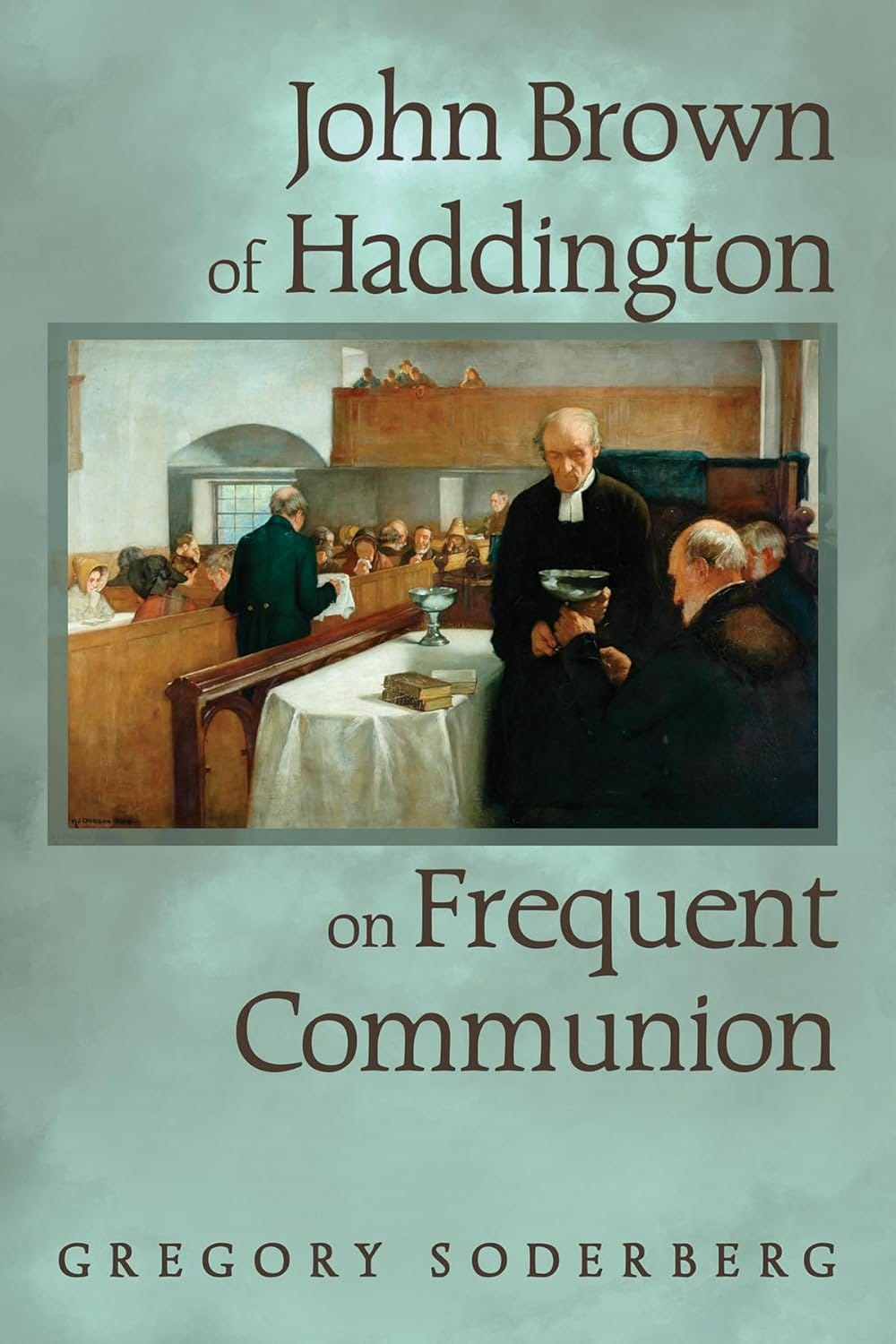
John Brown of Haddington on Frequent Communion

Kudos to Gregory Soderberg for this new edition of this important essay by John Brown of Haddington! I have for years said this piece deserved republication for a new audience. You can see an earlier blog post here. At the time of that post, WorldCat only showed 3 copies of the booklet in the US. I am pleased it will now be accessible to all.

Prof. Soderberg references that post in his discussion of the new book. I encourage you to get and read this little book, It is thoughtful and helpful. I remain convinced, as I have argued elsewhere (a brief piece, a book chapter), that the practice of weekly communion is beneficial to individual believers and to churches.

So, take up and read!

Pastoring in Hiroshima

One of the great things about reading history is that you stumble upon powerful examples. I am currently reading David Roll’s Ascent to Power: How Truman Emerged from Roosevelt’s Shadow and Remade the World.

After describing the events leading up to the bombing of Hiroshima and the devastating effects of the atomic bomb, Roll related accounts of people who survived the event. One of those was a Methodist pastor. This is a powerful example of pastoral ministry in the midst of unimaginable chaos and suffering.

“Somewhere in the park that night, Kiyoshi Tanimoto, pastor of the Hiroshima Methodist Church and a 1940 graduate of Emory University in Atlanta, was preaching the lesson of Psalm 90 to the burned, maimed, and dying. Their lives, in the sight of the Lord, would last no longer than ‘a watch in the night,’ he quoted. ‘They quickly pass and fly away.’ Though their time on earth had been ‘consumed by the wrath of God,’ Tanimoto asked the survivors to pray to the Almighty, as Moses had, that ‘the beauty of the Lord will rest upon us.’” (p. 186)

Recognizing and Responding to the Messiah

"Recognizing and Responding to the Messiah" is now available from Union University Press.

This Spring Union University Press released its latest book, Recognizing and Responding to the Messiah: Sermons on the Gospel of Mark, edited by Justin Wainscott and myself. For quite a few years, chapel services at Union have included a series through a book of the Bible. We call this our WORD series. This book contains the sermons preached through the Gospel of Mark in the Spring of 2023. The title comes from my contention in the first sermon that Mark’s Gospel seeks to cause us to ask to primary questions: Who is this Jesus? And, what will you do with Him? My fellow contributors include Matthew Albanese, Frank Anderson, Joe Ball, Michael Garrett, Brad Green, Robert Lane, Hal Poe, & Reginald Taylor.

We hope the book will help anyone reading the gospel of Mark, as well as serving as a resource for others who are planning to preach through this gospel. Each sermon takes a larger section of text and shows the personality and approach of each preacher.

Enemies Among Us, A Thriller

Recently I read a prepublication review copy of Jeffrey S. Stephens’ thriller, Enemies Among Us: A Nick Reagan Thriller. This is the second of his Nick Reagan books, though I have not read the first one. Regan is a CIA operative seeking to thwart terrorists who stumbles upon widespread corruption at high levels in the government.

The book is a fun read with fast-paced action and intrigue. It is clearly aimed at a more conservative audience, as this sort of thriller tends to do. Even the name of the hero, Reagan, seems to be a nod in that direction. All of this makes it a novel well suited for me. It is also relatively clean, which is not always the case for the genre. It is sad though, that while the book is clearly marketed to conservatives, there seems to be no problem with the hero being sexually active with his girlfriend. This is an example of what several people have noted about a divide between conservatives, with a significant number not thinking traditional, biblical morality being among the things which ought to be conserved.