Gimmick or Gospel

Al Mohler and Timmy Brister have already pointed out this interview. In case you have not seen it, it is worthwhile to do so for the sobering effect of realizing what too many are saying. What is the power of God unto salvation? God’s gospel or our gimmicks?

The closest thing I find in the New Testament to a gimmick being commended as a way to advance the Kingdom is when the Devil tempts Jesus to jump from the Temple (Luke 4; Matt 4).

2 Corinthians 4:1-6:

“Therefore, having this ministry by the mercy of God, we do not lose heart. 2But we have renounced disgraceful, underhanded ways. We refuse to practice cunning or to tamper with God’s word, but by the open statement of the truth we would commend ourselves to everyone’s conscience in the sight of God. 3And even if our gospel is veiled, it is veiled only to those who are perishing. 4In their case the god of this world has blinded the minds of the unbelievers, to keep them from seeing the light of the gospel of the glory of Christ, who is the image of God. 5For what we proclaim is not ourselves, but Jesus Christ as Lord, with ourselves as your servants for Jesus’ sake. 6For God, who said, “Let light shine out of darkness,” has shone in our hearts to give the light of the knowledge of the glory of God in the face of Jesus Christ.”

Use of the Psalms in the New Testament

This past Sunday at our church I taught in our Sunday School on how the Psalms are used in the New Testament (audio). My focus was not on the various ways the Psalms are interpreted but what people (Jesus, the apostles) actually did with the Psalms. I summarized the various uses in 3 categories. They preached (or taught), prayed and sang the Psalms. We find Jesus involved in all three uses as well as the early church.

In fact, Jesus dies with the Psalms on his lips in prayer. Then in the book of Acts the church’s first major decision is made based on the Psalms (Acts 1), the first sermon is based largely on the Psalms (Acts 2), and in the first recorded prayer meeting they are praying the Psalms (Acts 4).

This work is part of an ongoing book project on the use of the Psalms, growing out of the “Psalms Project at Union University” which is scheduled to be published by B&H next fall.

Read the Bible For Life Conference, Wrap up

It was a blessing to have almost 700 people gather with us last weekend for the Read the Bible for Life Conference. I am hopeful that the time together will have a lasting kingdom impact.

The audio from the conference is now available.
David Platt argued for reading the Bible as a whole, centered on Christ. Here are his three plenary lectures:
Plenary 1: Reading the Bible as Story
Plenary 2: Teaching the Bible as Scripture
Plenary 3: The Bible Teacher’s Purpose

George Guthrie gave an overview of the problem of biblical illiteracy and how the “Read the Bible for Life” curriculum aims to address it.

The available breakout recordings are:

Regrettably the recording of Paul Jackson’s session did not work.

We also have the audio from the panel discussion which I led with Platt, Guthrie and Card as panelists.

Audio from previous Ryan Center conferences can be found here.

“Fools for Christ,” An Inklings Weekend

I am excited about participating this weekend in “Fools for Christ, An Inklings Weekend at Montreat,” a conference sponsored by the Inklings Fellowship and organized by my colleague, Hal Poe.

Here is the official conference description:

FOOLS FOR CHRIST

I Corinthians 1:18-25 “for the foolishness of God is wiser than man’s wisdom”

Join us to celebrate the 80th anniversary of the conversion of C. S. Lewis to faith in Christ.

Beginning our retreat on April Fool’s Day we will consider the tradition of the godly fool in the writings of Lewis and Tolkien.

Puddleglum from The Silver Chair – Don King

Merry and Pippin from The Lord of the Rings – Rebecca Hays

Lucy from The Lion, the Witch, and the Wardrobe, Prince Caspian, and The Voyage of the Dawn Treader – Nigel Goodwin

The Narnians from The Last Battle – Hal Poe

I will have the privilege of giving the Saturday morning devotion on the theme, “The Resurrection: The Ground of Christian ‘Folly’.”

The official deadline for registration has passed, but if you are in the area you might be able to contact Dr. Poe and still be able to register.

Bonhoeffer, Psalms: The Prayer Book of the Bible

Dietrich Bonhoeffer’s little booklet, Psalms: The Prayer Book of the Bible, is a real gem. After reading it I bought a copy for each of my older boys for them to read and to have their own copy.

Much could be said about it, and I may say more in later posts, but here I will focus on his comments about the formative value of the Psalms for prayer. Too often we tend to think any guide to praying makes our prayers less genuine.  Bonhoeffer counters this, stating

“…it is a dangerous error, surely very widespread among Christians, to think that the heart can pray by itself. . . . Prayer does not mean simply to pour out one’s heart.” (9)

Yet God has given us words to guide us in our praying. As we teach our children how to speak properly and how to phrase things to communicate respectfully and effectively, so also our heavenly Father has given us instruction in the Psalms on how to address Him properly.

Here are a few quotes from the booklet on this point:

“So we learn to speak to God because God has spoken to us and speaks to us.” (11)

“If we wish to pray with confidence and gladness, then the words of Holy Scripture will have to be the solid basis of our prayer.” (11-12)

“It does not depend, therefore, on whether the Psalms express adequately that which we feel at a given moment in our heart.  If we are to pray aright, perhaps it is quite necessary that we pray contrary to our own heart.  Not what we want to pray is important, but what God wants us to pray.  If we were dependent entirely on ourselves, we would probably pray only the fourth petition of the Lord’s Prayer.  But God wants it otherwise.  The richness of the Word of God ought to determine our prayer, not the poverty of our heart.” (14-15)

“This is pure grace, that God tells us how we can speak with him and have fellowship with him.” (15)

God has seen fit to give us an inspired book of prayers and praises. We would do well to use it.

“Whenever the Psalter is abandoned, an incomparable treasure vanishes from the Christian church.  With its recovery will come unsuspected power.” (26)


Leupold on the Psalms

I have previously mentioned how I have appreciated H. C. Leupold’s Exposition of Psalms. Here are some great quotes from his introduction on the nature and character of the Psalms (all from p. 28):
“There does not seem to be any situation in life for which the Psalter does not provide light and guidance.”

“They are not the fruit of abstract meditation.  They did not grow out of the study of the scholar.  They were born out of real-life situations.  They are often wet with tears and the blood of the writer.”

“All the psalms were prayed on the steps of the throne of mercy.  The light that emanates from that presence somehow gives light to them that sit in darkness and in the shadow of death.”

“…the psalms have the happy faculty of stimulating our own private prayers and of fructifying them to an unusual degree.”

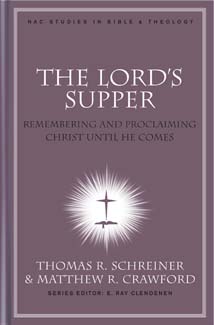
The Lord’s Supper: Remembering and Proclaiming Christ Until He Comes

I have often commented on the Lord’s Supper here as I believe it is an important practice which has fallen on hard times in our churches and has a significant place in pastoral ministry. It was, therefore, an honor and privilege to contribute to Tom Schreiner and Matt Crawford’s edited volume, The Lord’s Supper: Remembering and Proclaiming Christ Until He Comes (table of contents is available at the link). My chapter focuses on issues arising from the practice of communion in the church (e.g., frequency, manner, who can come to the table, etc.).

My hope is that the book will stir up good conversation about communion and help to revitalize our practice. So far, Baptist Press has posted an interview with contributors and Patrick Schreiner has an interview with the editorsTrevin Wax and David Alan Black have reviewed the book.

If you know of other reviews or interactions, feel free to link them in the comments.

UPDATE: Jim Hamilton’s essay is available online.

Read the Bible for Life

The Ryan Center 2011 Bible study conference, “Read the Bible for Life,” is rapidly approaching! We are still well ahead of the deadline and registration is around 170. The reduced rate hotel rooms sold out, but we have been able to secure a few more with the lowered rate through tomorrow, March 23 (details here, under Lodging).

The conference will be held April 15-16 and David Platt will be the plenary speaker, addressing the theme of biblical literacy in the church.  The conference shares the name of the new book and curriculum written by George Guthrie. George will also be leading breakout sessions to train leaders for using the video curriculum in small groups.

Michael Card will be singing and leading a breakout session.  Several faculty members from Union’s School of Theology and Missions will also be leading breakout sessions on various aspects of Bible study.

This will be a great opportunity for training and encouragement for pastors, Bible study leaders, Sunday School teachers and anyone who wants to enhance their own reading of the scriptures.

Portrait of a Faithful Father

The book of Fourth Maccabees (a Jewish book from around the time of Jesus) gives a powerful portrait of a faithful father. In context, the mother of sons who had died for allegiance to their faith, reflects on her husband’s work in training their sons:

A happy man was he, who lived out his life with good children, and did not have the grief of bereavement. While he was still with you, he taught you the law and the prophets. He read to you about Abel slain by Cain, and Isaac who was offered as a burnt offering, and of Joseph in prison. He told you of the zeal of Phineas, and he taught you about Hananiah, Azariah, and Mishael in the fire. He praised Daniel in the den of the lions and blessed him. He reminded you of the scripture of Isaiah, which says, `Even though you go through the fire, the flame shall not consume you.’ He sang to you songs of the psalmist David, who said, `Many are the afflictions of the righteous.’ He recounted to you Solomon’s proverb, `There is a tree of life for those who do his will.’ He confirmed the saying of Ezekiel, `Shall these dry bones live?’ For he did not forget to teach you the song that Moses taught, which says, `I kill and I make alive: this is your life and the length of your days.'” (4 Maccabees 18:9b-19)

Fathers, let us teach the Scriptures to and sing the Psalms with our families, leading them to trust in God that they might live and die faithfully. (Ephesians 6:4).

(Reposted from The Children’s Hour)

Learning Evangelism from the Great Soul Hunter

In my Johannine Literature class today we discussed John 4 and Jesus’ encounter with the woman at the well. There is much to learn in this passage, not least how in John 4 and John 3 we see Jesus dealing with individuals. A few years ago I wrote a brief article discussing lessons we can learn from Jesus’ example in these chapters- “Learning Evangelism from the Great Soul-Hunter.”

I find myself coming back to these texts regularly as I think about evangelism. Perhaps this brief reflection will be of use to others.