John’s Letters as Highest-Proof Grain Alcohol

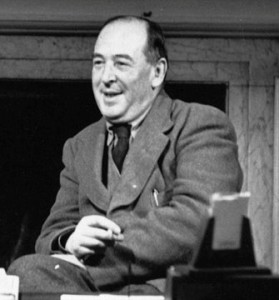
“Finally, if 1-3 John leave the disciple who studies them with any single lasting impression, it is the grandeur and centrality of God.  Part of this is the sheer volume of references to him.  There is hardly a verse or even clause anywhere that does not name a person of the Godhead (Trinity), a divine attribute, or a divine work (like a command that has come from God).  These letters are not simply theological, as one might say ale is alcoholic; they are rather theology distillate, analogous to highest-proof grain alcohol that is highly flammable and intoxicating in even small amounts. God- mainly Father and Son, but occasionally Holy Spirit- suffuses every situation John envisions, each piece of counsel he issues, every sentiment he conveys, each affirmation he sets forth. No OT psalmist is any more God saturated in awareness than the writer of these letters” (Robert Yarbrough, 1-3 John, 27-28).

Dominated by Jesus

In a technical article on the Greek word for “false teacher” used in 2 Peter 2:1, K. Rengstorf says this term shows their teaching was false and “in every respect they are a perversion of the Christian διδασκολος [teacher], since they reject the claim of Jesus to domination over their whole lives.”[1]

This is an accurate description of Peter’s point since he stresses that these people do not live according to the teachings of Christ.  What struck me in the article was the use of the word “domination.” If we resist Jesus’ domination of our lives we will be false teachers. He must rule all. Rebels will not be able to proclaim the Kingdom of God and the Lordship of Christ.


[1] Theological Dictionary of the New Testament, vol 2, p. 160. I was unable to get accent marks for the Greek word to post properly.

Own Your Ignorance

“In our daily reading of Scripture we come upon many obscure passages that convict us of ignorance” – John Calvin, Institutes of the Christian Religion, 3.2.4

This statement from Calvin is striking. At the time Calvin is writing this he is widely regarded as the leading theologian of the Reformation. No one else had produced such a systematic exposition of the faith in that day, explaining the Bible and how people could understand it as they came away from what “they had always heard” from the Catholic Church. And, it is clear from letters, Calvin was aware of the leadership role he had and how people looked up to him. If ever someone might be excused for thinking he might be justified in hiding what he did not know or understand, it could be Calvin at this time. But, he does not hide his ignorance. He does not try to present himself as more than he is. He boldly proclaims in his magnum opus that he is regularly, in his daily reading of Scripture, convicted of his own ignorance as he comes upon passages he cannot understand. He wrote commentaries on almost every book of the Bible, but he is regularly convicted of his own ignorance.

Pastor or Bible professor, do you acknowledge when you just don’t know the answer to a question? Or do you seek to cover your ignorance with some pious or technical obfuscation to keep up an image? Drop the charade. We can’t know everything and even some things we should know we won’t know or will forget. Don’t be afraid to simply say, “Sorry, I don’t know. I will look into it.” It is humbling and, sometimes, even humiliating. But it is real and honest. It’s also a relief. There is only one perfect man, one Chief Shepherd (1 Peter 5:4). Don’t try to impersonate Him, just rest in Him. And point the people to Him, not yourself.

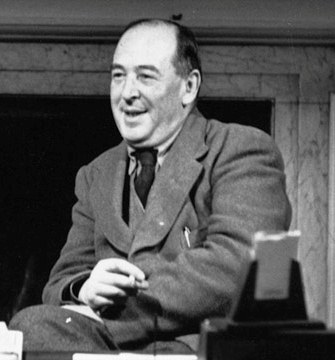
C. S. Lewis, Preaching & Rhetoric

I am in the midst of the last proofreading of the forthcoming book, Forgotten Songs: Reclaiming the Psalms for Christian Worship and am really enjoying the essays even though I’ve been through them several times already. In Jack Collins’ essay on the liturgical purpose of the Psalms in their Old Testament context he helpfully discusses the value of the rhetoric of the Psalms.

In that context he quotes C. S. Lewis

The proper use [of rhetoric that shapes the emotions] is lawful and necessary because, as Aristotle points out, intellect of itself ‘moves nothing’: the transition from thinking to doing, in nearly all men at nearly all moments, needs to be assisted by appropriate states of feeling. [1]

Collins uses this quote about the Psalms, but the quote is also helpful when thinking of preaching. In my tradition many are quite familiar with overblown rhetoric which really gets in the way- all heat and no light, more bluster than Bible, windy but not winsome, lacking in wisdom. In response to this abuse, some swing to the other side carefully avoiding emotion, or any rhetorical effort, etc. This can be light which gives no heat, truth that doesn’t touch, doctrine without delight.

Lewis’s summary here is quite helpful. “Intellect of itself ‘moves nothing.’ Proper preaching must begin with truth and then seek to elicit ‘states of feeling’ appropriate to this truth. Light properly producing heat.  Effective preaching must be affective.”

And, to come full circle, the Psalms can help us here.


[1]C. S. Lewis, Preface to Paradise Lost (Oxford: Oxford University Press, 1942), 52. Lewis is alluding to Aristotle’s Nicomachean Ethics, VI.ii.5.
Worship Frees Us from Self-reliance

Here is another excerpt from Brueggemann’s sermon on Psalm 100 [“Psalm 100,” Interpretation 39 (1985): 65-69]. In this section he is making the point that worship along the lines called for in Psalm 100 is a summons to reorient life in light of the reality that God is our Creator and Shepherd.

To sing in this way to Yahweh is to abandon self-groundedness. A life without praise is more likely a life turned in on self. It is a life of autonomy and self-invention, which imagines that one is self-made, need answer no other and can rely on no other. Such a notion of self-groundedness is a pervasive temptation among us, which may lead to cynicism and anxiety or to pride and domination. But this psalm is an acknowledgment that life is a gift. Life is always and regularly to be referred back to the giver. Such ultimate submission of sheep to shepherd leaves one free and unencumbered by the burden of self-invention.

Praise as Polemic

I have plenty of differences with Walter Brueggemann, but his sermon on Psalm 100 is very rich [“Psalm 100,” Interpretation 39 (1985): 65-69]. The following quote makes a profound point about praise and has helped me see more of the importance of praise.

To praise is to reject alternative loyalties and false definitions of reality. Praise is relentlessly polemical. As this God is affirmed, in the same act other gods are dismissed as irrelevant and denied any legitimacy. As Israel acknowledges to whom it belongs, it also asserts to whom it does not belong. The ones dismissed may be variously the gods of Egyptian enslavement, the gods of Canaanite manipulation, the gods of Babylonian imperialism; all these are now declared null and void. (66)

To lift up the one true God is to cast down all would be gods. We fight idolatry in our hearts with praise. And, when thanklessness creeps in, beware. There is an idol lurking. Unleash the cannons of praise!

But Brueggemann is really making a point about corporate, cultural claims more than internal personal issues.  When we praise Yahweh, the God of Abraham, Isaac and Jacob, the God and Father of our Lord Jesus Christ, we are saying that all others, put forward as gods throughout the world, are nothing.  This is strikingly countercultural in a pluralistic age. Praise is surprisingly subversive in a relativistic age. Praise then lays the groundwork for evangelism. Let us hold fast and advance by being people marked by hearty praise of our God and Savior.

Watching Out for One Another

The New Testament is clear about the duty of church members in watching out for one another and helping one another persevere (see esp. Heb 3:12-14; 4:1-2, 11; 12:15-16; James 5:19-20). Too often Christians have not learned to think this way. I also often find myself trying to help people see that evangelistic labors, properly understood, include both calling people to initial faith and helping one another persevere in that faith. The following quote from 2 Clement, a 2d century Christian document, illustrates these points well and shows how they were understood early in the history of the church.

Let us therefore repent with our whole heart, lest any of us perish by the way. For if we have received commands, that we should make this our business, to tear men away from idols and to instruct them, how much more is it wrong that a soul which knows God already should perish! Therefore let us assist one another, that we may also lead the weak upward as touching that which is good, to the end that we all may be saved: and let us convert and admonish one another. And let us not think to give heed and believe now only, while we have departed home, let us remember the commandments of the Lord, and not suffer ourselves to be dragged off the other way by our worldly lusts; but coming hither more frequently, let us strive to go forward in the commandments of the Lord, that we all having the same mind may be gathered together unto life. (2Clem 17:1-3, Lightfoot trans.)

Note that earnest evangelism is assumed- “tear men away from idols.” Added to this, the author pleads that his hearers not to sit idly by while professing believers wander from the truth (cf. James 5:19-20).. The remedy for wandering away is “assisting one another”, “admonishing one another”, and gathering frequently with the church (cf. Heb 10:24-25). God has given us the church, one another, fellow believers, to help us persevere.

F. F. Bruce on the Importance of the Local Pastor

While working on a project on what is taught about the church in Hebrews I came across this quote from F. F. Bruce (in his commentary). He is discussing Hebrews 13:17, the verse which provides the name for this site. This is a great comment:

“There would always be a tendency throughout the churches for visitors who came purveying new and esoteric doctrines to be regarded as much more attractive and interesting personalities than the rather humdrum local leaders, who never taught anything new, but were content with the conservative line of apostolic tradition.  Nevertheless it was those local leaders, and not the purveyors of strange teaching, who had a real concern for the welfare of the church and a sense of their accountability to God in this respect.”

Bruce’s comment and the verse in view stress the importance of loyalty to and submission to one’s own pastors. This assumes that these pastors, in Bruce’s words, have “a real concern for the welfare of the church and a sense of their accountability to God in this respect,” or, in the words of the text, keep watch over your souls knowing God will hold them accountable for it.  If this is not true of your pastor, all you have is a traveling preacher who shows up regularly.  No matter how good a speaker he is or how good the programs are, you need a shepherd who will watch over your soul.

Then, if you have such faithful pastors, take heed to them. Bruce here is speaking of unorthodox, travelling speakers, but the principle applies to other orthodox preachers as well. It can be useful to learn from other preachers, but they are not the ones who “stay awake at night” (sense of the verb “keep watch”) concerned for the sake of your soul.  Give heed, submit to those who demonstrate that they labor to care for you with a deep awareness that they will answer to God for this task.

And pastors, be this sort of leader. Carefulness in oversight will trump cleverness in speaking.

KJV Book to the Press

The book of essays which came from the event KJV400: Legacy & Impact last fall at Union University, has now gone to the publisher. We are hoping for a fall release for the book. The table of contents is below.

The aim of the book, like the event, is to recognize and celebrate how God has worked through this translation which is widely hailed as one of the most important books ever produced in English. This translation has truly impacted the world for four centuries.  There are lessons for us to learn from what God has done in the past, lessons to prepare us for the future.

Foreword– David S. Dockery

Introduction– Ray Van Neste


Leland Ryken, “What Makes the King James Version Great?”


Setting from Which the KJV Emerged

Timothy George, “Tyndale’s One Thing: William Tyndale and the Making of the English Bible”

John D. Woodbridge, “The Status of Biblical Authority among Europeans at the Creation of the King James Bible”

Gavin Richardson, “‘No New Reformation’: Anglo-Saxon Vernacular Scripture in the Minds of the Reformers”

James A. Patterson, “Divine Right or Holy Dissent? Conflicting Visions of Church and State in Early Seventeenth-Century England”

Micah Watson, “Who Appeals to Heaven? King James I and John Locke on Scripture & Political Authority”

Steve Halla, “Art, Iconoclasm, and the Search for Unity: Reflections on Cornelis Boel’s 1611 KJV Title Page Design”


Impact of the KJV

Bobby C. Rogers, “Therefore Now Put Off Thy Ornaments: The Influence of the King James Bible in Contemporary American Poetry”

John Netland, “‘The Very Language of Men’: Biblical Echoes in Wordsworth’s Poetry”

Scott Huelin, “Only God Speaks King James: The Literary Use of English Bible Translations in Flannery O’Connor’s The Violent Bear It Away”

Gene C. Fant, Jr., “Give Me also This Power: Secular Writers’ Simultaneous Fascination with and Denial of the Power of the KJV”

Justin D. Barnard, “Human Nature and the Veneration of the KJV”

Chris Mathews, “Sounding Through The Centuries: The Influence of the King James Version over Four Centuries of Musical Composition”

Jennifer Gruenke, “Isaac Newton’s Bible: Science and Heresy in 17th Century England”

Keith Bates, “Not Fundamentalist Enough: John R. Rice and Bob Jones University Fail the King James-Only Test”

Bradley Glen Green, “Covenant, Canon, and Culture: Theological Reflections on the Cultural Meaning of the King James Version”

Hunter Baker, “A Bible for the People: The Political and Cultural Impact of the Vernacular Bible”

C. Richard Wells, “From John Wycliff to ‘King James Only’: How Preaching Created the KJV. . . and What Happened Next”

Evangelism and the Titanic

Today is the 100th anniversary of the sinking of the Titanic. This terrible tragedy was also the occasion of some very heroic deeds as men by and large supported a “Women and children first” policy. Sadly the heroic aspect has been obscured by a dubious movie.  On this anniversary there is one specific story especially relevant to the theme of this site which I would not want us to miss. My friend Mark Donaldson pointed me to the story of John Harper, a Scottish Baptist preacher from Glasgow. Harper demonstrated the heart of a pastor and evangelist in this desperate situation.  This brief video from BBC news includes comments from the current pastor of Harper Memorial Baptist Church and Harper’s grandson. It is well worth watching.

Knowing the ship was going down, Harper, a widower, calmly placed his young daughter on a life boat along with his niece ensuring their safety while knowing he would likely not see them again. When the ship went down he was in the icy sea with a life jacket. Survivors reported that Harper called people to Christ aboard the ship and while in the sea.  Upon encountering a man without a life jacket, he asked if the man had trusted Christ. When the man said, “No,” Harper gave him his lifejacket saying the unbeliever needed it more than he did. This other man was later one of just a few who were rescued. John Harper died at sea, but the man who received the life jacket came to faith and later told the story.

Harper, like his Master, came to seek and to save the lost.

(Story on the website of Harper Memorial Baptist Church, Glasgow)