The Prince of Wales on the KJV

I am currently trying to finish up the book coming out of our festival last fall, KJV400: Legacy & Impact. As I have been thinking about the impact and influence of the KJV, I have appreciated the King James Bible Trust in London, who also helped to advertise our event as well as others around the world. The Prince of Wales is the Patron of the KJB Trust and this past year gave a brief speech at a reception for the trust where he commented on the value of the King James Bible.

I resonated with much of what he said, so here are a couple of excerpts:

I don’t know about you, Ladies and Gentlemen, I’ve never really understood who it was that decided that for people who aren’t very good at reading, the best things to read are those written by people who aren’t very good at writing! Poetry, I have always thought, is for everybody – even if it’s only a few phrases – but banality is for nobody. It might be accessible for all but so, at the end of the day, is a desert!

So, Ladies and Gentlemen, we are so blessed, I think, really with the King James Version, when you think what trouble King James I took to assemble such a group of learned scholars to ensure that the very best translation was produced and we have benefitted ever since. But one of the things I’ve always felt has been so sad is losing that sense of continuity that we were able to share, many of us, with our predecessors in having this access to such a great translation. And I’ve always felt that, one of the things as I get older, I find, is although I didn’t really understand everything I was hearing, over the years in Church, or wherever, school, in endless Chapel services, you know, as I get older and older and life can sometimes become more challenging here and there, or when particular moments of difficulty confront you, then all these wonderful passages come back, to provide such a degree of comfort and security when you think perhaps there is no hope.

Endorsements for “Forgotten Songs”

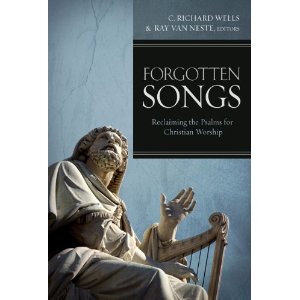
I previously posted the chapter titles for the forthcoming Forgotten Songs: Reclaiming the Psalms for Christian Worship, which is due out this

fall from B&H. As the book makes its way through the publication process, some people have been kind enough to give the book an early reading and share their thoughts. I have been very encouraged by the endorsements that have come in so far and have included them below.

“Saint Augustine once called the Psalter ‘the Old Testament in microcosm.’ All of the riches of the Scriptures filled in the mine of praise, prophecy and poetry that is the Psalter. These riches, however, need to be brought to the light of day so they might adorn the life of the Christian. This powerful edited volume by Ray Van Neste and Richard Wells does just that. It brings the wealth of the Psalms to the life of the church: to be sung, read, and practiced. No doubt this is a volume that will be used in colleges and seminaries in courses on the Psalter.”

Heath A. Thomas, Assistant Professor of Old Testament and Hebrew, Southeastern Baptist Theological Seminary

“At a time when the Psalms and most of the great hymns of the 18th and 19th centuries are largely neglected in modern congregational worship, this book is a much needed wake-up call. Wells and Van Neste have edited a collection of excellent essays which remind us of the prominent place the Psalms have had for Christians from New Testament times onward. The authors urge us to consider once again the spiritual benefits of focusing on the Psalms, and give practical guidance for their recovery in church life.”

– Graeme Goldsworthy, Visiting lecturer in Hermeneutics, Moore Theological College, Sydney, Australia

“A generation ago James Smart wrote a book about the mainline churches entitled, The Strange Silence of the Bible in the Church. A generation later for different reasons the same has become true in evangelical worship services. This book is a precious resource to help the church recover the invaluable prayers and songs that God has given his people to address Him. To an often superficial church that hides its pain, struggle and doubt on the one hand, and fails to see the majesty and greatness of God on the other, Forgotten Songs can help churches and individual believers reclaim a strong dose of Biblical Reality. For future courses on the Psalms that I teach this book will be required reading!”

– Stephen G. Dempster, Professor of Religious Studies, Crandall University

“This book is a welcome addition to the growing literature on the Psalms. Its authors bring together many perspectives, but are united in their conviction that the rediscovery of the Psalter encourages the ancient practice of living in the Psalms, the reclamation of canonical associations, the enrichment of coming into the presence of God with prayer and praise, and the renewal of congregational life. The essays lead the readers in a pilgrimage that takes them from the Old Testament to the New Testament, to the usage and interpretation of the Psalms in the Early Church and the era of the Reformation, and to our modern/post-modern context. The book includes various approaches to the use of the Psalms. I expect that this volume will encourage many to reassess their own theological, liturgical, and devotional practices.”

– Willem A. VanGemeren, Professor of Old Testament, Trinity Evangelical Divinity School

Forgotten Songs of God: Reclaiming the Psalms for Christian Worship is a timely expression of timeless truths. Some readers will discover truths they did not know; other readers will remember truths they had almost forgotten; and still others will rejoice that notice has been taken again of how important the Psalms are in Christian worship, both public and private. All readers will be revived by this refreshing word about the Psalms of the faith. Here is an important book to help us recover the ancient words, still ever new.”

– Michael Travers, Professor of English and Senior Fellow of the L. Russ Bush Center for Faith and Culture, Southeastern Baptist Theological Seminary

“While liturgical churches use the psalms regularly, many Baptist, Pentecostal, and other free church traditions do not. The impressive team of experts in this volume make the case that the Psalms enrich preaching, prayers, singing, and Christian living for every branch of Christianity. This volume is biblically sound and theologically rich, so it is practical to the core. Wells and Van Neste are to be commended for showing new audiences the great value of the Bible’s model songs and prayers.”

-Paul House, Professor of Divinity, Beeson Divinity School of Samford University

Another Children’s Book on the Covenanters

[posted at my children’s book site last week]

While we are travelling in Scotland I began reading to my older boys a book I picked up here- I Rode with the Covenanters, by Kathleen Fidler. We have read several books about the Covenanters along the way (not least Douglas Bond’s wonderful Crown & Covenant trilogy), but it seemed good to read another as we were seeing so many things related to their story. I did not have any previous knowledge of this book or author, but it has been wonderful! The book gives a good portrayal of what it must have been like for many typical families of the time- conviction of faith, yet fears, economic difficulties, etc.

Tonight’s reading was especially powerful- in fact, worshipful. The main character in the book is a 14 year old boy (John) whose father and older brother go off with the Covenanters to seek justice and relief from their oppression. In the portion we read tonight John was on his way to try to catch up with the Covenanter troop to bring food to his father and brother and to see how they were doing. He finds food and shelter overnight with a poor family who are also sympathetic to the Covenanting cause (a good description of the fear and carefulness of the time is given here as well). Because the villagers realize this boy’s father is with the Covenanters they help him though they have little themselves. Then just as they are about to go to bed, the man housing John thinks to ask him if he can read. When he discovers John can read, he asks if he would mind reading to him and his wife a portion from “the Good Book”:

From a cupboard he produced a treasured Bible and placed it on the table before me.

“It is the minister’s,” he whispered to me, as though fearful lest even the walls should hear what he said. Our minister has been outed [evicted] too, but whiles he rides across the hills and gives us a reading frae the scriptures and a bit sermon, forbye. This Bible belonged to his kirk, and he leaves it with me for safety.”

I turned over the pages with reverence. “What would ye like me to read?” I asked.

“Read anywhere ye like, but I would like fine if it could be out o’ one o’ the gospels,” David replied.

“Wait! Wait! This is too guid a thing to keep to ourselves. Be ye finding the place, John, while I seek out those who would wish to hear.”

David slipped out of the door and in a few minutes he was back but not alone. With him was the man who had met me on the hills, the blacksmith, and half a dozen other men and women, who came quietly in like shadows and stood, like shadows too, just outside the circle of the candle light. They did not even disturb the sleeping bairns. When the door was shut, David tapped me on the arm and I read aloud. I commenced at the twenty-fifth chapter of St. Matthew and the thirty-first verse.

The passage John reads is particularly poignant as these people have just taken him in and cared for him as Jesus describes in that passage.

It was a new experience for me to read before so many listeners, but I thought how my father would have done it, and I tried to carry it through in the quiet manner I know he would have done. But I could not help my voice trembling, and I was not ashamed of the great tear that fell upon the page. When I was finished there was a sigh ran round the folk, “Amen. Amen.”

They then ask John is he might lead them in prayer and he does the best he can praying as he has learned at home. With deep gratitude, the people depart as quietly as they came.

I don’t know if the excerpt captures the power of the portrayal which was no doubt heightened for us as I sat reading to my own boys having been walking through the experiences of the Covenanters together. My own voice quavered as I felt just a bit, again, of what it must be like for those whose only access to God’s Word is for someone else to read to them, for those for whom such reading is illegal- a situation which was not only true in the past but is still the case for believers in various parts of the world today. I told my boys that I have prized the opportunity for us to see so much natural beauty and history- and it is a great privilege- but that all pales in comparison with the treasure of God’s Word and the privilege of reading it as much as we want.

Lastly, in the story, as John is almost asleep he was “startled into wakefulness” as he realized he had just broken the law of the land. He had held a forbidden worship meeting and was now liable to severe punishment by his government.

For this simple thing of beauty which had been among us all, I could suffer the severest pains of the law. It would be accounted a wicked thing by the government in Edinburgh. Then suddenly I knew I had done God’s will and that it was the law that was wicked and wrong, and I cared no more. There was a lovely peace came upon me and sleep came down like a curtain.

Reminder of the treasure of God’s word and challenge to obey that word regardless- a powerful time, and lessons I pray sink deep into my own heart and those off my sons.

Ten Commandments of Grace

We were blessed today in the service at St. Andrews Free Church under the preaching of Alasdair Macleod.  The singing, including two psalms, was robust and encouraging. We caught part two of a three part sermon series titled “Ten Commandments of Grace” in which Macleod is essentially seeking to summarize the message of Paul. Today we heard commands 4, 5, & 6 but the handout contained all ten and I thought they were worth listing here. [material in quotes are direct quotes from the sermon or on the outline which was handed out]

1. Thou shalt have no other gods but the God of grace
The Triune God of love
2. Thou shalt feel completely accepted in grace
Justification leads to assurance
3. Thou shalt continue to be amazed by grace
Drawing from Paul’s statements where he continues to be amazed at grace
“Gasp at grace!”
4. Thou shalt commit to a community of grace (Acts 20:24, 32)
“Paul’s letters assume the church.”- no place for solo Christians
Grace in leadership- Leaders in the church are to be gospel-people, caring people, Word-people
Grace in the fellowship- motivated by grace to care for one another
5. Thou shalt enjoy the freedom of grace
“Freedom from human regulation, legalism”
“Freedom for living creatively for Christ”
“Look to Jesus, not over your shoulder”
6. Thou shalt walk in obedience by grace
Grace motivates and empowers obedience
7. Thou shalt know thyself to be gifted by grace
Spiritual gifts, you have a place to serve and contribute
8. Thou shalt be generous in grace
“God has been lavish, so should we not be lavish too?”
In giving & forgiving
“Do something over the top, in His name”
9. Thou shalt speak words of grace
“Words are important and we want to speak like the King”
“Speak with the accent of Jesus”
10. Thou shalt trust thy future to grace
“Grace empowers us to look forward with confidence: for this life and the life to come”

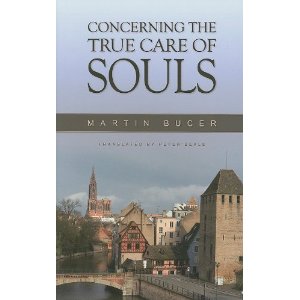
Concerning the True Care of Souls

Concerning the True Care of Souls, Martin Bucer
Translated by Peter Beale
(Banner of Truth, 2009), hb. 218 pp.

Martin Bucer (1491-1551) was one of the leading lights of the Reformation even though he is now lesser known in general. Bucer is the one who invited Calvin to Strasbourg after his expulsion from Geneva and had a significant influence on Calvin.  Many of Bucer’s works have never been translated into English, and we are greatly indebted to Peter Beale for recently translating this important work on pastoral ministry.

In this “little book,” as Bucer described it, Bucer expounds the nature and function of pastoral ministry. In doing so he discusses the nature of the church, church government, and church discipline. But all of this comes under the basic topic of what are pastors supposed to be and do.

The first portion of this book deals with the duties and qualifications for pastoral ministry and is pure gold! I was amazed at how relevant and timely so much of this section was. Bucer argues strongly for a plurality of pastors from a wide range of backgrounds so that the people can be cared for adequately. He also discusses at some length the variety of giftings we ought to expect among pastors serving together in the same church. All must be able to teach, but they may express that gifting in a variety of ways from more one-on-one settings to public proclamation.

Because caring for, protecting and restoring the flock is a central aspect of pastoral ministry Bucer discusses discipline and penance. The surprise to me was the amount of space given to (and the conclusions on) penance. Bucer acknowledges abuses of penance and how it degenerated into mere external works to “pay off” sins. However, he argues that proper use of penance must be maintained. That is he argues that for serious sins, truly repentant people must not be immediately restored (particularly restored to the Lord’s Supper) but must be excluded for a time and even given some ways of humbling themselves in order to help them take more seriously their sins. This was the most challenging portion of the book for me because elsewhere he was supporting my convictions and here he was contradicting them. It seems Bucer expected resistance or possible misunderstanding here because he devoted almost one fourth of the book to the one chapter dealing with this topic.

Bucer makes a careful exegetical case for this penance and we ought to consider carefully such a leading voice from the past. However, in the end I was not convinced. His exegetical arguments were not convincing (a key piece in his argument is identifying the sinning brother in 1 Cor 5 with the one to be restored in 2 Cor 1:5-7). I agree that pastors must wisely work with believers in their struggle with sin and understand that the effects of sin and lingering temptation do not disappear with repentance. However, imposing punishments and withholding the Supper until later seems to encourage what I need so much to fight against- “now, if I will do good for the next few days, then I will know that I have been forgiven.” Bucer works hard to avoid this, but I was not convinced.

The last portion of the book continues with the authority of pastors and their task of caring for the souls of their people.

This is a brilliant book stressing the pastors’ role in caring for souls. Interestingly, the book is strong in calling for evangelism. Though many today still equate Reformed theology with lack of evangelistic and missionary zeal, in this book you find the mentor of John Calvin giving strong rebuke to pastors who fail to evangelize. In fact he rebukes the Western church for failing to engage the Jews and Turks with effective missionary endeavors! Those would have been challenging mission fields at that time.  There is much in this book that is very helpful as we consider how the plurality of pastors work and how church discipline works. Since these two practices have had to be recovered in many churches today, this book provides helpful, practical insight for putting these biblical truths back into practice.

I heartily commend this book to you. Beale has produced a very readable translation making it a joy to read. I will hope to post some quotes in the near future.

Psalms Book in Production

Anyone who has been reading this blog (both of you) over the last year or so will have noticed a focus on the role of the Psalms in worship, both corporate and private. This arose from developments in my own life which corresponded with and were enhanced by a project I led at Union University, funded by a Worship Renewal Grant from the Calvin Institute for Christian Worship (here is a site devoted to that event). Coming out of that event Richard Wells and I began working on a collection of essays designed to teach about and encourage the use of the Psalms in worship. Some traditions use the Psalms quite a bit, but many- including most Baptists- do not. It is our hope that this book might encourage people to reconsider and even rediscover the use of the Psalms.

The book is now in production and is due out in October. It is already listed at Amazon for pre-order. I have pasted in below the table of contents so you can see the contributors and their essays (some titles may be adjusted slightly in the final version).


Introduction: Ray Van Neste

Section 1: Biblical and Historical Foundations


John Witvliet – The Psalms: Gymnasium for the Soul

Jack Collins – Always Alleluia: Reclaiming the True Purpose of the Psalms

Ray Van Neste – Ancient Songs and Apostolic Preaching: How the New Testament Laid Claim to the Psalms

Craig Blaising – Prepared for Prayer: The Psalms in Early Christian Worship

Douglas Bond – Biblical Poetry in a Post-Biblical, Post-Poetry World

Ray Ortlund, Jr. – Delighting in Doctrine: Word and Worship in Psalm 1

Section 2: Practice

James Grant – How I Got My Church to Sing Psalms . . . Without Getting Fired!

C. Richard Wells – Reclaiming the Psalms in Pastoral Prayer: A True Story

Leland Ryken – Reclaiming the Psalms for Private Worship

Calvin Seerveld – Why We Need to Learn to Cry in Church: Reclaiming the Psalms of Lament

Richard Joiner – Performing the Psalms: Reclaiming the Psalms for Corporate Worship

C. Richard Wells – Search Me, O God: Reclaiming the Psalms for Pastoral Care

C. Richard Wells – The Psalm of the Cross as the Psalm of the Christ

Conclusion: C. Richard Wells

“Ancient Words, Ever New”: An Interview with Marty Goetz

Songs to Be Sung: Examples of New Metered Psalms for Singing: Randall Bush, Chad Davis, Justin Wainscott

Resources for the Recovery of the Psalms in the Life of the Church: A Bibliographic Essay: J. Michael Garrett

“God does us an inestimable pleasure”

Preaching on 1 Timothy 3 Calvin expounds proper teaching of the Scripture as a distinguishing mark of a proper church and the considers the great privilege of hearing the word of God, recognizing that it is through His word that God abides with us.

And it is a singular comfort to us, so oft as we are assembled, namely, since the word of God is faithfully delivered to us, then we know that God is in the middle of us, and there sits as ruler, then we have the presence of our Lord Jesus Christ and are knit together to him as members to their head.  Therefore when we are sure of this, have we not, I ask you, good occasion to rejoice?  And therefore let us mark that God does us an inestimable pleasure when his word is thus delivered to us, and we have men who can execute such an office, who have knowledge and the means also to edify us; for it is as much as if God showed himself to us in visible shape, we have no less assurance that we are joined to him and that he governs us than if he should show himself to us face to face.

Do You Desire the Office of Overseer?

In expounding Paul’s comment on people desiring the office of overseer (1 Timothy 3:1), Calvin deals extensively with sinful (arrogant) and proper desire for such a position. He notes the difficulty of the work and that in Paul’s day as in his own, a man could not be a Minister of the word of God unless he completely hazard himself to become a martyr. On the other hand, Calvin notes, God provides the sufficiency. Then he stated:

A man will well be content to be set on work in this charge, especially seeing he knows that it is an acceptable sacrifice to God, and that we cannot bestow our lives and our deaths better than by bringing poor souls who were lost, and on their way to everlasting death, to salvation.  Therefore upon this condition we may desire to be Ministers of the word of God; but yet if we mark what a hard matter it is, if we consider our own ableness, out of doubt we will flee from it as much as we can, and would gladly be delivered from it.  Or if we have this charge, it is upon this condition, that we would gladly that God would call more able men, that they might serve the Church better.  We may not here be angry, we may not seek any specific way out; but no doubt he who has not this consideration when he desires this office, he is only a windbag carried away by naughty affections if he thinks he has a good zeal yet we know that there is nothing but ambition and vainglory in that man, if he has not this fear to hold back himself, and does not desire to have the Church served by others than himself.

This contains another strong statement from Calvin on the importance of evangelism- this is how he preached to his people! One thing that should properly draw men to pastoral ministry is the desire to labor for the salvation of souls. Then, Calvin notes that any man possessing merely the humility arising for basic self-awareness and affection from the church will yearn for God to raise up better men than he for this office. If you are grateful the church has you, you better think again. He who thinks he is God’s gift to the church, is a “gift” from a different source. But, brothers, if you find yourself weighted down with the care of souls, at times crying out to God wondering why he has not provided better for the shepherding of his people- realize, that in this you discover the seal of God’s approval on your calling. God is at work. You and I are not sufficient; but God is, and he is pleased to work through people like us when we realize it is all of him. Better men than us, who have gone before us, have felt this inadequacy. Let us join them in clinging desperately to God while standing fast at our posts.

“The Saving of Souls,” Calvin on Pastoral Duty

“The Holy Ghost called them also Bishops, that is to say, watchmen over the flock, to show that it is not an honor of idleness to be called to this state, and therefore that he must not be idle, but know that he is sent to go about the saving of souls, and therefore must give himself to it and be watchful therein, and take pains about it.”

– John Calvin, sermon 20, in Sermons on the Epistles to Timothy & Titus

Calvin, “Fools Scorn Motherhood”

I continue to be blessed by Calvin’s exposition of 1 Timothy (see previous post). While preaching 1 Timothy 2:15 Calvin took considerable space to reflect on how this text shows God’s approval of the state of motherhood. His words are strikingly contemporary as today we are also needing to re-assert the value of this wonderful work. Calvin is countering a false idea of spirituality which disdained such “earthly work” even considering marriage “of this world,” encouraging women instead to pursue “spiritual” work by entering convents.  In contrast Calvin stated:

Let us learn therefore that if a woman be among her household, and be busied about her children, to wipe them, and comb them, and dress them; or if she be nursing them, up day and night, suffering cold and heat to nurse them, if she bears it patiently, knowing that it is God’s good appointment, and he approves of it, this is a sweet smelling sacrifice to him.

Calvin then took on the “pretend chastity” of nuns, saying that was “nothing” in comparison with the daily work of being a wife and mother.

all the chastity they pretend is nothing before God in comparison to that which he has appointed, that is to say, that although it seems to be a vile thing, a matter of no account, for a woman to take pains about housewifery, to make clean her children when they are arrayed, to kill fleas and other such like, although this is a despised thing, yes and such that many do not even want to look upon it, yet they are sacrifices which God accepts and receives, as if they were things of great price and honorable.

So killing fleas was a common aspect of mothering in the 16th century!

He goes on to say,

Therefore let women say, “Well, although the world has no regard of me, yet must I find myself occupied here, for so God commands me.” And moreover also they have to consider that when they do their duty and execute their office, God accepts well of it, although men despise it.

In his day, as in ours, there were those who scorned “women’s work.” I couldn’t recall how many times my wife has been asked if all she does is stay home with our children or she has been asked if she wouldn’t really like to do something valuable or if she might use her gifts in a manner more beneficial to society. Calvin answers well:

“Indeed there are a number of fools that when they speak of women’s distaffs [i.e. domestic duties], of seeing to their children, will make a scorn of it and despise it.  But what then?  What says the heavenly Judge?  That he is well pleased with it, and accepts it and puts it in his reckoning.  So then let women learn to rejoice when they do their duty, and though the world despise it, let this comfort sweeten all respect they might have that way, and say, “God sees me here and his Angels who are sufficient witnesses of my doings, although the world does not approve of them.”

Calvin strongly affirmed a distinction of roles, but he exalted the value of mothering and called on husbands to appreciate the labors of their wives.

Again when a man sees his wife employ herself all the day long to do her duty, let him also consider whereunto God has called him, that he also for his part may do his duty.  For a man is not born to idleness, nor is a woman.

These are good words for us today as well. On one hand, we can see that affirming the role of wife and mother is not a recent phenomenon. We also see that Calvin, in spite of the mean caricature of him which is often portrayed, is at pains to support wives and mothers, rebuking strongly those who would demean them. And most importantly, we are reminded of this biblical teaching so that mothers might be encouraged that as they work hard at the often mundane tasks of motherhood they are pleasing God- no matter whether anyone else ever notices. And, we, husbands, are exhorted to make sure someone does notice- and we are to give thanks to God for faithful wives and mothers, sharing in the labors, and making our appreciation well known.

[quotes taken from Sermon 19, in Sermons on Timothy & Titus. A new edition is forthcoming]