Chrysostom, Benefit of Psalm Singing

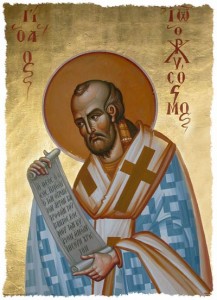
“Nothing, in fact, nothing so uplifts the soul, gives it wings, liberates it from the earth, looses the shackles of the body, promotes its values and its scorn for everything in this world as harmonious music and a divine song rhythmically composed.”

“From profane songs, you see, harm and damage and many dire consequences would be introduced; the more intemperate and lawless of these songs lodge in the parts of the soul, and render it weaker and more remiss. From the psalms, by contrast, being spiritual, there comes great benefit, great advantage and much sanctification, and the basis for every value would be provided, since the words purify the soul and the Holy Spirit quickly alights on the soul singing such things.”

–  John Chrysostom, Homily on Psalm 42; cited in Douglas Sean O’Donnell, God’s Lyrics, 109-110

Why a festival honoring the 400th anniversary of the King James Bible?

On September 15-17 the R. C. Ryan Center for Biblical Studies at Union University will host the festival, “KJV400: Legacy & Impact.” Some today may wonder why celebrate the 400th anniversary of the King James version.

This festival is not a call for everyone to use only the KJV or an exercise in mere dusty history. It is not reactionary or mere nostalgia. Rather,  It is an opportunity to consider an amazing work of God which occurred 400 years ago this year, a significant chapter in the ongoing struggle to bring the Word of God to people, a powerful moment which continues to shape the world through the English speaking church.  The production of the King James Bible is a moment when the church led the culture instead of the other way around as we often see today.  It was a crowning moment of the effort begun many years before of bringing God’s word to English-speaking people producing a Bible which was taken to the ends of the earth shaping world history in its path.

Join us, then, for an invigorating look at the work of God through His word. The production of the King James Bible was not the final chapter of Bible translation, but it has been a key one with rich lessons for us today.  As we examine the historical setting, with the great suffering endured by many to bring the Bible to the common person we will be reminded of the great privilege of having our own copies of the Bible in our language. As we consider the work of God in the past, may we yearn to see God move amongst us afresh.  As we see how God’s word has impacted the breadth of culture, it is our hope that we will be stirred to engage our world anew for the sake of the gospel.

Because the gospel engages all of life we will have not only lectures and addresses, but also theater, music, dramatic readings, film, art and an amazing Bible exhibit. It is our hope that the festival will be a time of refreshing and renewal. The Bible exhibit will be an amazing opportunity to see in one place all the early English translations as well as many other texts and biblical artifacts. We have been told that this exhibit rivals any other on display in North America this year. This will be a wonderful opportunity to marvel at how God has worked to bring us His word.

I hope you will join us.

Chrysostom on the Value of Scripture Reading

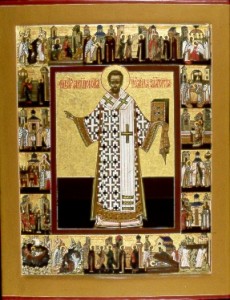
“Hearken, I entreat you, all ye that are careful for this life, and procure books that will be medicines for the soul. If ye will not any other, yet get you at least the New Testament, the Apostolic Epistles, the acts, the Gospels, for your constant teachers. If grief befall thee, dive into them as into a chest of medicines; take thence comfort of thy trouble, be it loss, or death, or bereavement of relations; or rather dive not into them merely but take them wholly to thee; keep them in thy mind.

This is the cause of all evils, the not knowing the Scriptures. We go into battle without arms, and how ought we to come off safe?”
(Homily 9, on Colossians 3:16-17)

I probably should just let this beautiful statement stand on its own, but here are two small observations.

First, note that individuals at this early date are encouraged to obtain their own copies of the scriptures. Personal, private reading goes back further than is sometimes suggested.

Second, while Chrysostom urges Bible reading as the ultimate medicine, he also encourages the reading of other good books- “If ye will not any other, yet get you at least the New Testament.” The Bible is primary, but the use of other helpful books is commended as well.

Luther, Psalms a Manual for Prayer

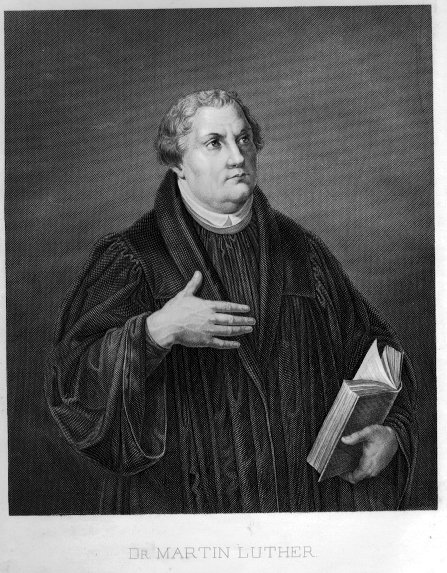
Every Christian who would abound in prayer and piety ought, in all reason, to make the Psalter his manual; and, moreover, it were well if every Christian so used it and were so expert in it as to have it word for word by heart, and could have it even in his heart as often as he chanced to be called to speak or act, that he might be able to draw forth or employ some sentence out of it, by way of a proverb. For indeed the truth is, that everything that a pious heart can desire to ask in prayer, it here finds Psalms and words to match, so aptly and sweetly, that no man—no, nor all the men in the world—shall be able to devise forms of words so good and devout. Moreover, the Psalter doth minister such instruction and comfort in the act of supplication; and the Lord’s Prayer doth so run through it, and it through the Lord’s Prayer, that the one helpeth us finely to understand the other, and the two together make a pleasant harmony …

In my opinion, any man who will but make a trial in earnest of the Psalter and the Lord’s Prayer will very soon bid the other pious prayers adieu, and say, Ah, they have not the sap, the strength, the heart, the fire, that I find in the Psalter; they are too cold, too hard, for my taste!

(from his Preface to the Edition of the Psalter in 1545)

The Psalms- Singing as Prayer

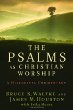
In describing the elements of public worship in the apostolic (1st century) church, Philip Schaaf lists “The SONG, a form of prayer, in the dress of festive poetry and the elevated language of inspiration.” This practice, he writes, “passed immediately, with the psalms of the Old Testament, those inexhaustible treasures of spiritual experience, edification and comfort, from the temple and the synagogue into the Christian church” (History of the Christian Church, vol. 1).

Two things are striking to me in this comment. First, is this beautiful description of the Psalms. How true! What treasures we miss when we fail to appropriate these for our singing and praying as our forebears did.

Second, singing is here seen primarily as a form of prayer. This is a common idea in Judaism, the New Testament (see Acts 16:25), and in the church for centuries. But, it has not been a common idea in my church circles along my journey. We sing to praise God, which is good and biblically based. But what do we miss by failing to consider our corporate singing- at least portions of it- as prayer? What formation do we miss by failing to see the value of prayer “in the dress of festive poetry”?

Chrysostom, Psalm Singing Leads to Happiness

“Do you wish to be happy? Do you want to know how to spend the day truly blessed? I offer you a drink that is spiritual. This is not a drink for drunkenness that would cut off even meaningful speech. This does not cause us to babble. It does not disturb our vision. Here it is: Learn to sing Psalms! Then you will see pleasure indeed. Those who have learned to sing with the psalms are easily filled with the Holy Spirit.”

(Chrysostom, Homily on Ephesians 19.5.19-21; from Galatians, Ephesians, Philippians (Ancient Christian Commentary on Scripture))

Tim Tebow, Through My Eyes

At my blog on children’s literature, The Children’s Hour, I comment on books we read together as a family giving recommendations or warnings. This is the most recent entry from The Children’s Hour:

Through My Eyes, Tim Tebow with Nathan Whitaker

(Harper Collins, 2011), hb., 260 pp.
Ages 10+
My boys and I really enjoyed reading this book. It is different from the others books we typically read since it is a contemporary autobiography, but it was very beneficial.  We had already been drawn into the Tim Tebow story as we had watched his college career and his clear Christian witness. When I met and served with his father, Bob Tebow, and learned more about his family we were only drawn more to Tebow.  This is a genuine young man with a solid Christian family.
So, when we saw this book I thought I’d give it a try for our reading together.  We were not disappointed. The book was entertaining and exciting. The stories of his adventures and mishaps with his brothers growing up were fun and familiar! The stories of his competiveness- especially of his 300+ curls to win a contest leaving him unable to straighten out his arms for days!- were fun and challenging.  Throughout the book Tebow held up faith in God, the importance of family, hard work and perseverance, and our responsibility to help others, especially those in need.  He speaks of his accomplishments without bragging and is honest about his own shortcomings. In the end I was glad for my boys to hear this story and example of hard work and commitment to God. It provided a current example of many of the characteristics we have read and talked about elsewhere.
I have suggested roughly the age 10 or above for the book since that is probably about the time the details of football games, etc. will be of particular interest. The only thing that arose which was more tricky with my younger guys was the incident where the reporter asked Tebow if he was saving himself for marriage. Tebow addresses the issue but does so very tactfully. Still, it simply did not make sense to some of my younger boys who have no idea what he was talking about. If I knew of it ahead of time I would simply have skipped that portion for reading aloud, so I mention it to you in case that is of help.
We commend the book to you, and even though we are die-hard Packer fans we will be pulling for the Broncos as well when Tim Tebow is on the field.

Prayers on the Psalms


I have just received my copy of Prayers on the Psalms:From The Scottish Psalter of 1595 and am delighted with it! It will now be placed on my morning table alongside Reading the Psalms with Luther to aid me as I seek to pray the Psalms.

After just seeing the book in a catalog I did not realize this little volume contains a prayer from each Psalm. This makes it, like Luther’s book, immensely valuable. Some Psalms and some mornings combine to make it relatively easy to pray the particular Psalm in view. Many other days it is more difficult and having a good example is very helpful.

Furthermore, late 16th century Scotland is a good source for mature reflection on the Psalms- a day when the psalms were cherished, sung and prayed. The difficult days of the Covenanters, when so many died for the faith, was yet 40 or so years away. Yet, it is no surprise that when these Covenanters faced persecution, rejection and death, they did so with the Psalms on their lips.  These psalm-based prayers from the previous generation formed part of the soil from which grew such faith and endurance.

Lastly, I am increasingly convinced that the best way to prepare to preach the Psalms is to have been praying and singing them along the way. Thus, I am grateful for this little volume.

The Gospel is for All Christians

While at Southern Seminary about a week ago I had the opportunity to meet Mitch Chase and to see his new book, The Gospel Is For Christians.  So far I have only been able to peruse the book, but I like what I see. The thesis is dead on and has been a key concern of my own teaching over the last several years- We must not think of the gospel simply as the way to get saved but as the way to live. The gospel is more than “the plan of salvation” (though not less). It is the explanation of and power for life.

I applaud Mitch’s effort in addressing this important theme and wanted to make sure you heard about this book.

Michael Morgan Bible Exhibit at Union University

I recently posted a list of the items from the Green Collection which will be on exhibit at our upcoming King James Bible Festival, “KJV400: Legacy & Impact”. I can now also provide a list of the items which will be in display simultaneously from Michael Morgan’s private collection. Michael has visited Union previously with an exhibit of his old and rare psalters. The list below contains hyperlinks to help explain various items.

I was amazed at what will be on display between these two collections so I asked Michael how unusual this exhibit will be, since he is often involved with similar exhibits and has a good knowledge of them.  His answer amazed me:

This really promises to be one of the most incredible exhibits anywhere during this anniversary year. Many of the books are so exceedingly rare that the sheer fact they will all be in one place at the same time makes it a unique opportunity to experience the history of the King James Bible. Virtually every translation will be represented in first or very early editions, from Wycliffe to the Oxford Standard KJV of 1769. That’s truly amazing!

I can’t imagine another exhibit in the country which comes close to this. I do know that the Folger Library [Washington, D.C.] and the Bodleian Library at Oxford have assembled an exhibit, but except for the fact that some of those books belonged to the kings and queens involved in the process, it won’t be any more comprehensive. I can only speak for the English side, but this exhibit borders on unbelievable. Where else could there be 2 Tyndales, a Coverdale and a Taverner, 4 Great Bibles, and 2 first printings of the KJV? I hope the exhibit will be available for viewing to those who might not be registered for the conference. It would be worth the driving time and perhaps even the cost of a hotel room to see such an assembly!

This will be a wonderful, perhaps once in a lifetime, opportunity and I hope you and people in your churches will be able to take advantage of it.

Here is the list of key items which will be here from Michael Morgan’s collection:

Wycliffe NT (Pickering printing, 1848)
(a magnificent black-letter printing, a good complement to the mss. leaf to be displayed)

Tyndale/Erasmus NT, 1550
(prints Tyndale and Erasmus’ Latin versions in parallel columns)

Matthews Bible, 1549 (“Wife-Beater” Bible)
(the second printing of Matthews Bible, and the first with Becke’s controversial notes)

Great Bible, 1540
(good complement to the 1539, virtually identical but could be opened to another page)

Great Bible, 1562 (First Elizabethan Edition)
(with Altdorffer’s woodcuts, beautiful edition)

Geneva Bible, 1578 (First Large Folio Edition)
(black-letter to compete with Bishops’ Bible, with Prayer Book)

Geneva Bible 1640
(Final Edition, and first to formally omit the Apocrypha)

Bishops’ Bible, 1572
(Second Folio with revisions, display could highlight differences)

Cartwright’s NT 1618 (Catholic confutation)
(similar in scope to Fulke’s NT)

KJV Folio 1611 (“He” Bible)
(a second copy of the First Folio, could be open to highlight a different page)

KJV Folio 1616
(First revision)

KJV Folio 1629
(First Cambridge revision)

KJV Folio 1638
(First Cambridge “Standard” Edition)

KJV Folio 1660
(Field’s magnificent Bible commemorating Charles II, with huge folding engravings)

KJV 1675
(First Oxford Edition)

KJV Folio 1716/7
(Baskett’s “Vinegar” Bible, very impressive edition — huge!)

KJV 1762
(Paris’ Cambridge revision)

KJV Folio 1763
(Baskerville’s Bible, First Issue, considered one of the finest English Bibles ever printed)

Full Score of Handel’s “Messiah” 1761 (KJV Text)
(a tie-in with the music associations of the KJV)

Macklin’s Bible Folio 1800
(largest Bible ever printed — I’ll only bring one of the huge volumes, of which there are 7)