A very strong proof of this destruction of death and its conquest by the cross is supplied by a present fact, namely this. All the disciples of Christ despise death; they take the offensive against it and, instead of fearing it, by the sign of the cross and by faith in Christ trample on it as on something dead. Before the divine sojourn of the Savior, even the holiest of men were afraid of death, and mourned the dead as those who perish. But now that the Savior has raised His body, death is no longer terrible, but all those who believe in Christ tread it underfoot as nothing, and prefer to die rather than to deny their faith in Christ, knowing full well that when they die they do not perish, but live indeed, and become incorruptible through the resurrection. But that devil who of old wickedly exulted in death, now that the pains of death are loosed, he alone it is who remains truly dead. There is proof of this too; for men who, before they believe in Christ, think death horrible and are afraid of it, once they are converted despise it so completely that they go eagerly to meet it, and themselves become witnesses of the Savior’s resurrection from it. Even children hasten thus to die, and not men only, but women train themselves by bodily discipline to meet it. So weak has death become that even women, who used to be taken in by it, mock at it now as a dead thing robbed of all its strength. Death has become like a tyrant who has been completely conquered by the legitimate monarch; bound hand and foot the passers-by sneer at him, hitting him and abusing him, no longer afraid of his cruelty and rage, because of the king who has conquered him. So has death been conquered and branded for what it is by the Savior on the cross. It is bound hand and foot, all who are in Christ trample it as they pass and as witnesses to Him deride it, scoffing and saying, “O Death, where is thy victory? O Grave, where is thy sting?”
The Privilege of Theological Study
 Today in one of my classes we discussed B. B. Warfield’s classic booklet, The Religious Life of Theological Students. There is much wisdom in this little booklet, so if you have not read it I encourage you to do so (online here).
In one places he exhorts theological students to realize and appreciate the privilege they have in studying about God. This privilege continues to apply to pastors. We must not forget what a privilege is our sin giving ourselves to the study of God.
“Think of what your privilege is when your greatest danger is that the great things of religion may become common to you! Other men, oppressed by the hard conditions of life, sunk in the daily struggle for bread perhaps, distracted at any rate by the dreadful drag of the world upon them and the awful rush of the world’s work, find it hard to get time and opportunity so much as to pause and consider whether there be such things as God, and religion, and salvation from the sin that compasses them about and holds them captive. The very atmosphere of your life is these things; you breathe them in at every pore; they surround you, encompass you, press in upon you from every side. It is all in danger of becoming common to you! God forgive you, you are in danger of becoming weary of God!” (emphasis added)
Influence of the Psalms in the Renaissance
I continue to be intrigued by the wide-ranging, deep impact of the Psalms across the centuries. This quote is just one more documenting this impact on the church and the surrounding culture.
“The Renaissance was a cultural movement founded on the enterprise of translation …. The Earl of Surrey and Richard Stanyhurst translated Virgil’s Aeneid; Arthur Golding and George Sandys translated Ovid’s Metamorphoses; but all four translated the Psalms, as did John Milton, Sir Philip Sydney, the countess of Pembroke, Sir Thomas Wyatt, Sir Francis Bacon, Henry Vaughan, Phinehas Fletcher, and Richard Crashaw. Virtually every author of the period (Shakespeare, Spenser, Bunyan, Donne, Herbert, and Johnson) translated, paraphrased or alluded to the Psalms in their major works. In fact, the translation, or ‘Englishing,’ of the biblical Psalms substantially shaped the culture of sixteenth- and seventeenth-century England, resulting in creative forms as diverse as singing psalters, metrical psalm paraphrases, sophisticated poetic adaptations, meditations, sermons, commentaries, and significant allusions in poems, plays, and literary prose, by English men and women of varied social and intellectual backgrounds…
The Protestant Reformation sanctioned and even demanded vernacular translations of the Bible, but no biblical book was translated more often or more widely in the subsequent two centuries than the Psalms.”
– Hannibal Hamlin, Psalm Culture and Early Modern English Literature
(Cambridge University Press, 2004), 1
Baptist21 Panel at Union University
Tonight Baptist21 will host a panel discussion at Union University at 8pm in Bowld 247.
Here is the information from the Baptist 21 site:
Panelists include Greg Thornbury, Ray Van Neste, Taylor Worley, and Nathan Akin.
In effort to best serve Union students and promote Gospel-centered conversation among Southern Baptists, the questions will focus on the following;
1. Ask the professor anything,
2. Church Planting/Revitalization
3. The role of Theological Education in Ministry.
Questions may be submitted in the fields below, or asked at the event.
Baptist21 is grateful for Union allowing us to host this event on their campus, and invite all Union students, staff, faculty, alumni, and local pastors and church members to join us on Oct 12 at 8pm.
There is no registration for this event. All are invited. Coffee will be available
Ambrose as Pastor
In Augustine’s Confessions his description of Ambrose as a pastor is instructive. He mentions how Ambrose is taken up with ministering to the needs of his people (“to whose infirmities he devoted himself”) and then stealing time for study (Book 6.3). His first mention of Ambrose’s labors provides a model portrait for pastors:
And to Milan I came, to Ambrose the bishop, … thy devoted servant. His eloquent discourse in those times abundantly provided thy people with the flour of thy wheat, the gladness of thy oil, and the sober intoxication of thy wine. To him I was led by thee without my knowledge, that by him I might be led to thee in full knowledge. That man of God received me as a father would, and welcomed my coming as a good bishop should. And I began to love him, of course, not at the first as a teacher of the truth, for I had entirely despaired of finding that in thy Church–but as a friendly man. And I studiously listened to him–though not with the right motive–as he preached to the people. (5.13, Outler’s trans.)
May we, like Ambrose of old, receive people as a “father” and a “friendly man”, thus winning a hearing for the truth we teach as we abundantly provide God’s people with the nourishment of His word.
Leland Ryken’s Forthcoming Book on the KJV
 I have had the privilege of reading a pre-publication copy of Leland Ryken’s forthcoming book, The Legacy of the King James Bible: Celebrating 400 Years of the Most Influential English Translation, which is due out from Crossway in January.
Too many people my age and younger will simply yawn at the 400th anniversary of the KJV next year. This is both sad and bad. Negative reactions often arise due to interactions with those who argue that the KJV is the only proper English translation. This is unfortunate. In spite of the misuse of the KJV by some, this translation has had an amazingly wide and deep impact for good on the world. The KJV is a good example of an instance where the church led the culture rather than chasing it. We do well to consider and appreciate what God has done and Ryken’s book will help you to do just that.
Dr. Ryken’s book is divided into four parts:
The King James Bible in Its Own Day
The King James Bible in History
The King James Bible as a Literary Masterpiece
The Literary Influence of the King James Bible
In these sections Ryken presents the setting in which the KJV was produced, traces its impact in history, language, culture and religion, and discusses its literary merits. Even though I talk about some of these things in my classes I was amazed to learn so much more about the impact of the KJV. In addition Ryken’s forthright style made it an enjoyable read.
Dr. Ryken will be presenting some of the information in this book when he participates in our upcoming conference “KJV400: Legacy & Impact”, September 15-17, 2011 here at Union University.
So I encourage you to get the book and consider attending this conference.
Ryan Center Conferences in 2011
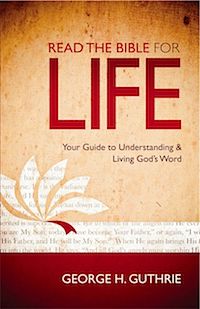 I am pleased to be busily working on two conferences through the Ryan Center for Biblical Studies for 2011. I believe both will be helpful for pastors and laypeople.
This Spring we will host our regular bi-annual Bible study conference. This time our theme will be “Read the Bible for Life” and our plenary speaker will be David Platt. The conference theme is taken from the book and initiative written by George Guthrie and focuses on the desperate need of raising the level of biblical literacy within the church (introductory video). Platt will address the theme and there will be training sessions for churches and groups wanting to use the “Read the Bible for Life” material. Michael Card will also be joining us to teach and sing.
The conference will run from Friday evening to Saturday afternoon, April 15-16, 2011. The cost for the full conference will be $50 with registration opening later in the fall.
Then, in the Fall, September 15-17, 2011, we will host “KJV400: Legacy & Impact” with plenary speakers Leland Ryken, Timothy George, and John Woodbridge. 2011 will mark the 400th anniversary of the publication of the KJV, which many have hailed as the most significant literary work ever produced in English. We will consider and celebrate the impact of this translation in various realms of life recognizing this instance where the church shaped the culture of its day rather than simply following it. Union faculty members will present papers examining the impact of the KJV on their various disciplines including literature, history, theology, music, business, political science, and science. Cost and registration information will be made available closer to the time.
Currid on Habakkuk
 John D. Currid, in his recent commentary, The Expectant Prophet: Habakkuk Simply Explained
“At the very heart and core of the Scriptures is the doctrine of the sovereignty of God. What this means is that God is the Creator of the universe, Lord and Master of heaven above and the earth beneath, and his will is the cause of all things. He is simply sitting on the throne of the universe. He maintains creation, directs it and works all things according to his own will and purpose. Everything that happens in heaven or on earth occurs because of God’s decree, will and purpose. This is the Bible’s teaching, and we reject it at great peril. The centrality of the doctrine of the sovereignty of God is much needed in the church today. The zeitgeist of the day is man’s self-centeredness – that is, that the entire world revolves around humanity. The self-absorbed ‘me-ism’ of the day in the West is almost overwhelming. We need a radical change in thinking that acknowledges that God is the centre of reality, and not we ourselves. It should be theism over ‘me-ism’.” (9)
This is a good commentary!
Augustine the Preacher
 In the recent translation of Augustine’s Homilies on the First Letter of John
“…they are marvelous examples of the easy interaction that Augustine enjoyed with his congregation; they demonstrate his ability to adapt to the moment, to show how scripture spoke to contemporary issues, to present often-difficult material that he had mastered to his listeners in a way that they could understand, and to temper the exegetical with the spiritual.” (15-16)
This is a good model for preaching. May we imitate it.
Eusebius, How God Used Men to Uphold His Church
In our opening session of our men’s class at church Wednesday night we started with this video from Darrin Patrick which many of you have no doubt seen.
Patrick is introducing a book on church planting, but his point in this video is the importance of men in the life of the church. We took this as the starting point of our class- God sustains his church often through godly men.
Then, that same evening I read to my boys from Eusebius’ Church History, Book 5, Section 1, on the persecution in Lyons. This section jumped out to me as affirming the same point as Patrick’s video and our class discussion:
“The intensity of the pressure here, the awful rage of the heathen against the saints, and the sufferings of the blessed martyrs are beyond description or writing. For the Adversary, in a foretaste of his own imminent advent, attacked us with all his might. He used every means to train his followers against the servants of God, so that we were not only excluded from homes, baths, and marketplaces, but were even forbidden to appear anywhere. But the grace of God rescued the weak by deploying the strong, pillars of men who drew on themselves the full attack of the Enemy and endured every punishment as their hurried to Christ, proving that the sufferings of this present time are not worthy to be compared with the glory that shall be revealed in us.” 171
The grace of God – sustained by deploying the strong, pillars of men. May we be about developing such pillars today- not rooted in bravado, but in confidence in the grace of God which empowers the fallen and frail.