Wrestling with My Boys

I absolutely love wrestling with my boys. I began wrestling with them when they were very little and this “wrestling” consisted of rolling around on the floor and rolling them over. We progressed to flipping them upside down, tossing them into the air and various other forms of roughhousing which they loved as much as I did. There were naysayers then, but we let them worry while we had fun.  Now my older boys are 16, 14, and 12, and, as they are bigger, the wrestling is only that much more fun! It now involves a bit of a challenge as they have weight and strength. And my oldest now wants to test his strength and ability against me. It is great fun! He especially likes to have another brother be quarterback throwing to me in the end zone with him covering me. We mix it up real good, and nothing thrills him more than to keep me from catching a pass. And, I take great pleasure in catching most of the passes, shaking him off, knocking him down and, generally, as much as possible, dominating him! I don’t believe in gloating and think “celebration dances” are sissy, but I can make a point of letting him know his best efforts to beat me failed.

Watching this, some people like to say, “You know one day he’ll best you.” I have various ways I’d like to respond to these sage observers. One is to say in mock surprise, “Really? I’ve never considered the fact that I am getting older and further away from my prime while he is approaching his! Speak more, O Wise One!” Of course he will one day best me. That’s the way it is supposed to be. These folks seem to be suggesting that I will regret this turn of fortunes one day. Nothing could be further from the truth. Of course, when the day comes, and he regularly dominates me I’ll not rejoice in losing the game. But winning has not been my goal all along any way. I’ve been at work building men, and his beating me is just one more step in that process. Of course he’ll beat me one day, but I’m making sure in the meantime that when he does beat me he’ll know he accomplished something. I’m putting it on him now- of course in good fun with an eye to what he can handle- so that when he does become the champ he’ll be proud of an accomplishment. No, I’m not dreading the day he beats me. I’m watching for it. If I’m dreading anything, it’s the day when I can’t mix it up with him like this anymore.  Of course that day will have its own blessings, but in the meantime I’ll be making the most of what we can do now, banging into one another, laughing, playing and mixing it up. And I think, in this way, I’ll be fortifying his soul.

The Message of Esther, a Poem

A week ago Tom Fox preached a wonderful message on the book of Esther as whole. In discussing God’s providential work in preventing the king from sleeping and how that lead to Mordecai’s exaltation and eventually the thwarting of Haman, Tom used the phrase, “Death to life, a sleepless night.” That wording struck me and along with the thoughts stirring in my mind from the sermon I hurriedly jotted down the following poem.

Death to life, a sleepless night
The serpent and seed of woman fight.
Haman rises to destroy
Lest there be born a little boy.
The plan is hatched, deed almost done,
Yet intervenes the Sovereign One.
A questionable queen at appointed time
Raised up by God to preserve the line.
Wicked plan comes in clandestine
But God deliverance did predestine
Haman anticipates his own exaltation,
But serves Mordecai with the praise of the nation.
Yet Haman will be lifted high,
On gallows planned for another he’ll swing and die.
God was working in the royal split
So a Jewess on the throne might sit,
Risk her life in illegal suit
The king’s help to recruit.
So the day appointed for destruction
Instead brings in a resurrection
Purim, a feast of God’s sovereign care,
Guarding and keeping His people everywhere.
Keeping his word, advancing His plan
To send forth a savior, God become man.

Psalms Book now Available

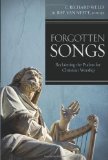
I am pleased to say Forgotten Songs: Reclaiming the Psalms for Christian Worship (B&H), edited by  Richard Wells and myself is now available. At Amazon you can see the table of contents as well as preview the book quite well. The preface and conclusion will give you a feel for the aim of the book.

I am truly hopeful that the book might encourage people and churches to re-engage the psalms in private and corporate worship. For my part, this book is the fruit of my own personal journey in re-engaging the Psalms, drawn by the scriptural exhortations and the testimony of the church across the ages.  My life has been deeply enriched, my prayers have been expanded and strengthened, and my worship enhanced by an increasing engagement with the psalms over the last several years. I, and my family with me, am only getting started, and I hope others will join in.

Working with the contributors to this book has been a rich blessing.  I have learned much from the fine work of Richard, my co-editor, and our contributors, Ray Ortlund, Jack Collins, Leland Ryken, John Witvliet, Calvin Seerveld, Craig Blaising, Douglas Bond, James Grant, Richard Joiner, and Mike Garrett.

I hope the book may be useful to you.

Spurgeon, When We Need to be Made Weak

Terence Peter Crosby has done us a favor by compiling and editing C.H. Spurgeon’s Forgotten Prayer Meeting Addresses (Day One Publications, 2011), a collection of addresses on prayer which were not included in the massive collections of Spurgeon’s sermons. This is a gem for anyone who appreciates Spurgeon- and who can’t use encouragement in prayer?

Here is one gem from the book as Spurgeon considers Jacob’s wrestling in Genesis 32:

There was something in Jacob that was too strong, so he had to be made weaker. He was much too clever, and cunning, and crafty, for the Lord to bless him as he was; and there are many of God’s children, nowadays, who are very much like him. They know too much, they feel themselves too strong, they have not enough of the true child spirit, they are not little enough and humble enough for God to bless them.

So Jacob, being so big in his own estimation, had to be taken down a great deal before he was fit to receive the blessing that God intended to give him. (12)

Select Practical Writings of John Knox

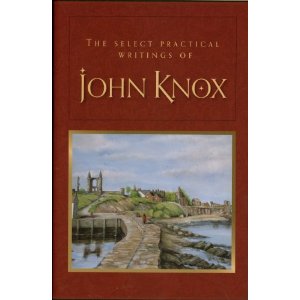
I have enjoyed perusing Banner of Truth’s republished edition of The Select Practical Writings of John Knox.  When this volume was originally published in 1844 it was part of an effort to make available to “every family” the “good old theological literature of Scotland,” particularly “those venerable treatises of practical theology and personal religion” which have “kept alive true religion in many a district where, in the pulpit, the trumpet gave forth an uncertain sound, or a sound all too certain on the side of error” (vii-ix). The original preface notes that Knox and others had come to be known only for their controversial works and that we would do well to see also the inner workings of their devotional lives in these practical writings.

This volume also includes an introduction from the 19th century edition, written by Thomas Thomson. His statements about John Knox’s writing style bear quoting in full.

Much indeed has been said of Knox’s ruggedness and want of taste, and heavy have been the allegations against him as the enemy of all refinement. But let the choice of his words and structure of his sentences be considered – his epithets so pregnant with meaning, and the march of his language, so stately and so full of music – and it will be acknowledge, that as a writer of the old rich English tongue, he had few equals, and certainly no superior, during his own day. Nay, more than this, he not only exhibits the highest literary excellencies of his English contemporaries, but with his characteristic good feeling and sound sense, he avoids that classical and scholastic pedantry by which their writings were so generally infected. From this circumstance, as well as from the vigor of his intellect, and straight-forwardness of his habits of thought, Know is a writer for all time, and will be intelligible in every age – and especially to those who prize the language of the Bible. (xxxi)

We still remain in regular need of examples of sound theology well written.

The book contains sermons, treatises on prayer and Scripture, and several letters. In a series of letters to his mother-in-law, Knox seeks to help her deal with insecurity over salvation and a burdened, tender conscience. You’ve heard Knox thunder. Listen here as he comforts a tender soul with the balm of grace. It is a wonderful reminder that both voices are needed in a pastor.

Practical Ecclesiology from Conrad Mbewe

Conrad Mbewe, Foundations for the Flock: Truths About the Church for All the Saints (Granted Ministries Press, 2012), hb., 338 pp.

Here is a valuable, recent book you may not have heard about. Conrad Mbewe, often called “the Spurgeon of Africa,” led the planting of Kabwata Baptist Church in Zambia about 25 years ago and continues to pastor there. In this book he has collected several booklets he had previously published in Africa. These materials came out of his effort to establish biblical church order and practice and are very relevant today.

The Section headings for the book are as follows:

Your Baptismal Class Notes

Biblical Church Government

The Lord’s Supper

The Role of Women in the Church

Challenges in Today’s Pastoral Ministry

Worship in Spirit and Truth

Relationship Between Church and State

Biblical Inter-Church Associations

Partners in the Harvest

Missions at Kabwata Baptist Church

This is a helpful book on various levels, not least because it arises from the labors of a faithful servant striving to accomplish these various things and doing so in a different cultural setting from most of us.

Thanks to Granted Ministries Press for publishing this book. I have only just discovered this press and have realized they are producing some very helpful material.

Stennett, Showy Preaching & False Conversions

As a follow up from the last post, here is a further comment from Samuel Stennett. He is responding to the argument that shallow, flamboyant preaching has at least led to many conversions. Since this argument continues today, Stennett’s response continues to be relevant.

And now there remains only one thing more to be noticed, which we hear sometimes urged by weak people as an excuse for the indiscreet liberties we wish to correct; and that is, that “this eccentric mode of preaching has been owned for the awakening and converting of sinner.” But before this argument can have any force, the fact itself should be fully established. Many have been supposed to be the contrary. Convictions have been mistaken for conversion, and a fit of warm enthusiastic zeal, attended with a temporary external reformation, has been deemed sufficient evidence of a renovation of heart. And thus a supposed fact, or what is rather wished than proved to be a divine approbation of such preaching. But even admitting the fact, the inference by no means follows. Very unworthy characters have been instruments of great good, and the unjustifiable extravagancies of weak and inconsiderate men have been overruled by divine Providence, in some instances to very salutary purposes.

Samuel Stennett on Preaching

Particular Baptist Press has recently republished Samuel Stennett’s An Exposition of the Parable of the Sower in Matthew 13, and it is worth purchasing. Stennett (1728-1795) served as a Baptist pastor for almost 47 years in London and composed many hymns including “On Jordan’s Stormy Banks.”

In the introductory portion of his exposition Stennett provides a helpful discussion of preaching. His words continue to be quite relevant, so I have included a lengthy excerpt here. At first it may sound like he is opposed to animation in preaching, but, if you read on, you see that is not the case. He is concerned that showmanship not obscure the message.

And now we are upon the subject of public preaching, it may not be amiss to add, that this mystical treatment of Scripture is not the only evil we have to complain of. The pulpit is too often disgraced with a kind of language, action, and manner of address, better suited to the familiarity of the market or fireside, yea in some instances to the drollery of the stage, than the gravity of a Christian assembly. Sermons shall become vehicles not only of trifling puerilities, quaint conceits, and fantastic allusions, but of idle stories, some true and some false. At every step the preacher advances you shall have some image held up to view, taken from common life, dressed in an antic form, and adapted as it should see rather to disturb than to excite devotion. Or if this be not his aim, but on the contrary his object is to make some truth or duty familiar to his hearers, yet the means defeat the end: for the substance is lost amidst the people’s attention to the shadow, and so much time is taken up about the images of things, that little is left to investigate the real nature of things themselves.

That this is an easy mode of preaching and requires no great labor or ingenuity, is not to be doubted. A man of slender capacity, with a little natural elocution and a good deal of courage, may easily enough descant for a while upon this or that trite metaphor, making its several qualities stand for something he has no clear idea of, and knows not how to express in plain language; especially if he has the talent of digressing when occasion requires, and of mingling with his discourse a variety of tales, some ludicrous and others serious. And thus possessed of the art of preaching pray why should he throw away his time in laborious researches into nature, the Word of God, and his own heart? Why should he spend his days and nights in close thought, diligent reading, severe inquiry, and a constant succession of painful exertions? Truly if this mode of preaching were agreeable either to common sense or Scripture, he would be justified in forbearing such labor. But as this is not the case, it would surely be more for his own and the people’s advantage, if he were less solicitous about his ease, and applied himself with great anxiety to his duty. It is the plain language of the Bible, Give attendance to reading, to exhortation, to doctrine (1 Tim. 4:13); Study to show thyself approved unto God, a workman that needeth not to be ashamed, rightly dividing the Word of truth (2 Tim. 2:15). Labor to get at the grounds and reasons of things; to explore their nature, uses, and effects; to state clearly the difference between good and evil; and thus to lead men step by step to the knowledge of God, Christ, themselves, their interest, duty, and final state.

It is indeed to be feared too many hearers are more pleased with sounds than sense, with the shadow than the substance, the false glare of a bold image than the striking energy of truth. They feel no weariness in hearing a loose unconnected unmeaning harangue, but their spirits are quickly jaded by an attention to close reasoning. In short, so their fancy is pleased and their passions moved, they care not what becomes of their understanding and judgment.

Dictionary of Scripture & Ethics: Neither Scriptural nor Ethical

Preparing for my annual survey of commentaries and biblical reference works for Preaching Magazine (see last year’s installment) which will be out soon I needed to assess Baker Academic’s Dictionary of Scripture and Ethics (2011), edited by Joel Green. It is a large reference work so I decided the best way to get a feel for it would be to dip into articles on some hot topic issues. I was surprised by what I found particularly on the issue of homosexuality.

The entry, “Homosexuality,” by Jeffrey S. Siker concluded essentially by saying the Church is divided over the issue of whether or not homosexual activity is sinful. The weight of the historic affirmation of the church through the centuries seems to have been missed. The closing sentences of the entry states:

The Bible serves as a key touchstone for this conversation within the church, though its interpretation, relevance, and application in relation to homosexuality remain points of significant contention, especially as interpreters seek to correlate and integrate the biblical witness with other sources of authority- tradition, reason, and experience.

Since Paul may have only known of negative or abusive “forms of homoerotic activity,” Siker argues, we cannot be certain his condemnation of homosexuality fits all expressions of it. “Like most Jews of his day, he [Paul] seems to presume heterosexual expression as the norm, though his own preference is for celibacy (1 Cor. 7:7).” Paul’s apostolic teaching to the church is reduced to first century Jewish presumption and personal preference!

The central issue here, as Siker notes, is the role and authority of Scripture. This entry elevates “tradition, reason, and experience” as “other sources of authority” on the par with Scripture allowing us to overturn the plain statements of Scripture.  In fact, however, it is primarily reason and experience that are in play here. If tradition had, in fact, been given more weight the conclusion would have to be different. Thus, both Scripture and tradition are demoted.

Sadly the entry, “Marriage and Divorce,” by Allen Verhey goes even further. Verhey states:

We need not regard divorce as good or homosexual acts as good in order to acknowledge fidelity and mutuality between divorced and homosexual persons as good.  If we allow divorce in a world such as this for the sake of protecting marriage and marriage partners, and remarriage after divorce, then perhaps we should also consider blessing homosexual unions for the sake of nurturing fidelity and mutuality and protecting the homosexual partners. (emphasis added)

If we would respond that the Church cannot bless homosexual unions because the Church’s Head forbids it in His Word, Verhey, in keeping with the previous entry states:

Scripture is not a timeless code for marriage and divorce, but in Christian community it is somehow the rule of our individual lives and of our common life.  We set the stories of our lives, including the stories of our singleness and of our marriages, alongside the story of Scripture to be judged, challenged, formed, re-formed, and sanctified.  Fidelity to this text and to its story does not require (or permit) us to read Mark (or any other particular text) like a timeless moral code.  We do not live in Mark’s community (or in Matthew’s or Paul’s), but we do live in memory of Jesus, and we test our lives and our readings for fidelity.  Fidelity requires creativity.  And creativity licenses the formation of rules and judgments concerning divorce that need not be identical to Matthew’s concession or Paul’s, but that respect both the vows of marriage and the partners of a marriage, safeguard both the delight and vulnerability of sexuality, protect vulnerable partners, and honor God’s creative and redemptive intentions. (emphasis added)

Somehow?! Really, “somehow”? If we are left saying Scripture is “somehow the rule of our individual lives and of our common life,” then it is not the rule for our lives. According to this entry we are free to reset the boundaries in ways entirely different from what is seen in Scripture and still call that consistent with the Scriptures.

That this book has gone forth from an evangelical publisher and is likely to be seen as a standard reference work on scripture and ethics is both sad and alarming. I can only characterize the position of these entries as capitulation, and capitulation on one of the key ethical issues of our day. They obviously do not find their ethical position in Scripture but argue for ways to avoid the clear meaning of the text of Scripture by elevating human reason and experience (and arguably not the best of either of those). Here these authors fail to stand; I wish they could have done other.