The Apostle Peter tells us that in Paul’s letters “there are some things … that are hard to understand” (2 Peter 3:16). We are not surprised then to find passages which require work to understand. In these cases it becomes particularly clear whether one approaches the Scripture expecting it to conform to one’s own understanding (Does this passage fit life as I understand it?) or whether one approaches the Scripture as the true Word of God to which we must conform (it is true, how must my understanding adjust to appropriate this teaching).
I stumbled upon a very clear example of this this week in C. H. Dodd’s commentary on Romans (The Epistle of Paul to the Romans. New York: Harper and Brothers, 1932). In discussing Paul’s use of a marriage analogy in Romans 7 about the law, Dodd states, “The illustration, however, is confused from the outset” (100). He goes on to say, “We shall do best to ignore the illustration as far as may be, and ask what it is that Paul is really talking about in the realm of fact and experience” (101).
I am aware that Dodd did not share my view of the Scripture, but this level of condescension was still surprising. It only gets worse. Dodd’s concluding paragraph on this passage is below:
The two lines of illustration, then, which Paul offers, have not proved very felicitous. He lacks the gift for sustained illustration of ideas through concrete images (though he is capable of a brief, illuminating metaphor). It is probably a defect of imagination. We cannot help contrasting his labored and blundering allegories with the masterly parables of Jesus, unerring in their immediate translation of ideas into pictures, or rather their recognition of the idea in the picture which life itself presents. Paul flounders among the images he has tried to evoke, and then with unconscious humour pleads that he is trying to stoop to the weak nature of his correspondents. We are relieved when he tires of his unmanageable puppets and talks about real things (103 – emphasis original).
Too bad for Paul. It is a shame he had a defective imagination and blundered so poorly in these letters which have shaped the Western world and have impacted millions of people the world over (believers and unbelievers). Dodd’s comments remind me of a retort Howard Marshall once gave in a seminar where someone presented an argument similar to Dodd’s (on a different passage)- “I now have a new exam question for first year students, ‘Rewrite Paul’s argument in order to more faithfully communicate his point’.”
Yes, commentators note the challenge of this passage, but across the centuries they have not landed on Dodd’s counsel of despair.
Of course someone with a high view of the Bible’s inspiration cannot brook Dodd’s approach. However, even apart from inspiration, this dismissive condescension is foolhardy. It reminds of C. S. Lewis’ apt phrase, “chronological snobbery”- the ancients were obviously less intelligent than we are and we can explain how it really ought to have been done.
We ought beware of the hubris of assuming we- whose writings have not yet endured a generation, much less a couple of millennia- can stand in judgment over writing which has been read, understood, appreciated and applied for 2,000 years in various cultures and translations. Simple historical awareness and cognizance of our own smallness should give pause.
One suspects the defective imagination was Dodd’s.
, 164).
 , R. G. Collingwood- A fascinating little book. I got lost some in the philosophical debate chapters but much challenging and rousing stuff on childhood, education and politics (completed in 1938).
 , Maurice Possley and John Woodbridge (audio)- This is a fascinating story covering spiritual biography, World War II history, and intrigue. I suggested to Dr. Woodbridge it would work well as a movie and he hinted there was some discussion in that direction.
 , Bill Kauffman- Kauffmann does not know how to be boring, and he clearly warms to his topic here.This is a well written biography and powerful argument for Anti-Federalist views. Since the Anti-Federalists are so often unknown today and when they are recognized they are maligned and misunderstood, this book ought to be read. Thanks to Eric Smith for loaning me this book!
 , Ron Paul (audio)- Very good! Paul’s candor and adherence to the constitution is refereshing. He is knowledgeable on the issues so this book would be useful to any US citizen.
 , Clint Johnson- I have not seen much on this part of history and Johnson tells the story well. There were some surprising grammar errors, but Johnson writes in a balanced manner neither vilifying nor excusing. Shows stubbornness and other negatives of Davis but also his honor & perseverance. He corrects some common historical misunderstandings.
 , Lars Walker- This is a Viking story mixed with fantasy. I would never have known of it or probably paid it serious attention if Hunter Baker had not so warmly and consistently commended it. I was hooked right away with this tale of a priest in training who is captured by marauding Vikings eventually becoming the priest for a Christian Viking leader. Walker takes historical facts known of the time and era and weaves them into a powerful story. This becomes a powerful tale of pastoral ministry.
 , Wendell Berry (audio)- Classic Wendell Berry, this novel really appealed to me. The story is a wonderful vehicle for extolling the value of family, community, place and tradition. There are good examples for various aspects of life. Interestingly, the Okinawa chapter was very “preachy”, even protruding from the narrative. I gave copies to my mom and my wife and daughter for Christmas.
 , Brian Godawa- I mentioned this in more detail in a recent post, so here I will simply say it was nicely done. Another book in biblical fiction I appreciated was
  by Cliff Graham. David’s “mighty men” sound like modern special ops with ninja moves, but it was a good read and brought to life some of the biblical characters.
 , Dietrich Bonhoeffer- A real gem, powerful on prayer and the use of the Psalms.
 , Peter Hitchens (audio)- Excellent! You have probably heard recently about what a good writer his recently deceased writer his brother was. Peter Hitchens is also a very gifted writer. He reminded me of C. S. Lewis often both in his content and in the fact that like Lewis Hitchens was a delight to read not only because of the truth he wrote but simply for the sheer delight of how well he writes.
 , Archbishop John Shahovsky- I stumbled across this book at a conference and read it on my plane ride home. It embodies Eastern Orthodox so there are obviously places where I differ, but it was also rich with wisdom and insight. I hope to post more on this book later.
 , Douglas Bond- This is a brief introduction to Knox which does a great job of introducing the man and his relevance for us today. In his engaging way Bond brings Knox to life.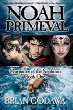
 and saw endorsements ranging from Ralph Winter (X-Men) to Marvin Olasky, I decided to give it a chance.